In 1911, hand-drawn illustrations weren’t just a stage in the design process. They were how a dress became art, apart from the garment itself. Technological advancements like the camera were starting to be used, but within fashion the tool was still a catalogue device, good for documenting a garment, not selling it. French publisher Lucien Vogel decided to test that assumption and commissioned American photographer Edward Steichen to shoot Paul Poiret’s gowns for the magazine Art et Décoration. The resulting images, moody and staged, are closer to painting than to a catalogue page.
By the 1960s, illustration had been demoted to a magazine’s occasional flourish, and photography had become fashion’s default language.
There was no Reddit thread or comment section to check for unfiltered reactions at the time, but it’s not hard to imagine the pushback that followed Vogel’s dare to push a documentation tool into an art form.
Photography got its own reckoning decades later. Adobe shipped Photoshop in 1990, and anti-retouching sentiment built for years after; photographer Peter Lindbergh became known for refusing to retouch his own work at all, while regulators from Brazil to the UK debated warning labels for altered images. Then came CGI: Shudu Gram, the “digital supermodel” who fronted Balmain and Fenty Beauty in 2017, and Lil Miquela, whom Prada dressed starting in 2018, drew the same complaints brands hear now, that a synthetic face takes a paycheck from a real one and borrows diversity a payroll.
The tool keeps changing. The conversation around it doesn’t. What follows are seven campaigns making the newest version of it, AI as the tool, spanning the industry from luxury houses to high-street retailers.
Gucci: AI Images Ahead of Demna’s Gucci Debut
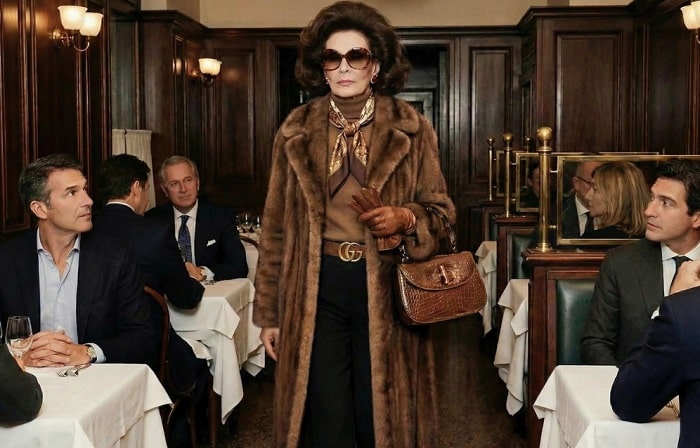
Image: Gucci Instagram
Not Gucci’s first synthetic experiment. Four days before Demna Gvasalia’s first Gucci show, on February 27, 2026, its Instagram grid filled with AI images from the show’s “Primavera” mood board. A few of the images depicted a couple on a motorcycle, styled in a GTA/Vice City aesthetic with a Gucci neon sign glowing in the background. Others showed an older woman in a fur coat, oversized tortoise-shell sunglasses, and the house’s signature belt, walking through a restaurant, past tables of besuited men and women, all eyes turning toward her. The captions carried no disclosure; it was Instagram’s own AI-content label that notified viewers the images were AI-generated, not Gucci itself. Thousands of comments followed, branding the content “AI slop,” a house charging upward of $10,000 for a handbag reaching for the cheapest tool in the room.
Oscar Wilde’s famous line raises a complication: “There is only one thing in the world worse than being talked about, and that is not being talked about.” Every booing comment was still a person saying Gucci’s name four days before a runway it needed to be watched, the same way backlash made the CGI model Shudu famous before it made her employable. The outrage may have been the clearest sign the campaign worked.
Prada: AI-Rendered Creatures by Artist Jordan Wolfson
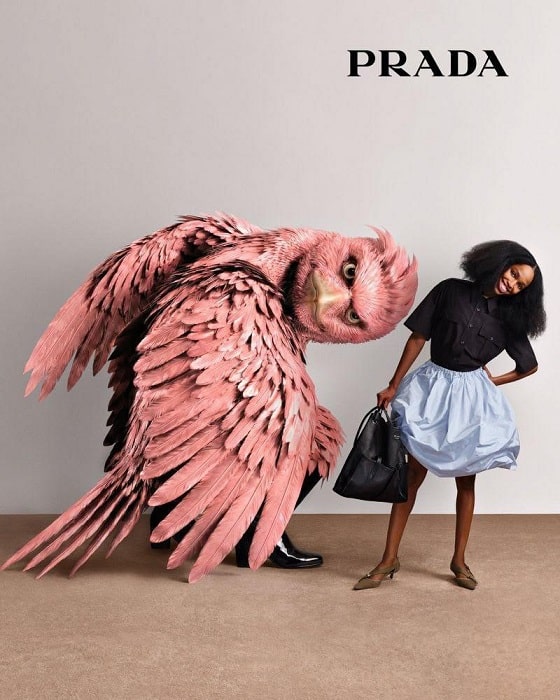
Image: Prada Website
A common complaint about Primavera was that AI was replacing an artist. Prada’s answer: what happens when a real artist utilizes complex visual imagining? Its Spring/Summer 2026 campaign, I, I, I, I AM… PRADA, handed its imagery to Jordan Wolfson, known for unsettling animatronic sculptures long before AI entered fashion. The campaign features photos and videos of models and actors, Hunter Schafer, Carey Mulligan, and Levon Hawke, paired with matted-feather birds that create a shared kinesphere. The figures weren’t 100 percent AI-produced; CGI tools played a role in post-production alongside it. With a thoughtful rollout, the campaign’s landing page blurs the line between using AI to generate art versus just content.
Burberry: AI Brings a 1980 Archive Photo Back to Life
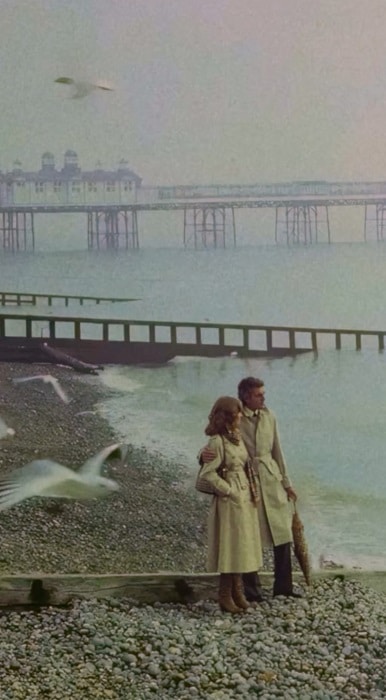
Image: Burberry Instagram
Burberry’s summer 2025 campaign used AI to bring a static 1980 Lord Lichfield photograph back into motion rather than generating anything new, and drew the least controversy of all seven. The reaction to this use of AI was as innocent as grandchildren digitizing old family film. It honors the past rather than replacing it.
Valentino Garavani: AI Remixes a Runway Show
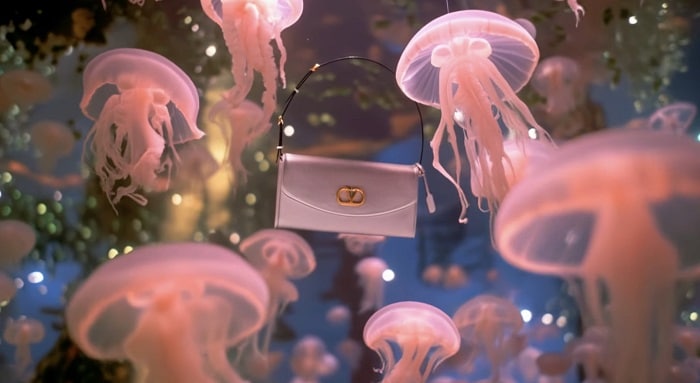
Image: Valentino Youtube
For Valentino Garavani’s first trainer collection, a collaboration with Vans, the team opted out of flooding a real bathroom and instead used AI to repurpose material from its Fall/Winter 2025-2026 show, Le Méta-Théâtre Des Intimités, shown at Paris Fashion Week in March 2025. It wasn’t the house’s last run-in with AI. Three months later, in December 2025, Valentino released an AI video for its DeVain handbag, set in an underwater scene. The surrealism arguably went a step too far, with one too many duplicating jellyfish triggered by a touch from the subject in the video. It raises the question of where AI amplifies artistry and where it drowns in excess.
Mango: The Cheapest Way to Shoot in Marrakech Is With AI
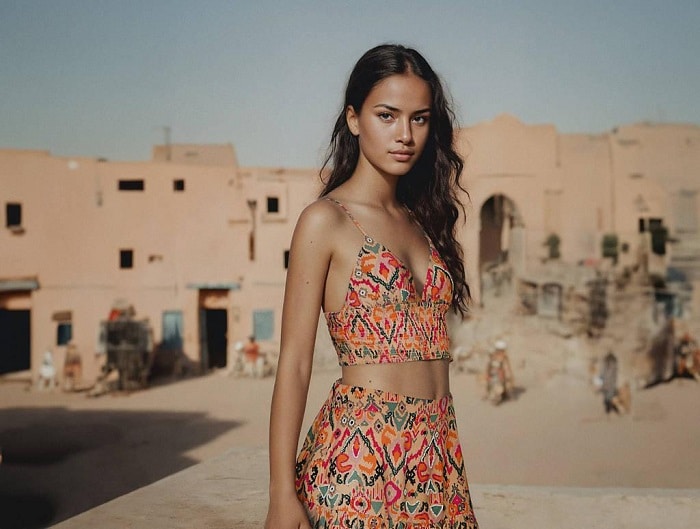
Image: Mango Website
As part of Mango’s “Earn” lever under its Strategic Plan 2024-2026, the brand turned to AI for the limited-edition Sunset Dream collection from its youth line. Real garments were photographed, then placed via generative model onto synthetic models set in a synthetic Medina of Marrakech, rolled out across 95 markets. It read like an ordinary shoot, at a fraction of the cost of flying real models and a marketing team from Europe to the MENA region.
H&M: Real Models Cloned by AI
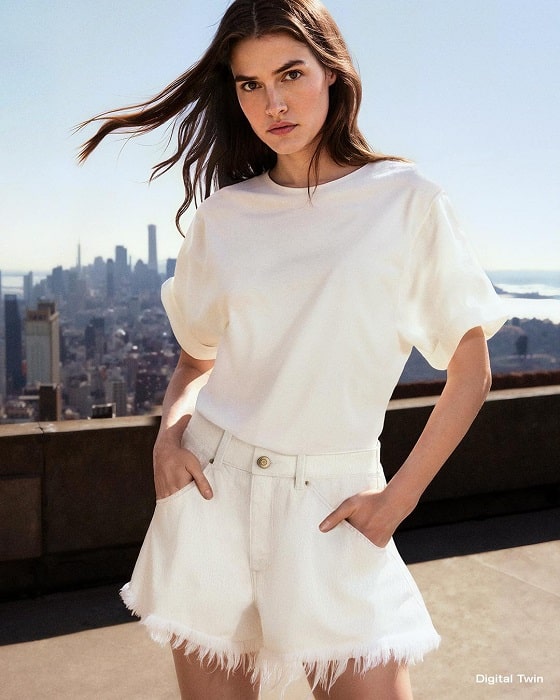
Image: H&M Website
H&M announced its partnership with tech firm Uncut in March 2025, and a few months later, in July 2025, released the first images of 30 digital clones of its real models, reusable across markets without new shoots. The models approved the use of their likenesses and were compensated for the cloning of their original images. H&M model Vanessa Mood embraced the shift, saying she was glad to be included in the process rather than left out of it, and calling it a case study in AI best practices. She even joked that her clone is just like her, minus the jet lag.
Guess: An AI Ad in Vogue
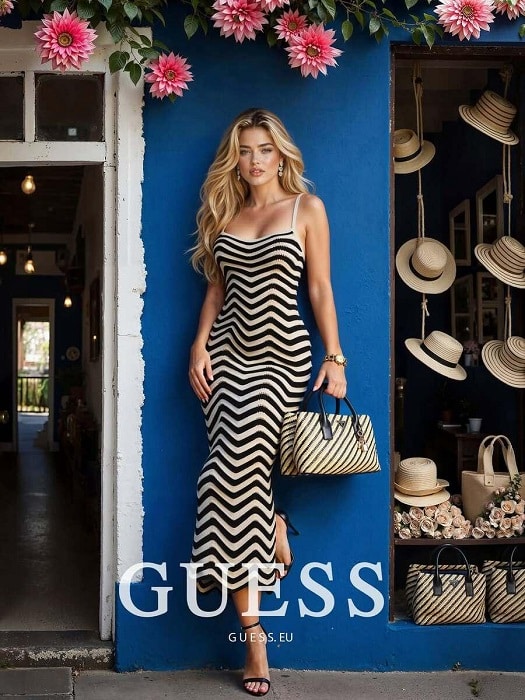
Image: Seraphinne Vallora, AI Marketing Agency
In American Vogue’s August 2025 issue, the one with Anne Hathaway on the cover filming a Devil Wears Prada sequel, sits a two-page Guess advertisement featuring two blonde models, Anastasia and Vivienne, posed in the brand’s new collection. If you couldn’t tell from the images alone, the fine print confirms it: both were generated by an outside AI studio, Seraphinne Vallora, commissioned to build the entire scene, no real models, no real photography, no real location, just AI-generated imagery styled to pass as a conventional shoot. The only real presence on the page was the clothing.
The irony wouldn’t land until nine months later, when the Devil Wears Prada sequel opened with a dystopian portrait of journalism being hollowed out by the very technology Guess used to make this spread.
Hermès: Choosing Linda Merad’s Hand Over AI
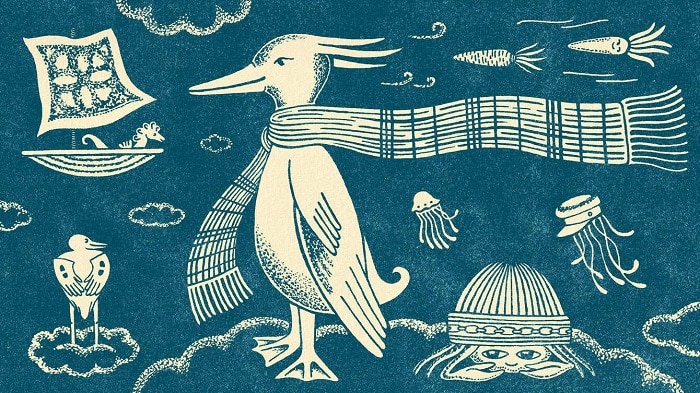
Image: Linda Merad Website
A quieter countermovement: brands treating a human artist as the selling point.
Hermès made the clearest bet, hiring illustrator Linda Merad for its Drawn to Craft collaboration, which went beyond the website redesign into public installations inviting visitors to pick up a pencil and draw, treating illustration as a living process rather than a decorative flourish.
Worth noting, these campaigns are just the marketing layer of AI in fashion, its footprint runs further back into pattern-making, forecasting, and supply chains too. But at that layer, the conversation itself hasn’t moved since Steichen picked up a camera. What’s moved is the speed: photography took decades, Photoshop, CGI to AI took years. Under that is a discomfort less about job loss than what it implies, that years mastering a skill start to feel wasted once a machine does it in seconds. But the skill worth having was never the tool.
Wolfson’s birds are impressive because of artistic judgment to decide what the AI was pointed at, not because AI was used, the same as when Vogel dared the camera to make fashion art out of a photograph rather than a document of one.