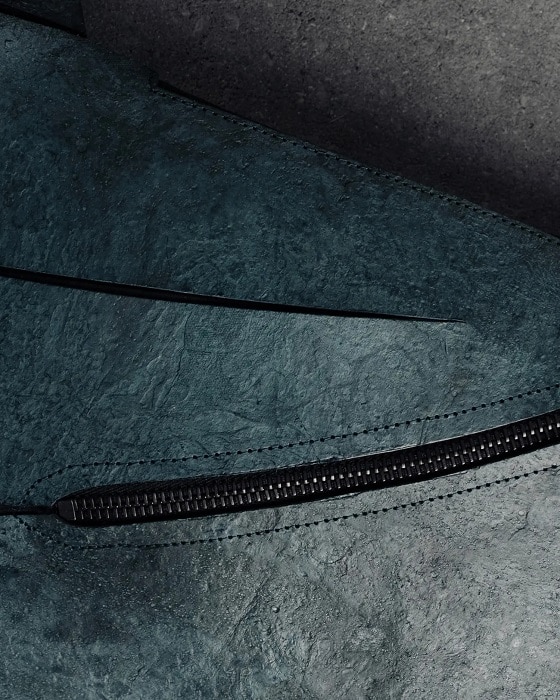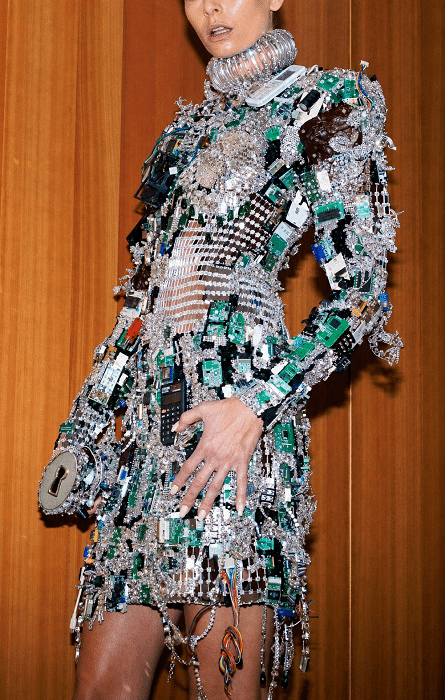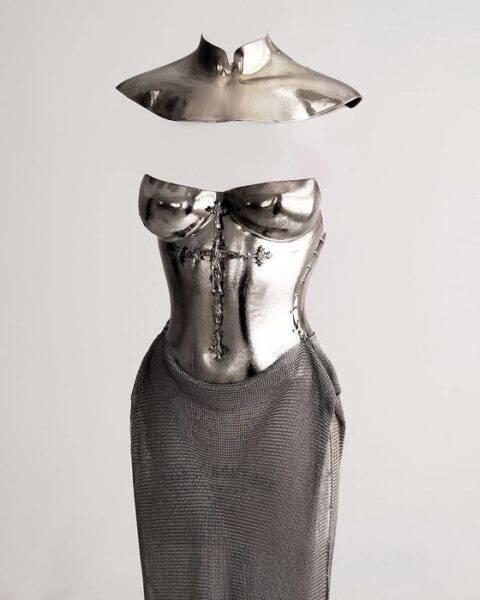
Known as Y3K, the emerging aesthetic favours metallic surfaces, translucent fabrics, exposed hardware and silhouettes engineered around the body. Popularised online in East Asia, its reach extends beyond social media. Its appeal lies not in a single uniform, but in how the idea travels: houses turn the future into form, emerging designers explore it through material, and South Korea’s pop industry builds a visual world around it.
The Future as Form
Thierry Mugler established one of fashion’s most enduring images of the mechanical body with his metal and Plexiglas robot suit from Autumn/Winter 1995–96. Created with corset-maker Mr Pearl, artist Jean-Jacques Urcun and aircraft specialist Jean-Pierre Delcros, and inspired by Hajime Sorayama’s chrome humanoids, the articulated catsuit transformed Nadja Auermann into a couture cyborg.
Three decades later, the house continues to engineer the body. Miguel Castro Freitas’s Spring/Summer 2026 Mugler debut combined exaggerated shoulders and lacquered PVC with hourglass tailoring, framing the figure as though each look had been moulded around it.
At Coperni, technology is both reference and material. Introduced for Autumn/Winter 2024, the Air Swipe bag was developed with researcher Ioannis Michaloudis. Made from silica aerogel, a material used by NASA’s Stardust mission to collect comet particles, it contains 99 per cent air and weighs around 33 grams.
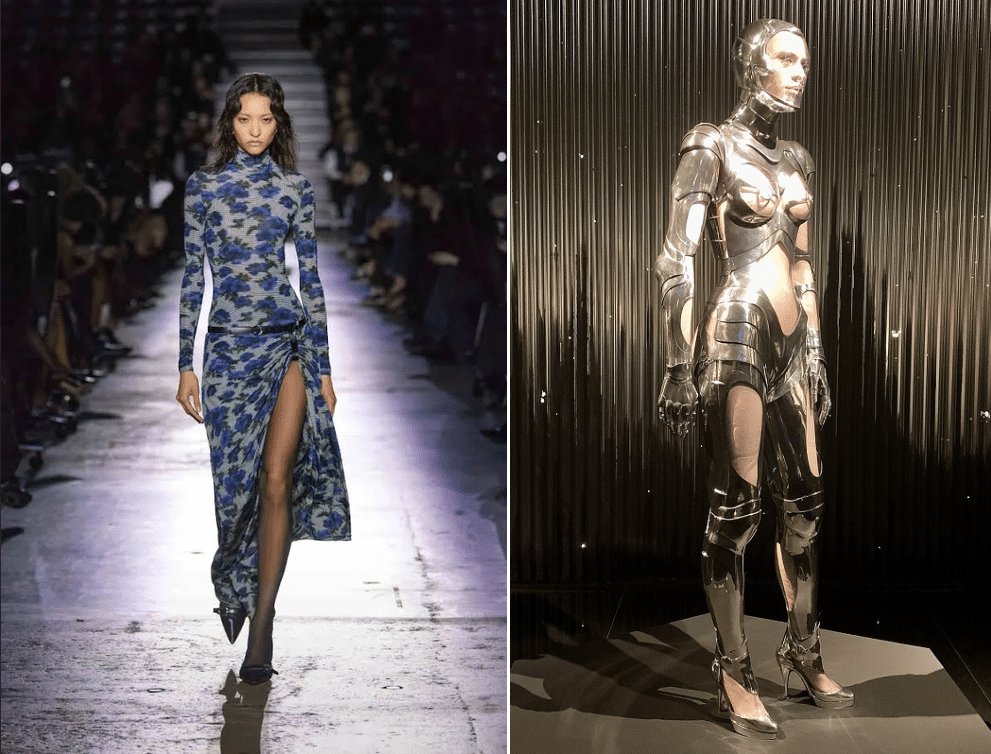
Left: Coperni’s Autumn/Winter 2025 collection featured an ASCII-generated floral print inspired by computer code. Right: Photograph by Stephen Kelly, via Wikimedia Commons, licensed under CC BY 2.0.
For Autumn/Winter 2025, Coperni turned towards hacker culture. An ASCII-generated floral motif translated computer code into print, while machine-embroidered pearls recreated television static. Silver-studded thigh belts and screen-like sheer pleats completed a collection informed by gaming and the early internet.
At Mugler and Coperni, the future appears as a prototype: sculpted, engineered and shaped through technological references. For Chet Lo and Susan Fang, the same impulse begins with the material itself.
The Future as Material
Central Saint Martins graduate Chet Lo has built his label around a distinctive spiked knit developed during his studies. Semi-sheer and body-skimming, the fabric creates an almost reptilian surface. His designs have since been worn by Dua Lipa, Doja Cat and SZA.
Susan Fang, another Central Saint Martins graduate, offers a lighter interpretation. Her work includes 3D-printed crystal-resin bags, air-weave textiles and bubble accessories. Technology and craft become parallel routes towards unfamiliar forms.
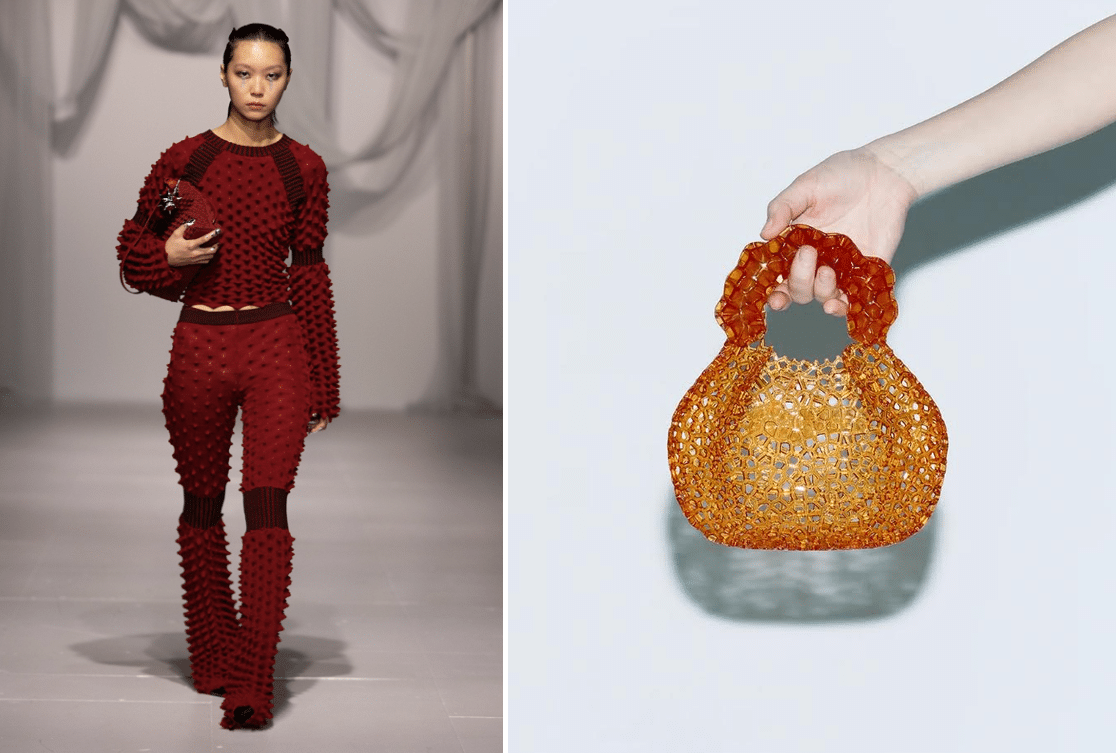
Left: Chet Lo’s signature spiked knit. Courtesy of Chet Lo. Right: A 3D-printed crystal-resin bag by Susan Fang. Image via the Susan Fang website.
Built into fabric and accessories, Y3K becomes easier to wear and circulate. South Korea’s fashion and entertainment industries take that process further by surrounding the look with music, beauty, performance and digital storytelling.
The Future as Image
South Korea’s importance to Y3K lies in circulation. K-pop rarely presents clothing as an isolated element: fashion, beauty, choreography and digital storytelling are developed together, allowing an aesthetic to move from teaser imagery and music videos to live performances and fan styling.
Aespa is a particularly relevant example. Since its debut, the group’s identity has involved digital avatars and an extended virtual mythology.
Its 2024 Armageddon era translated that narrative through industrial settings, metallic accessories and otherworldly beauty, placing Y3K codes within a continuing story.
Gentle Monster extends the same logic beyond pop performance. The Seoul eyewear label’s shield glasses, mirrored lenses and surreal campaign worlds make futurism both wearable and physical. Chrome eye make-up and mirrored nails complete the image, carrying the aesthetic from the accessory to the face.
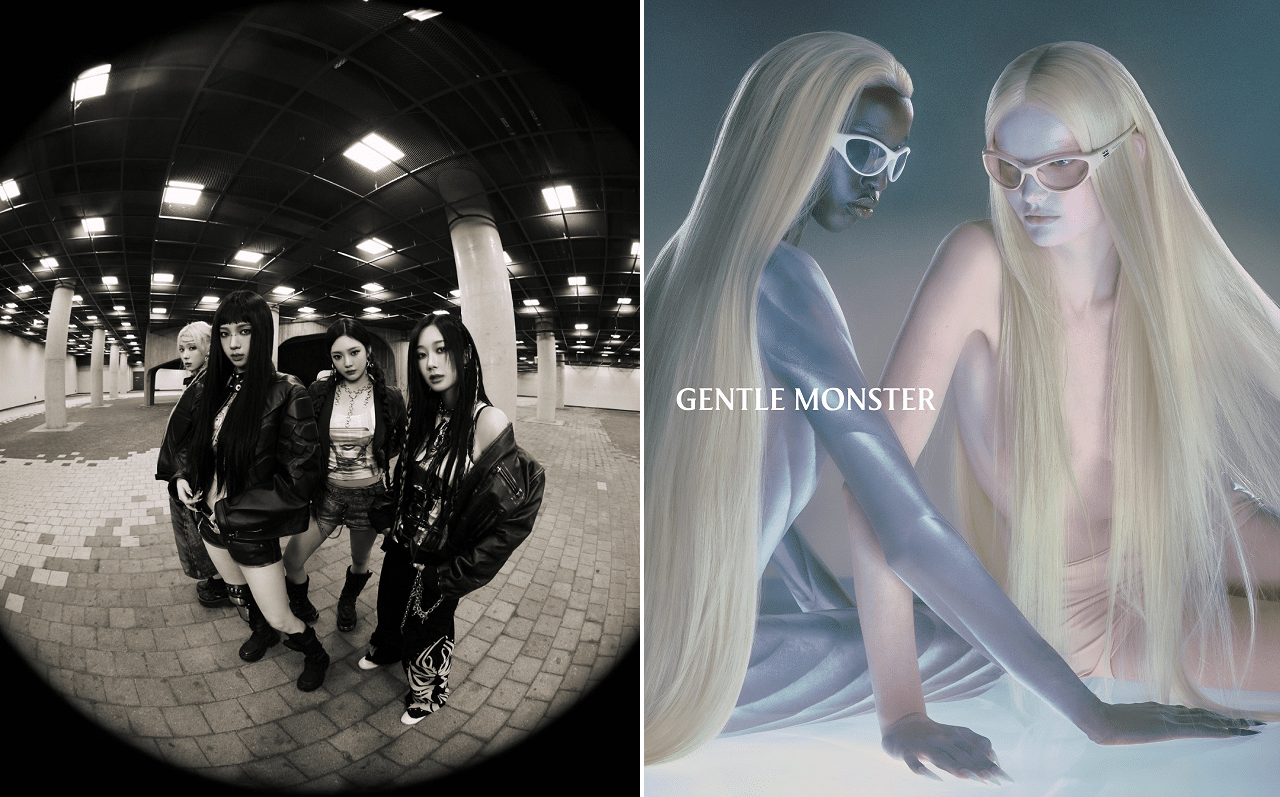
Left: aespa for Armageddon. Courtesy of SM Entertainment. Right: Gentle Monster’s 2024 campaign, photographed by Elizaveta Porodina. Courtesy of Gentle Monster.
No one can predict how people will dress in the year 3000. That is precisely Y3K’s appeal. With no period archive to quote, designers are free to imagine one, building the future through form, material and image.