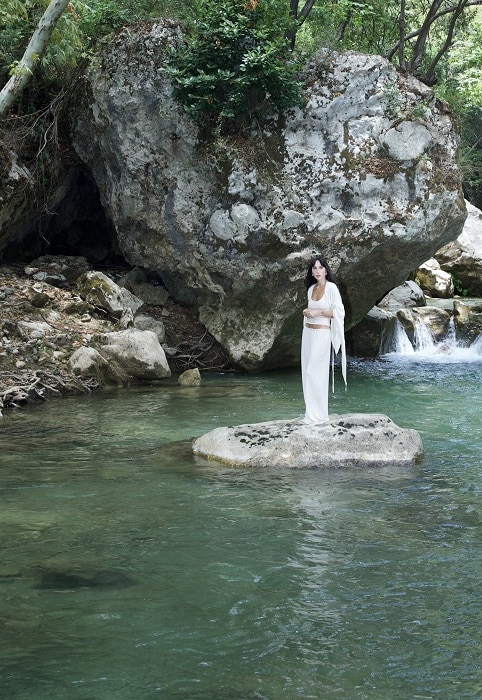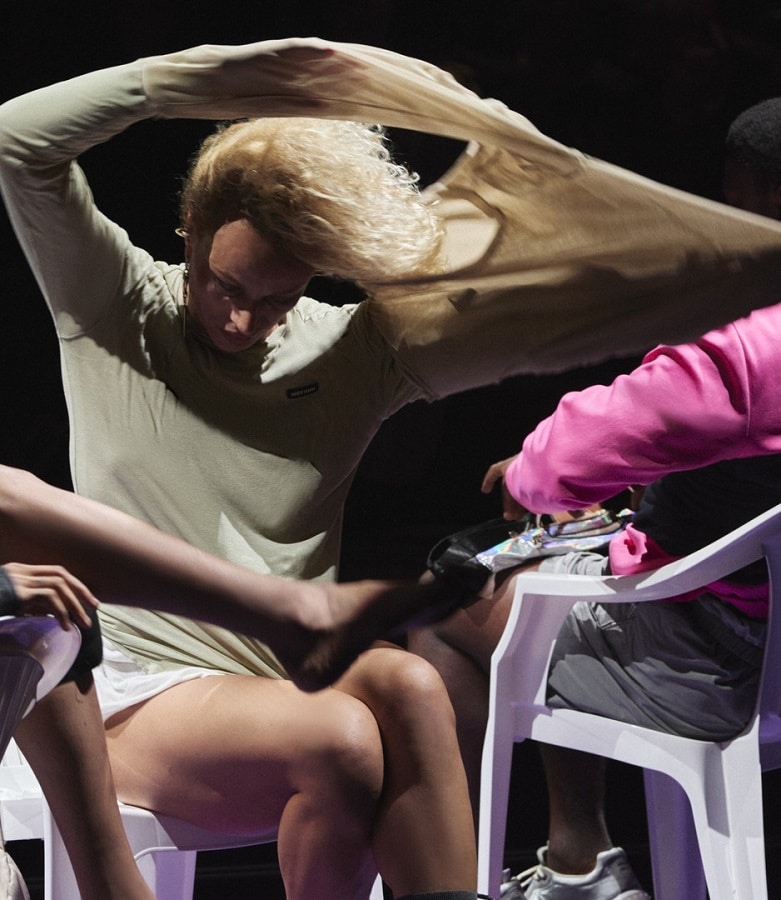
What happens when the images we inherit from history no longer tell the full story? French filmmaker Alice Diop explores this question in her new exhibition, Geste de Consolation (Gesture of Consolation), which brings together film, photography, sculpture, poetry, dance, music and performance to reconsider how Black women have been perceived throughout art history, and how these images continue to shape our view of the world today.
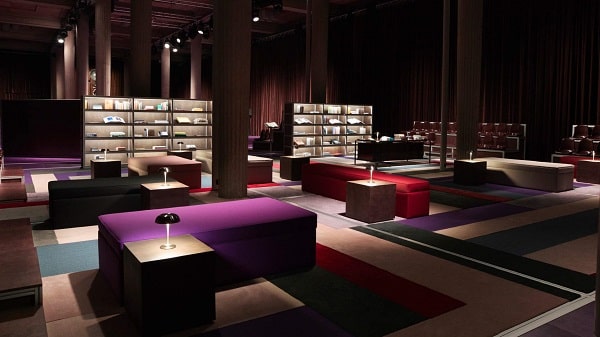
Image: Courtesy of Miu Miu
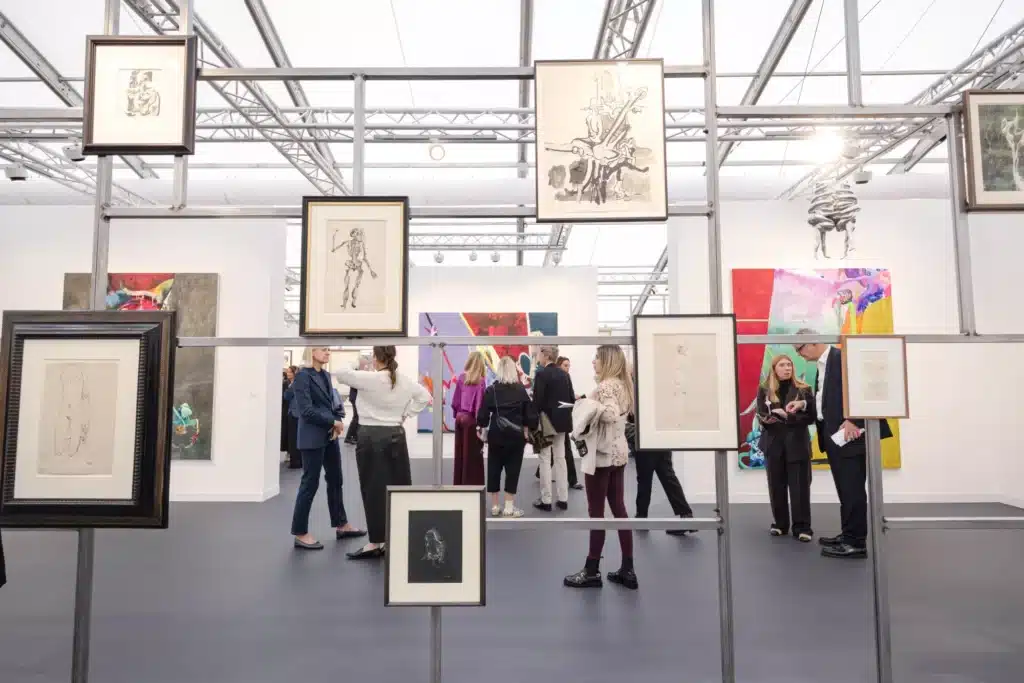
Commissioned by Miu Miu, the exhibition forms part of the fashion house’s partnership with Art Basel Paris’s Public Program. It opened to the public on October 21 at the Palais d’Iéna in Paris, a building also known for hosting the brand’s runway shows. The exhibition runs until October 25, 2026, with free admission. For Diop, whose films have explored identity, migration and colonialism, this marks her first step into exhibition-making, although the project remains closely connected to her work behind the camera.
The opening dinner also brought together artists and cultural figures from the Arab world, including Qatari-American artist Sophia Al-Maria, Moroccan artist Meriem Bennani and Sheikha Al Mayassa bint Hamad bin Khalifa Al Thani, Chairperson of Qatar Museums. Both Al-Maria and Bennani have explored questions of identity and representation through moving images, each approaching these subjects through her own cultural experiences and artistic perspective.
Images: Courtesy of Miu Miu
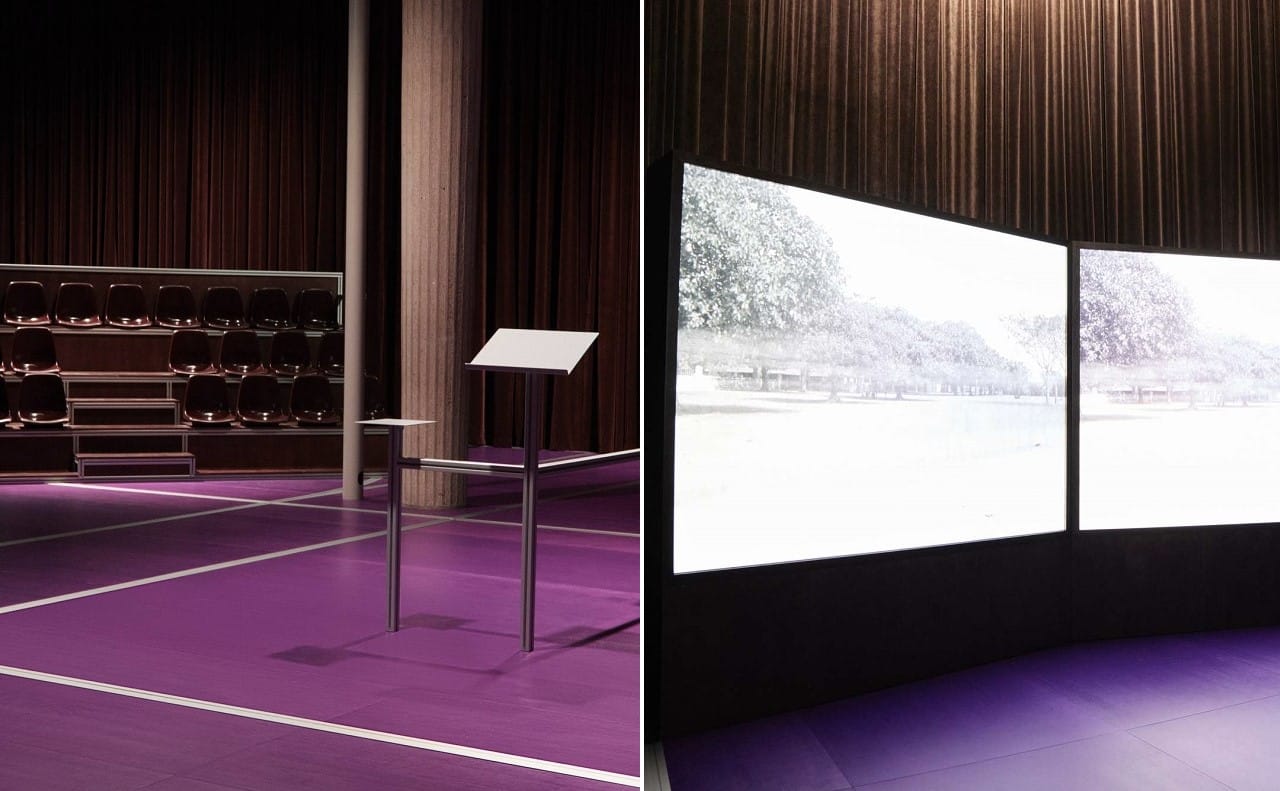
In Geste de Consolation, Diop replaces the conventional display of artworks for visitors to observe from a distance with a journey through four interconnected spaces. The experience unfolds like a film, with one scene leading into the next and meaning emerging through the sequence rather than direct explanation. Visitors are invited not simply to look at the artworks, but to engage with them, listen to them and, at certain moments, become part of the experience themselves.
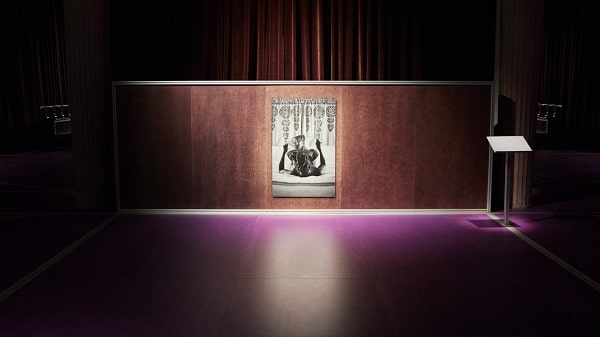
Image: Courtesy of Miu Miu
The journey begins with a photograph by South African artist Zanele Muholi, followed by a two-screen video installation bringing together archival images and excerpts from films that have helped shape Diop’s view of the world. Some of these images are disturbing, while others offer a sense of consolation and comfort. Placing them side by side raises a troubling question: what happens when the very visual culture that has shaped our understanding of Black women has also reduced them to stereotypes or distorted representations?
Diop responds by making room for other voices to express themselves. In a space titled Chambre à soi, a living room and library are arranged over brightly coloured carpets featuring a motif by artist Mary Lee Bendolph. Within the concrete structure of the Palais d’Iéna, this corner feels like a welcoming home, inviting visitors to pause and reflect. The library contains books that have influenced Diop’s thinking and intellectual journey, making it both a personal archive and a place in which to imagine a freer world.
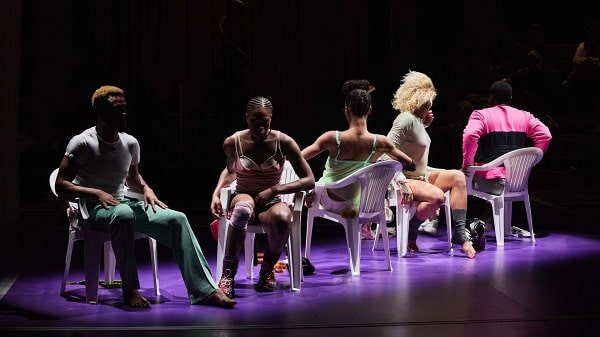
Image: Courtesy of Miu Miu
Inside, the quiet atmosphere gives way to a series of performances. Texts by various writers, including Audre Lorde, Zora Neale Hurston and Zadie Smith, are read aloud, while dancers perform an adaptation of a work by Ivorian choreographer Nadia Beugré. Musician Angel Bat Dawid and her ensemble, Sistazz of the Nitty-Gritty, also take part. The exhibition shifts from individual reflection to collective experience, inviting visitors to think not only about what they see, but also about how they perceive it.
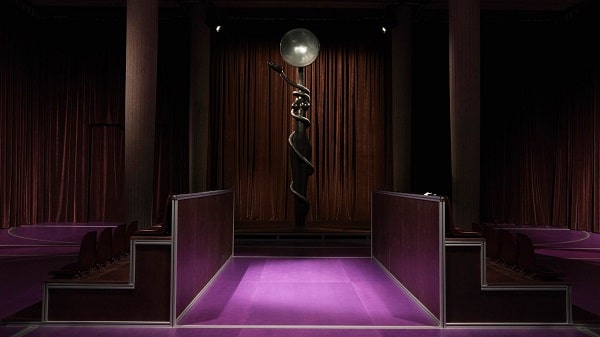
Image: Courtesy of Miu Miu
The final chapter centres on Sentinel (Mami Wata), a monumental bronze sculpture by Simone Leigh standing nearly five metres tall. The elongated female figure is encircled by a serpent and inspired by Mami Wata, a powerful West African water spirit whose image has travelled across the continent and through African diasporic communities, transforming as it has moved from one place to another. As a figure associated with both creation and destruction, Mami Wata resists a single interpretation. The same is true of Leigh’s sculpture, which stands silently as if keeping watch over the entire exhibition.
Placing the sculpture at the end of the exhibition is significant. After moving through images, words, bodies and voices, visitors encounter a figure that does not demand an immediate explanation. Instead, it leaves them free to contemplate its form and consider what it represents, each in their own way.
For Diop, consolation does not lie in erasing the painful history of discrimination against Black women, but in confronting the images it has left behind, many of which remain with us today, while making room for different stories to emerge. This is the idea behind the exhibition’s title, Geste de Consolation, or Gesture of Consolation: the act of looking at these works may itself be the beginning of a different way of seeing Black women.