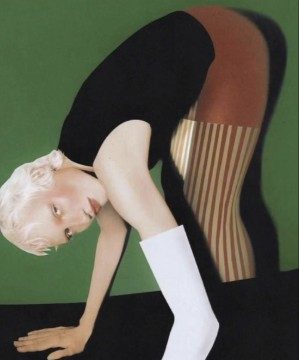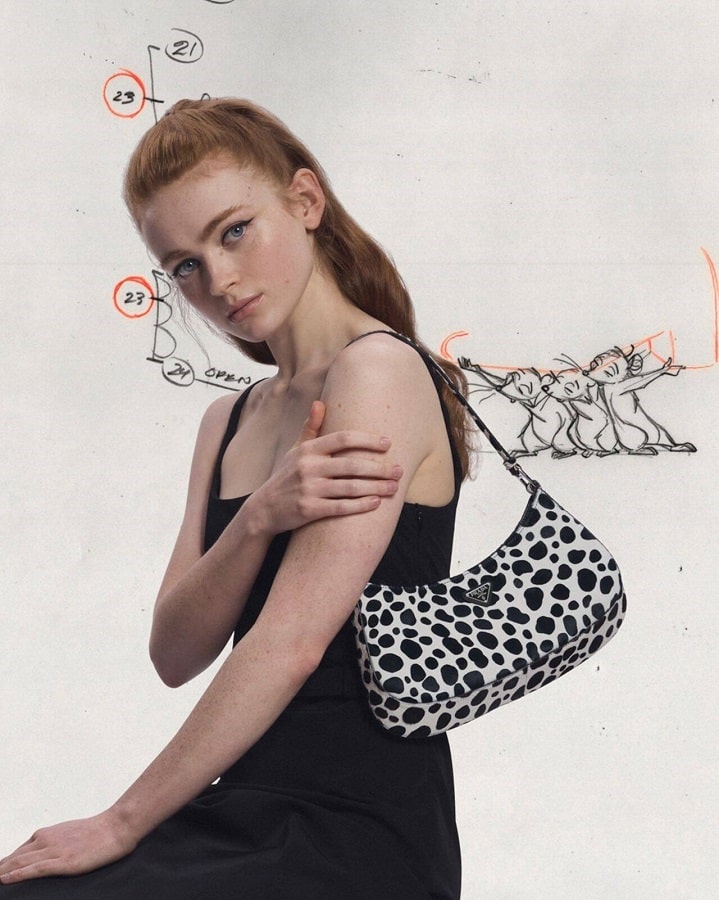
In Prada’s Holiday 2026 campaign, actors and illustrated creatures share the same scene. Lighting and perspective align across photography and drawing, making the encounter between the two worlds feel natural to the story. Glen Luchford created the photographs, while a team led by animation director John Pomeroy produced the illustrations. The campaign’s title, Drawing Prada: Animated by Hand, announces how it was made before the viewer even begins to consider the clothes.
A fashion house can build an imaginary world around a handbag, but Prada also chooses to tell us who drew that world and how. The image has a maker, just as the object does. At a time when image-generation tools can produce increasingly complex scenes, commissioning an artist offers something different: a recognisable visual language shaped by an individual.
Craft Extends to the Campaign
Prada’s campaign draws on the pleasures of illustrated storytelling, placing its clothes within a playful fantasy. Photography and animation work together to construct a world in which the illustrated characters feel as present as the actors themselves.
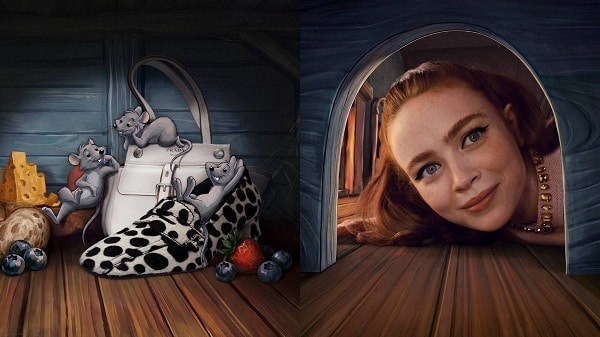
Image: Prada
These campaigns do not suggest that luxury houses are abandoning artificial intelligence, or that every illustration commission is a response to it. They do, however, raise an interesting question. When images can be generated more quickly than ever, what makes an artist’s particular way of seeing worth investing in?
Part of the answer lies in the choices an illustrator makes. The proportions they exaggerate, the details they leave out and the relationship they establish between reality and imagination all contribute to the character of an image. What we remember is not necessarily the product at its centre, but the world built around it.
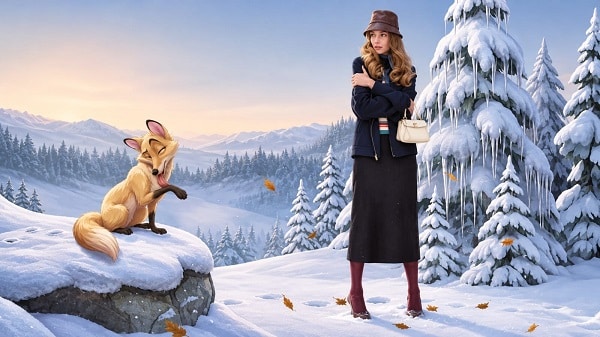
Image: Prada
An Artist Draws the Shopping Journey
In Hermès’s collaboration with Linda Merad, illustration became part of something more everyday: navigating the website. Sea creatures appeared alongside the products, with a pelican sitting inside a loafer and an eel beside a watch. Rather than simply decorating the pages, the illustrations guided visitors through the store’s different departments, bringing a little humour to the shopping experience.
Speaking to Fast Company, Merad explained that the house wanted viewers to “feel the materiality of the drawing.” It is an interesting ambition for a digital space, where the visitor cannot touch the paper or see the physical marks left by the artist’s hand. Yet her lines and compositions retain something of that tactile quality, even as they perform the practical task of directing customers towards products.
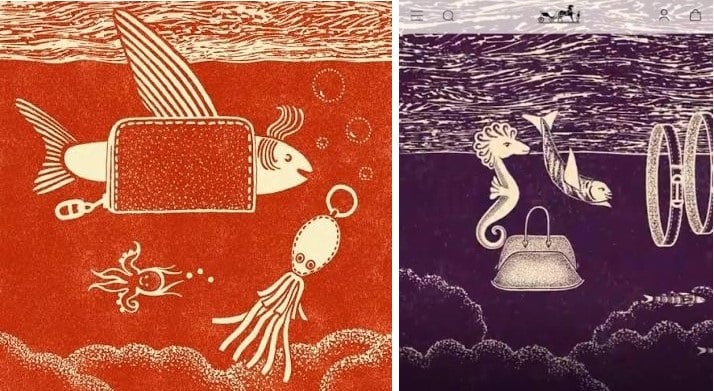
Images: Kit Klein
Unlike a campaign that appears for a season and disappears, these illustrations became part of the experience of using the website. A visit to the shoe department could begin with an unexpected encounter between an animal and an object, giving an otherwise familiar act of browsing a rather different character.
A History Remade on Paper
For LOEWE’s 180th-anniversary film, illustration took on a larger role. Directed by Isabel Garrett with Blinkink, in collaboration with artist Joanna Blémont, the animation brought together approximately 2,000 hand-painted frames. The team worked with acrylic and oil stick on watercolour paper, while Antonio Banderas narrated the story of the house.
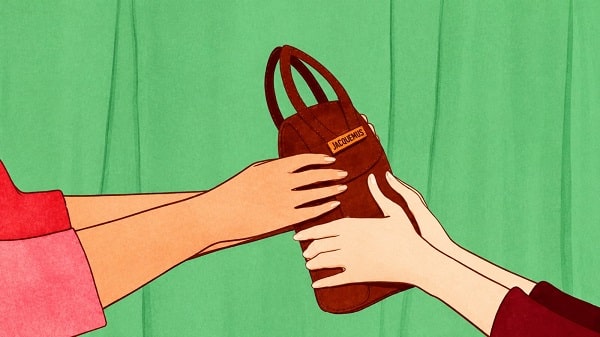
Image: Blinkink
There is something fitting about recounting the history of a house that began as a leather workshop through another process that demands such close attention to materials. Each frame required its own decisions about colour, composition and movement. Together, they became a film that could be watched in a matter of minutes.
The production process is almost as interesting as the finished animation. Seeing the individual paintings reveals the amount of work concealed within each movement, although the number of frames alone is hardly what makes the film successful. Its appeal lies in the rhythm of the storytelling and the way illustration allows LOEWE to revisit its history without making it feel like a conventional retrospective.
A City Through Jisu Choi’s Drawings
Chanel offered another interpretation of illustration in the animated teaser for its Métiers d’art 2026 presentation in Seoul. Artist Jisu Choi imagined Gabrielle Chanel arriving in the city, illustrating a panorama that brought together elements of the surrounding landscape, architecture and urban life.
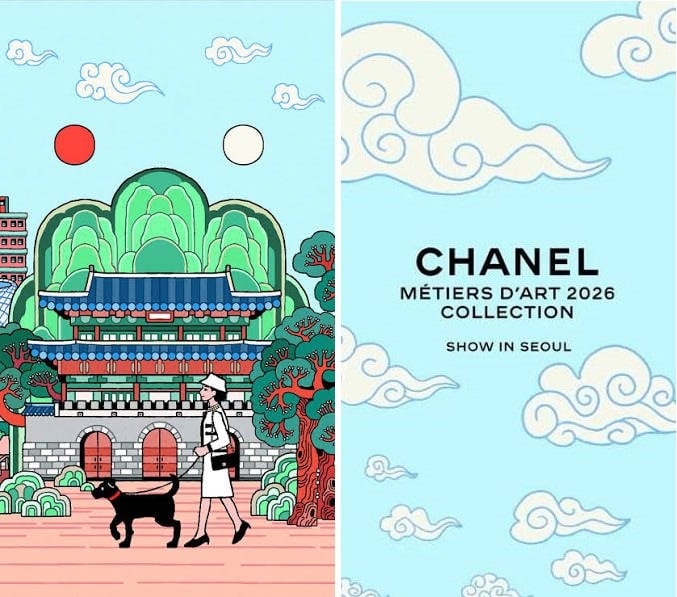
Images: Dutch Uncle
The film accompanied the collection’s presentation in Seoul in May 2026, following its original unveiling in New York in December 2025.
Rather than presenting the city through conventional campaign photography, Chanel allowed Choi to interpret it through her own drawings. The familiar codes of the house entered a setting shaped by the artist’s imagination, giving the location a character that went beyond a recognisable backdrop.
There is also a connection to the Métiers d’art collection itself, which celebrates the specialist artisans whose work contributes to Chanel’s creations. Before encountering the garments, audiences were introduced to the collection through another artist’s work.
The most interesting aspect of such collaborations is the room they leave for an individual point of view. A commissioned artist brings more than a technique. Their particular way of interpreting a subject can introduce something unexpected into even the most established visual identity.
What Proves the Presence of a Hand?
There is a temptation to describe hand-drawn illustration as something that cannot be replicated. Yet the appearance of a drawing tells us very little about how it was made. Digital tools can imitate brushstrokes, uneven lines and the imperfections we associate with working by hand.
What makes these collaborations interesting is not simply that the images look handmade, but that we can trace their creation. Prada names its animation director, Hermès introduces the illustrator behind its website, and LOEWE offers a glimpse into the paintings that became its anniversary film.
For luxury houses, which have long built their identities around craftsmanship, there is a natural connection between the people who make their products and those who create the images surrounding them.
But the strongest examples go further than demonstrating the hours involved. They give artists the freedom to bring their own ideas into the picture, allowing the resulting work to feel like something that could only have come from them.