In luxury watchmaking, a few centuries of heritage usually help. Richard Mille has built its own legacy in just 25 years, with its attention firmly on the future. Founded in 2001, the brand started with a fairly simple question: how far can you push a watch?

Image: Courtesy of Richard Mille
During my visit to Richard Mille’s manufacture in Les Breuleux, Switzerland, I was struck by how specialised the work is, and how much attention to detail goes into producing something that eventually fits on a wrist. It made me curious about the thinking behind these watches, and how a relatively young brand has approached some of watchmaking’s oldest traditions.
Three models seemed a good place to start: the RM 001, the tourbillon that launched the brand in 2001; the RM 27-02, developed for Rafael Nadal to wear while playing tennis; and the RM 07-04, Richard Mille’s first sports watch dedicated to women.
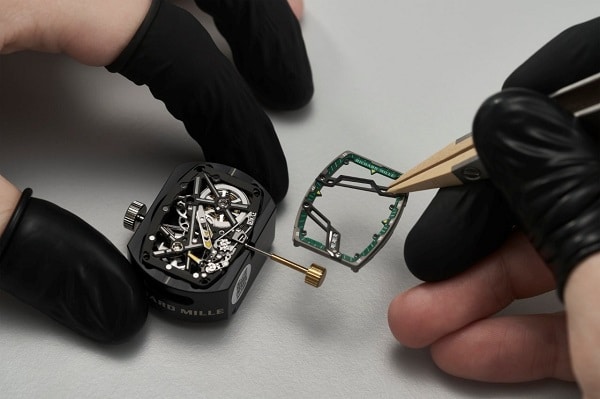
Image: Courtesy of Richard Mille
It All Started With a 200-Year-Old Invention
In 1801, Abraham-Louis Breguet, a Neuchâtel-born watchmaker who established his workshop in Paris, patented the tourbillon, a mechanism designed to improve the accuracy of pocket watches by reducing the effects of gravity on their timekeeping. It places some of the watch’s most delicate components inside a rotating cage, a complicated solution to a very practical problem.
Exactly 200 years later, Richard Mille introduced its first watch, the RM 001, developed with specialist movement maker Renaud & Papi. Breguet had been concerned with precision, while Richard Mille was now exploring how much a complicated mechanism could withstand, borrowing ideas and materials from industries where resistance and performance were essential.
Complicated watches had traditionally been considered fragile, which makes the story of Mille dropping an early example on the floor in front of prospective retailers all the more amusing. It was reportedly his way of demonstrating the watch’s resistance, although I imagine a few people in the room must have been rather nervous.
The RM 001 established the direction Richard Mille would follow over the next 25 years, with engineering inspired by racing cars and a willingness to test the limits of traditional mechanical watchmaking.
Rafael Nadal Became Part of the Testing Process
Of all Richard Mille’s partnerships, the one with Rafael Nadal is perhaps the easiest to understand when you consider what the watch actually has to do. We’re accustomed to seeing athletes wearing luxury timepieces when they lift a trophy, but Nadal was wearing his throughout the match, putting a mechanical tourbillon through the repeated shocks and movements of professional tennis.
The first RM 027 arrived in 2010, weighing less than 20 grams, strap included, an impressive achievement for a watch containing such a complicated mechanism. And because Nadal wore it during competition, the tennis court became an opportunity to understand how the watch performed under real conditions.
The RM 27-02 followed in 2015, limited to 50 pieces, with a construction inspired by the chassis of racing cars. Its baseplate and caseband form a single structure, improving rigidity without adding unnecessary weight, a consideration that becomes important when the person wearing it is hitting a tennis ball at considerable speed.
Nadal’s involvement went beyond being the face of the watch. The demands of his sport became part of the engineering brief.
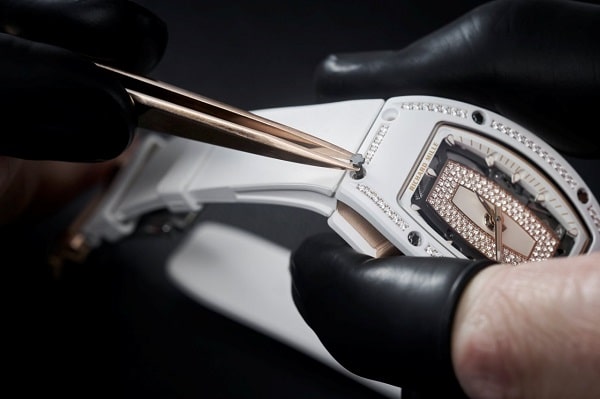
Image: Courtesy of Richard Mille
The Pattern on the Case Is Part of Its Construction
The RM 27-02 is visually spectacular. Its black-and-white case has an almost marbled appearance, with irregular streaks running through the material that look as though they’ve been applied by hand.
The patterns actually come from the construction of the case itself. Richard Mille uses Carbon TPT® and Quartz TPT®, materials made from exceptionally thin layers of fibres that are arranged, bonded together and then machined into the required shape. As the material is cut, the different layers become visible, producing the distinctive streaks across the surface.
Each case has its own pattern, and the result is surprisingly organic for something created through such a technical process, especially as the materials were selected for their strength, rigidity and low weight rather than their looks.
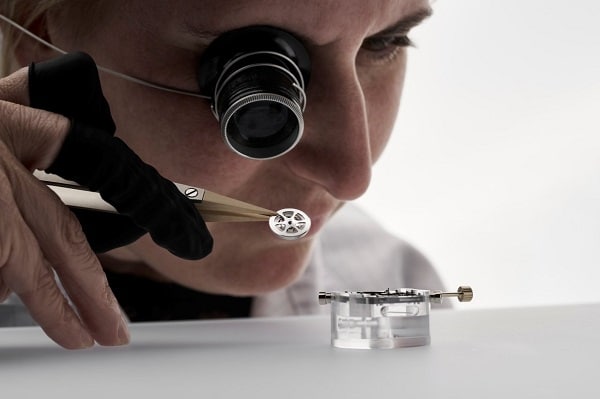
Image: Courtesy of Richard Mille
The Inner Workings Are Part of the Design
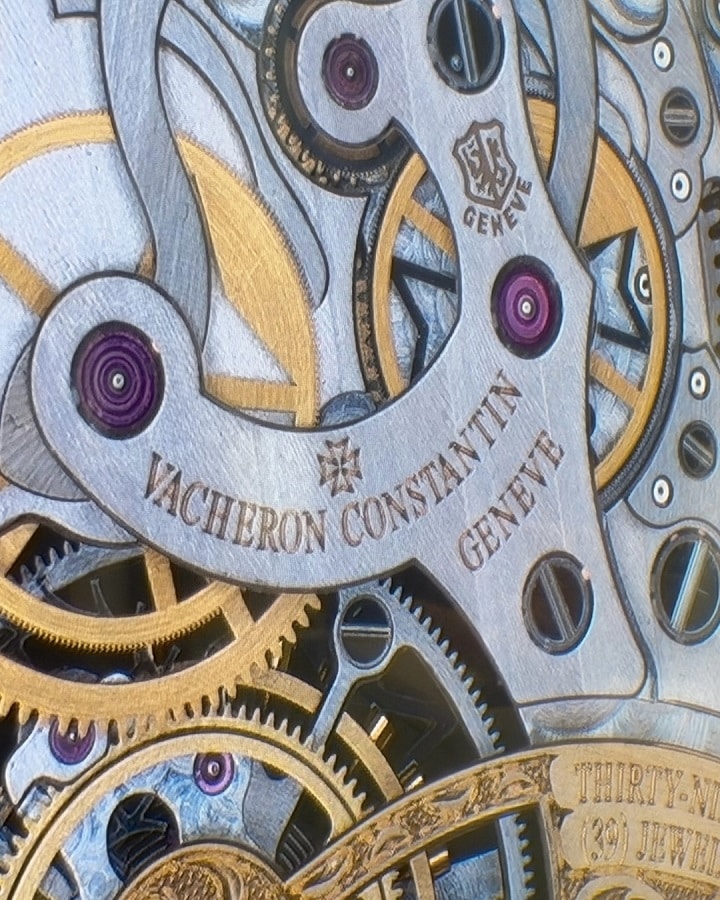
One of the most recognisable characteristics of a Richard Mille watch is how much of the movement remains visible. There are wheels, bridges and open spaces arranged across several levels, and the whole thing has an almost architectural quality. It’s technical, a little chaotic, but beautiful to look at
I was curious how much of that composition is planned for the eye, and how much comes down to what the mechanics actually need.
Tilly Harrison, Managing Director of Richard Mille Middle East and Türkiye, explains in written comments for this feature that the movement, case and dial are conceived together from the beginning. As she puts it, “function leads, because nothing earns its place in one of our watches without a reason to be there.”
The skeletonised bridges, for example, support the mechanism while leaving much of it open to view, and the different finishes, from satin and sandblasted surfaces to polished edges, catch the light at different levels.
I like the idea that you can spend so much time looking at the machinery itself. There’s a lot happening inside these watches, and you don’t necessarily have to understand every component to appreciate the composition.
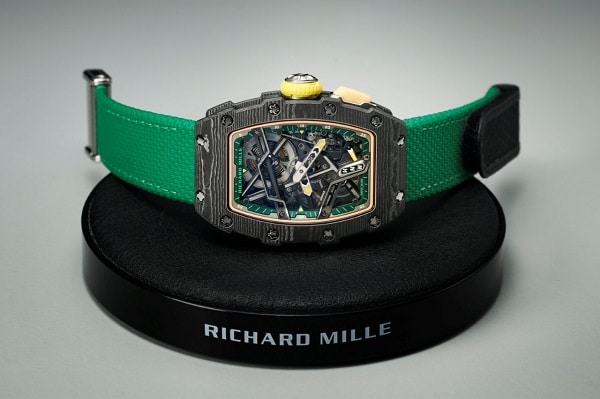
Image: Courtesy of Richard Mille
A Sports Watch Doesn’t Have to Look Like One
Then there’s the RM 07-04, Richard Mille’s first sports watch dedicated to women, which comes in colours closer to sorbet than steel. The soft pinks, creams and brighter shades were the first things I noticed, and I wouldn’t immediately associate them with a watch developed for professional athletes.
Yet the RM 07-04 weighs just 36 grams, strap included, and took three years to develop. Its automatic movement is designed to withstand shocks of up to 5,000 g, with the case and movement engineered to provide the resistance required for demanding sporting activities.
None of that shows in the colours, and I think that’s the point.
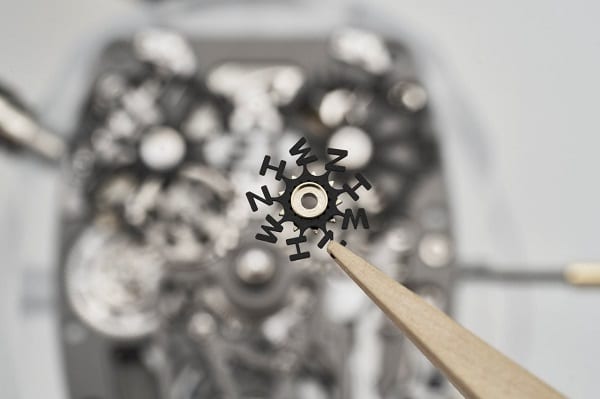
Image: Courtesy of Richard Mille
The Smallest Components Require Some of the Most Work
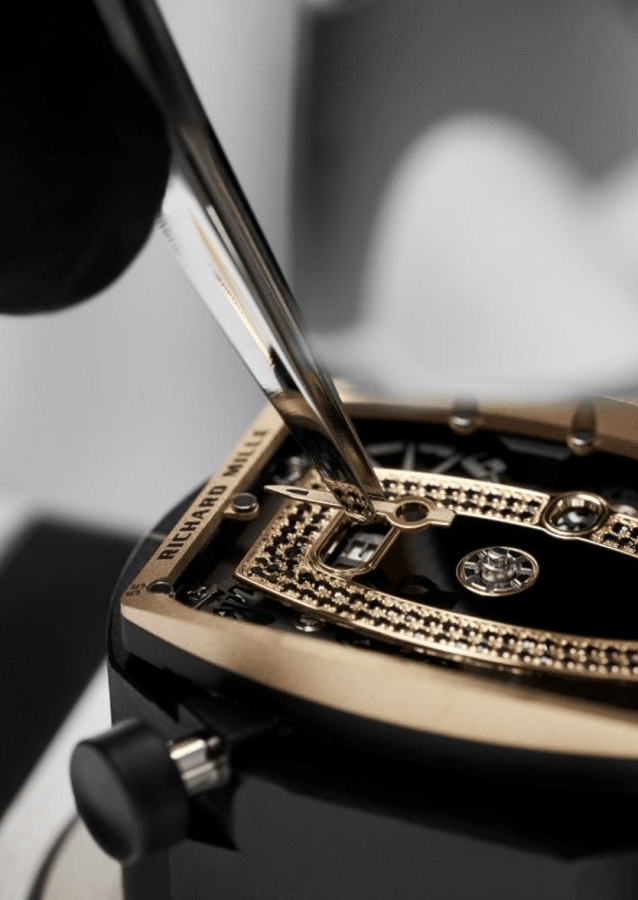
During the manufacture visit, I noticed the attention given to even the tiniest components, with artisans working on individual parts of a movement one at a time.
A single screw at Richard Mille can require more than 20 operations to manufacture, while certain cases involve hundreds of machining operations, with extensive preparation and programming taking place before the finishing can even begin.
I expected to see sophisticated machinery, but what fascinated me was how much of the process still relies on the precision and expertise of the watchmakers themselves. The RM 07-04’s titanium baseplate and bridges, for instance, undergo detailed finishing and bevelling, including anglage, a traditional technique used to polish the edges of individual components.
We’re talking about the edges of parts that are already incredibly small, some of which will hardly be visible once the movement has been assembled. I imagine this isn’t the kind of craft where you can improvise and see where it takes you. A screw still has to fit, and a movement still has to run.
The research and development department was equally impressive. Once the watches are complete, they undergo testing for impacts, acceleration and ageing, with the aim of ensuring that the mechanisms can withstand the conditions for which they’ve been designed.

Image: Courtesy of Richard Mille
These Watches Are Being Made for the Next Generation
I keep thinking about Breguet’s tourbillon, invented in 1801 and still being developed more than two centuries later. Richard Mille has spent the last 25 years working with some of the most advanced materials available, but what will someone looking at one of these watches in another 200 years make of our fascination with performance and technology?
There’s something funny about a watch so technologically advanced eventually becoming an antique.
“Every Richard Mille is conceived not for a season but for a lifetime,” Harrison explains, describing how the brand selects materials for durability and tests every watch for impact, acceleration and ageing, with the intention that it can eventually be passed from one generation to the next.
There’s also the question of what technological progress means for mechanical watchmaking. Richard Mille continues to experiment with materials and engineering, but remains committed to the traditional principles of a mechanical movement, with its springs, wheels and escapements.
As Harrison puts it, “Electronics may tell the time, but they cannot give a watch a soul.”
After visiting the manufacture, I keep coming back to the artisans working on those tiny components in Switzerland, and the thought of a mechanical tourbillon being worn during a professional tennis match. There’s an enormous amount of work between those two moments, much of which you would never see by looking at the finished watch.