At the Winter Palace Ball of 1903, Dowager Empress Maria Feodorovna wore two magnificent sapphires on the front of her elaborate Russian court costume. One of them, a 197.80-carat Ceylon sapphire mounted by Fabergé, would go on to survive the Russian Revolution, pass through the hands of an opera singer and eventually find a new setting at Cartier.
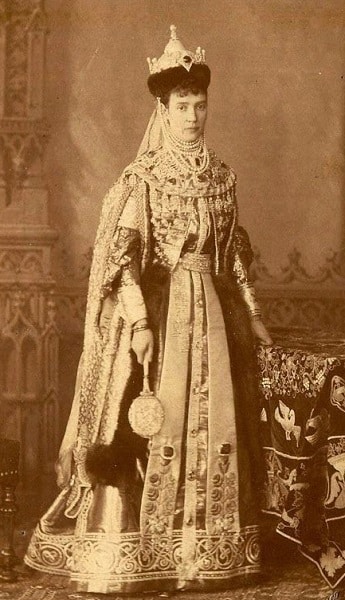
Dowager Empress Maria Feodorovna at the 1903 Winter Palace Ball. Archival image: source and reproduction rights to be confirmed.
Dowager Empress Maria Feodorovna at the 1903 Winter Palace Ball. Archival image: source and reproduction rights to be confirmed.
More than a century later, the Romanov Sapphire is heading to auction at Sotheby’s Geneva on 11 November 2026. It leads a sale of nearly 80 historic jewels with links to the Russian, French, Portuguese and Swedish royal families and the British aristocracy.
Demand for this kind of history is strong. Last November’s sale achieved CHF 11.5 million, with every lot sold.
The Many Lives of the Romanov Sapphire
According to Sotheby’s catalogue, after the Russian Revolution of 1917, the sapphire was recorded in the Fersman inventory, the Soviet survey of the imperial treasure, before being sold in the state’s dispersal sales. In 1927, Ganna Walska bought it from Cartier, set as the centrepiece of a long necklace known as a sautoir.
The Polish-born opera singer and socialite was known for her six marriages and taste for extravagant jewellery. Two years after acquiring the sapphire, she had it reset alongside a carved emerald weighing 256.60 carats.
The sapphire continued to change settings, later becoming part of a shorter necklace before returning to auction in 1971 and again in 1992. Reports from SSEF and Gübelin confirm its Ceylon origin and that the sapphire has not undergone heat treatment.
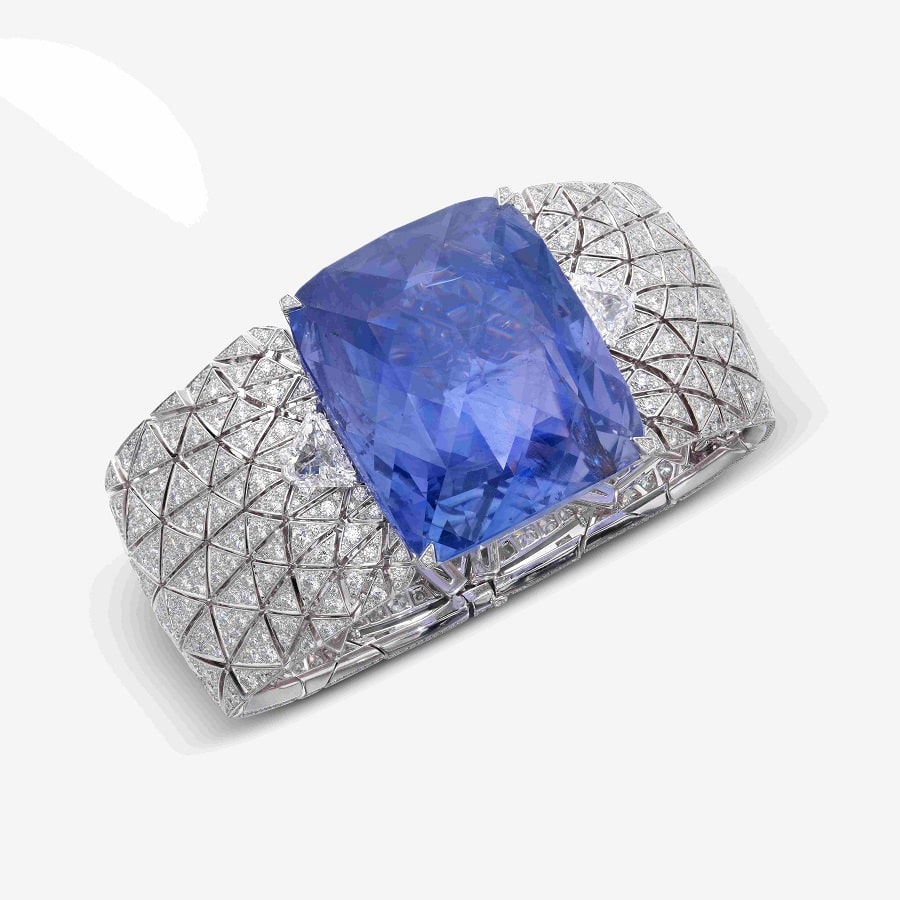
In 2015, Cartier created the diamond-set bracelet in which it is presented today, with an interchangeable rock crystal centre so it can be worn without the sapphire. The original Fabergé setting is long gone, and Cartier made no attempt to reproduce it. It went back to its own Art Deco vocabulary instead, the style of the house when it first sold the stone to Walska almost ninety years earlier.
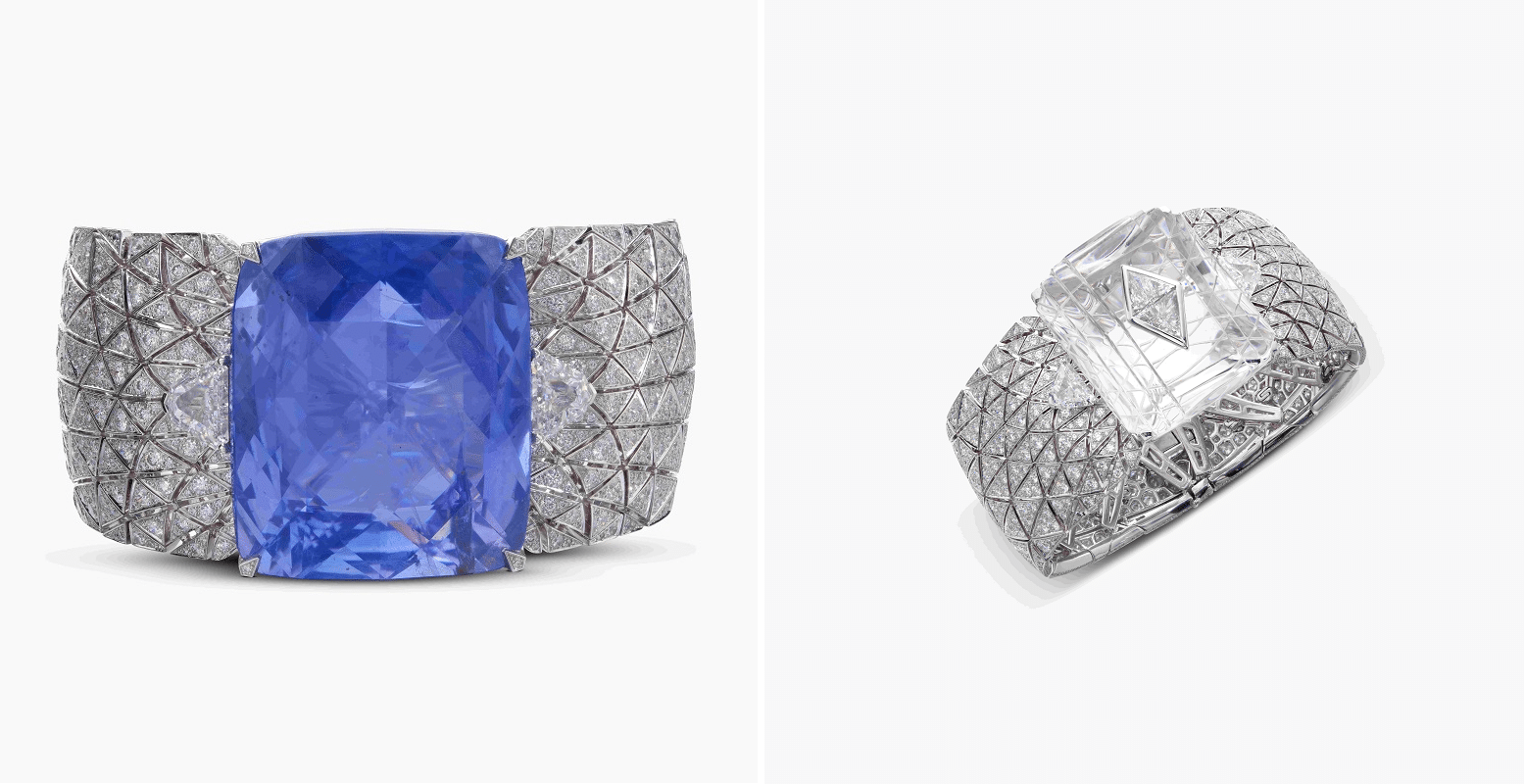
Image1:The sapphire in the contemporary Cartier setting, Courtesy of Sotheby’s. Image2:The interchangeable rock crystal centre, Courtesy of Sotheby’s.
From Coronation to Red Carpet
Cartier London created a black opal and diamond jewel in the late 1930s for Mary Cavendish, Duchess of Devonshire. Built around Australian black opals, it can be worn as a tiara, a necklace or five separate brooches. The opals flash green, blue and crimson against diamonds arranged in the geometric lines of Cartier’s Art Deco designs.
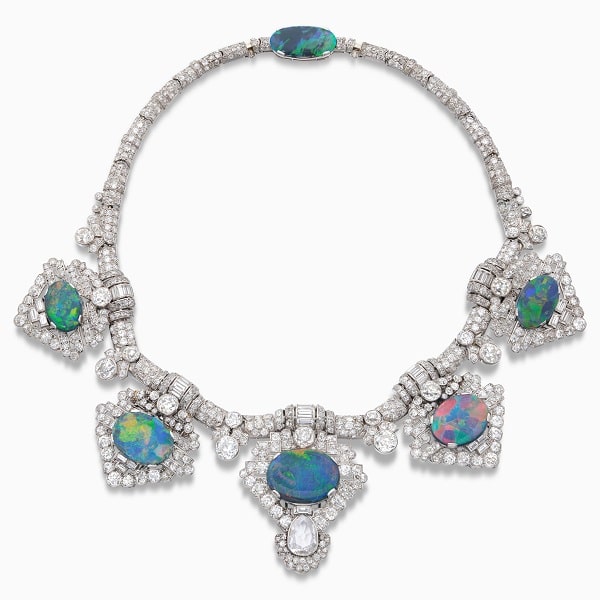
Cartier’s transformable black opal and diamond necklace, lot 1082. Image: Courtesy of Sotheby’s.
According to family tradition recorded by Sotheby’s, the opals were presented to the Duchess and her husband during a tour of Australia and New Zealand in 1936 and 1937.
The jewel was probably commissioned around the coronation of King George VI in 1937. Sixteen years later, the Duchess wore it as a necklace at the coronation of Queen Elizabeth II, where she served as Mistress of the Robes.
Its most recent public appearance came in February 2026, when filmmaker Emerald Fennell wore it with a scarlet Vivienne Westwood gown to the London premiere of her adaptation of Wuthering Heights.
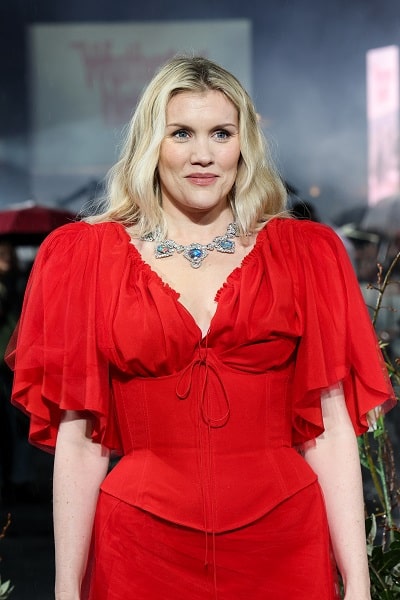
Emerald Fennell wearing the Cartier black opal necklace in London, February 2026. Photographer credit and usage rights to be confirmed.
A Tiara With a Royal Past
Among the sale’s historic pieces is a diamond tiara by Parisian jeweller Mellerio dits Meller, first presented at the International Exhibition in London in 1862.
Its design draws on classical Greek motifs, with a repeating geometric pattern formed from diamonds. The piece can also be worn as a necklace.
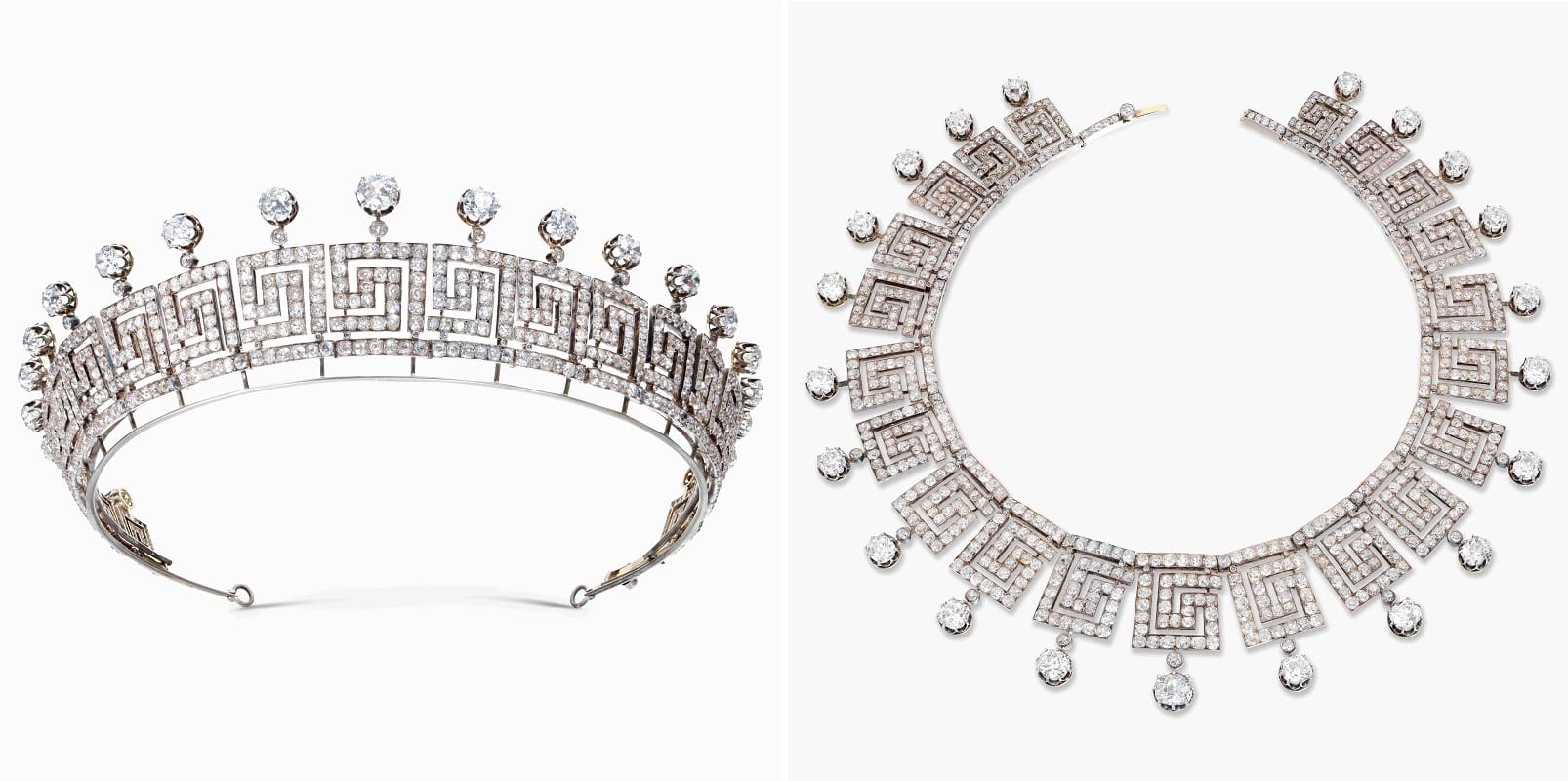
Image1: The Mellerio tiara, circa 1862, Courtesy of Sotheby’s.
Image2: The same jewel in necklace form, Courtesy of Sotheby’s.
Two years after its exhibition debut, the tiara became a royal wedding gift. Antoine d’Orléans, Duke of Montpensier, and his wife gave it to their daughter Marie Isabelle on her marriage to Philippe d’Orléans, Count of Paris.
The newlyweds belonged to a family that continued to hold ambitions of restoring the French monarchy. Their daughter Amélie would later become Queen of Portugal, and her emeralds are also in the sale.
The Mellerio tiara passed through subsequent generations of the Orléans family.
The Last Queen of Portugal’s Emeralds
Born into the French House of Orléans, Amélie married the future King Carlos I of Portugal in 1886. In 1908, she survived the Lisbon Regicide, in which her husband and eldest son, Crown Prince Luís Filipe, were assassinated. Two years later, the Portuguese monarchy fell, forcing the royal family into exile.
Her jewels in the sale are an emerald and diamond bangle centred on a 27.38-carat Colombian cabochon emerald, and an emerald and diamond brooch.
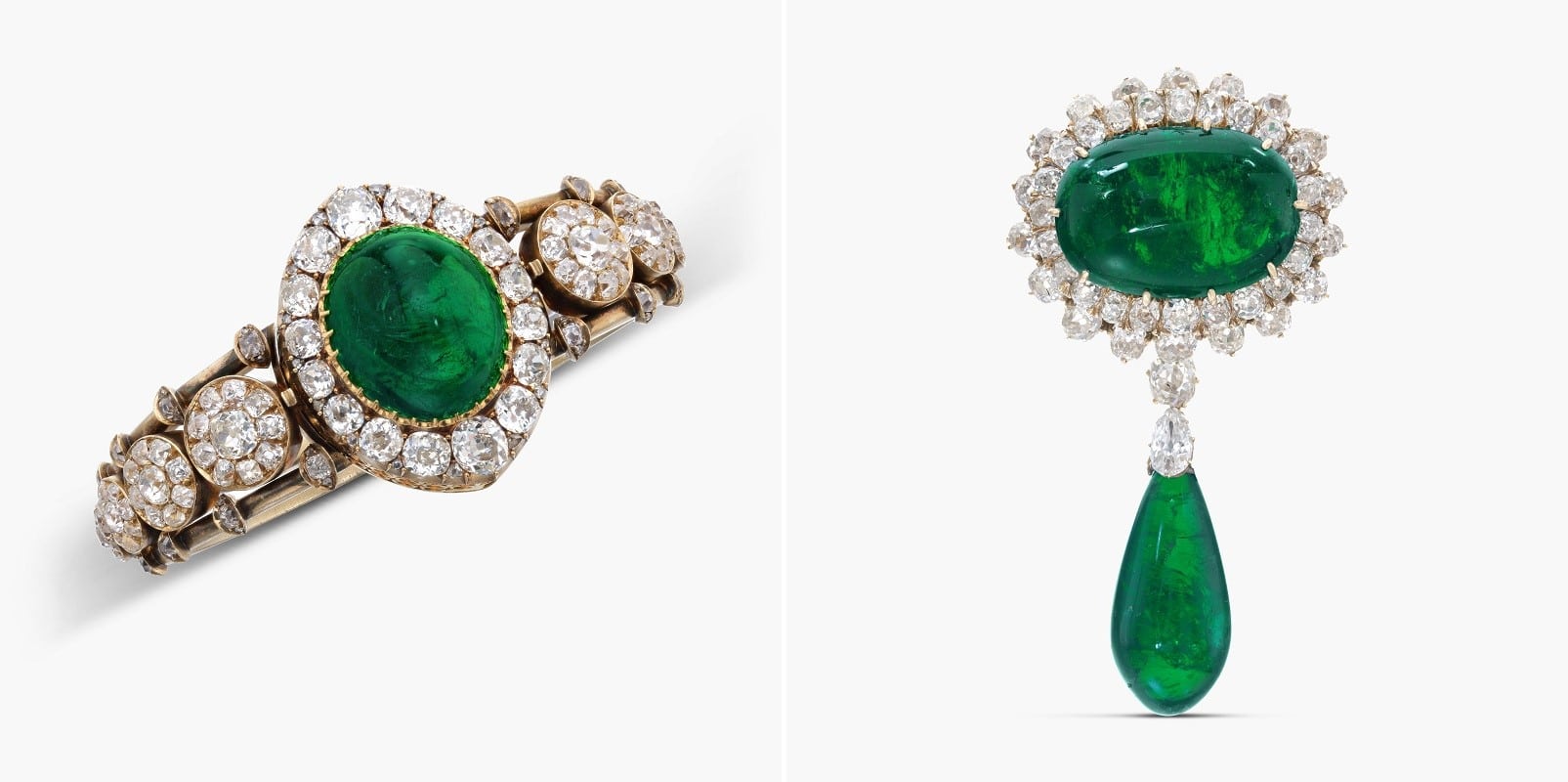
Image1: Que Queen Amélie’s emerald and diamond bangle, Courtesy of Sotheby’s.
Image2: Her emerald and diamond brooch, Courtesy of Sotheby’s.
After her death in 1951, the jewels passed to her niece and goddaughter, Princess Esperanza of Bourbon-Two Sicilies. They subsequently became wedding gifts for Esperanza’s daughter, Princess Maria da Gloria of Orléans-Braganza, before entering private collections.
The Sapphires Passed Between Princesses
When Princess Sibylla married Prince Gustaf Adolf of Sweden in 1932, the former Tsar Ferdinand of Bulgaria gave her a sapphire and diamond necklace.
According to family tradition, the sapphires had once belonged to Empress Maria Feodorovna of Russia, the same empress who wore the Romanov Sapphire at the Winter Palace Ball.
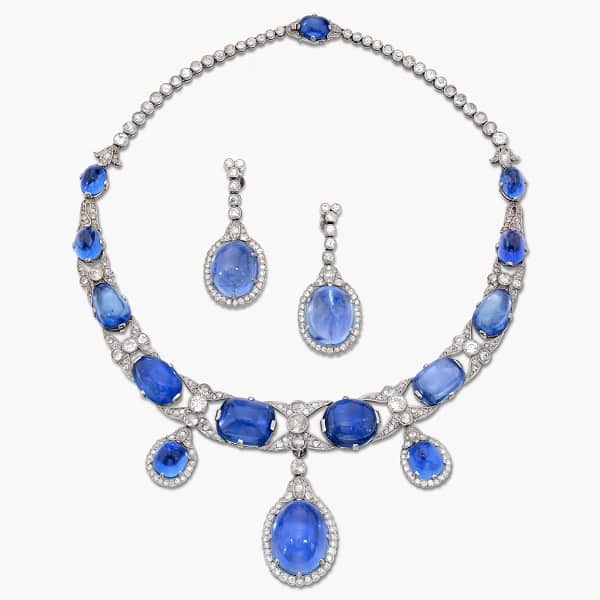
The sapphire and diamond demi-parure belonging to Princess Sibylla of Sweden, lot 1067. Image: Courtesy of Sotheby’s.
Two of the necklace’s pendants were later removed and made into earrings. Sibylla, mother of Sweden’s King Carl XVI Gustaf, wore the jewellery for decades, often with tiaras from the Swedish royal collection, and lent it to her daughters for official occasions.
It eventually passed to Princess Birgitta of Sweden, who wore the set to the weddings of Crown Princess Victoria in 2010 and Princess Madeleine in 2013.
The necklace and earrings are now offered together.
A Ring With a Literary Past
A toi et moi ring, French for “you and me”, pairs a 7.83-carat unheated Kashmir sapphire with a 6.77-carat Colombian emerald. It belonged to Catherine, Lady Walston, widely considered the inspiration for Sarah Miles in Graham Greene’s The End of the Affair.
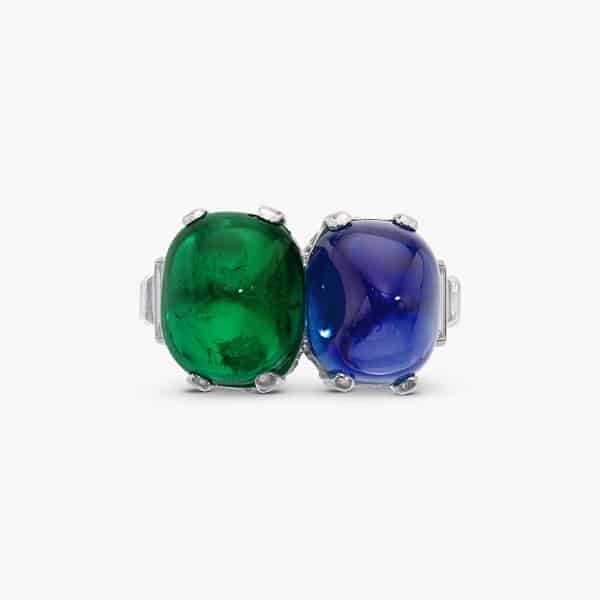
Lady Walston’s sapphire and emerald toi et moi ring, lot 1068. Image: Courtesy of Sotheby’s.
Greene and Walston began their relationship in 1946. The novel, published in 1951, is dedicated simply to “C.”
Of all the jewels in the sale, the Romanov Sapphire has the most striking history. An empress wore it in a Fabergé setting in 1903. Ganna Walska had it redesigned to suit her taste for dramatic jewellery. Today, it sits in a Cartier bracelet made in 2015.
Whoever acquires it in Geneva will become part of its history, too.