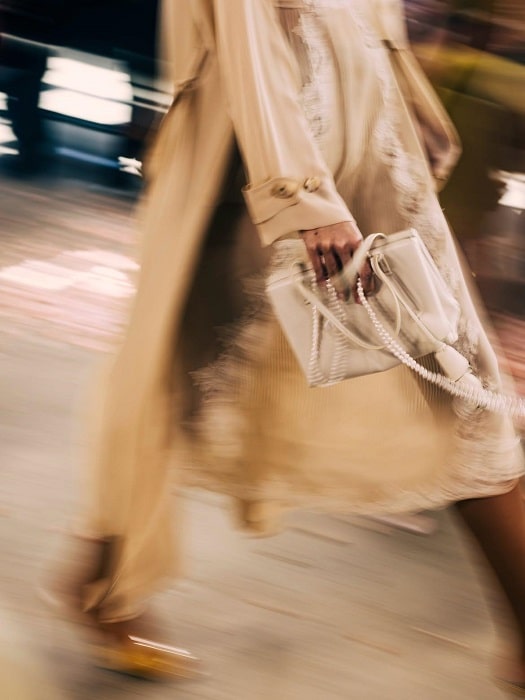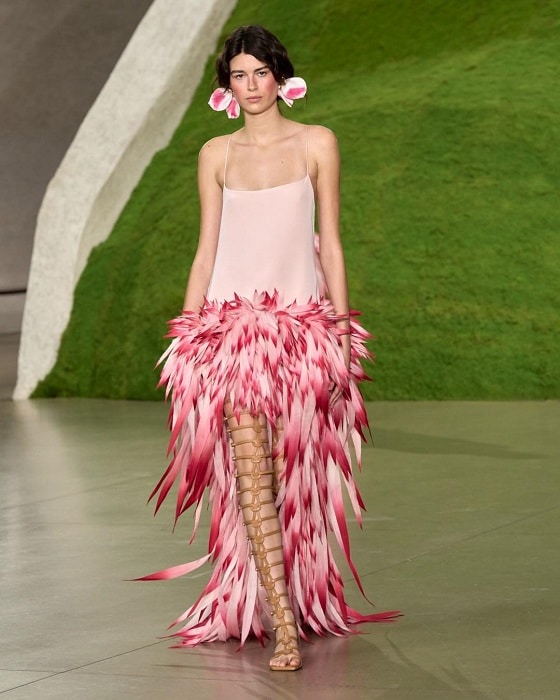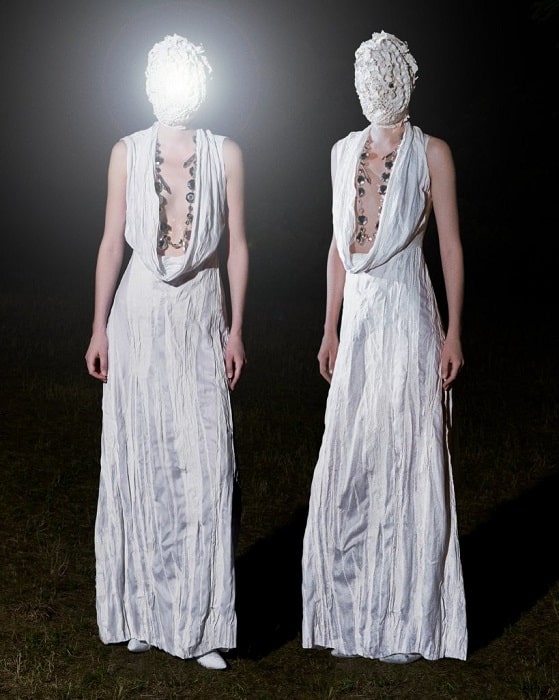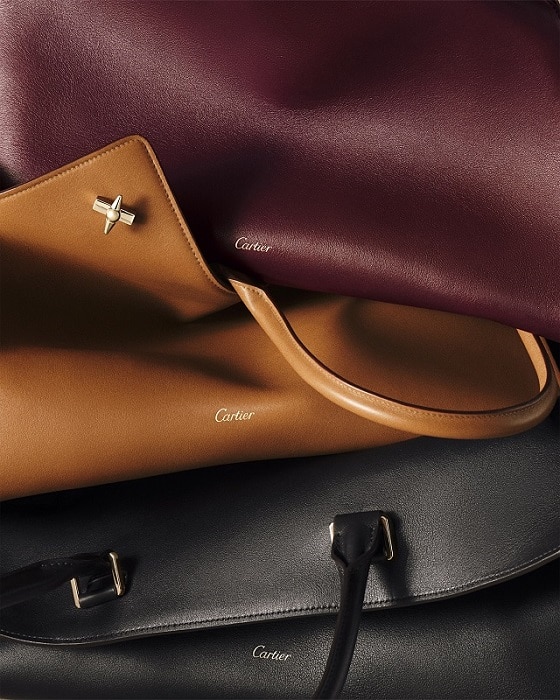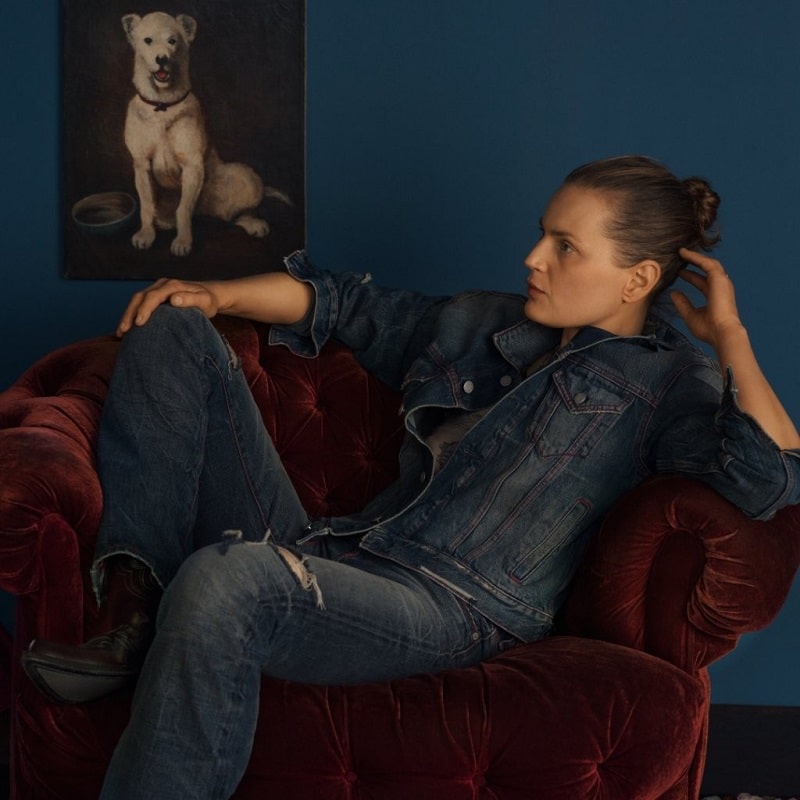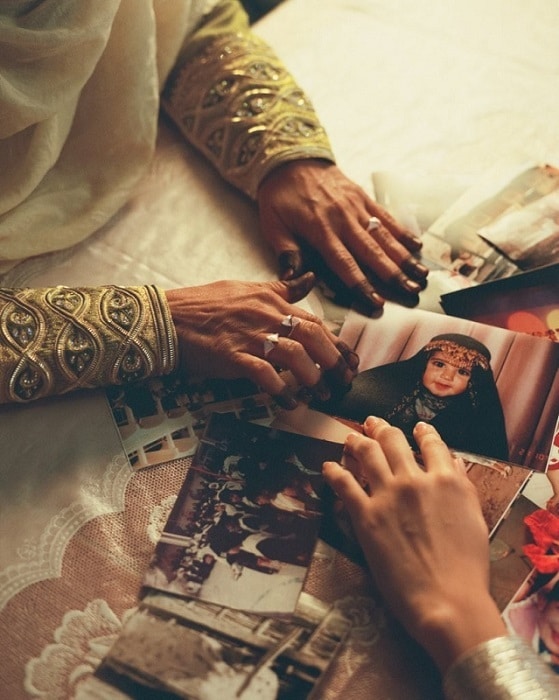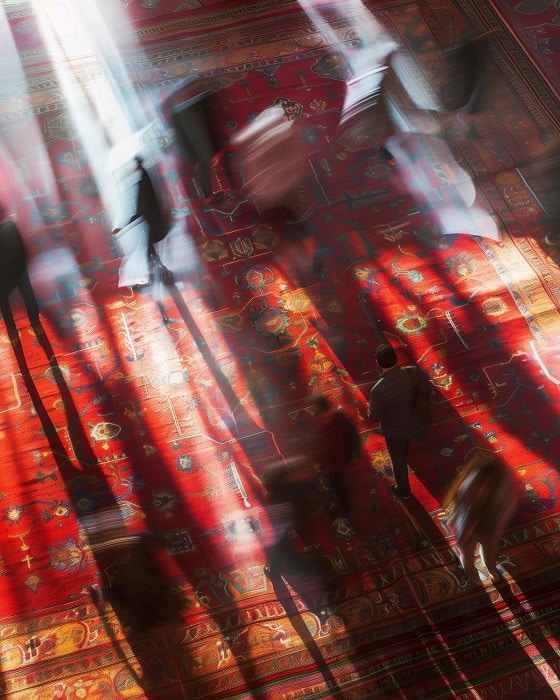
Each label has built a reputation by landing on official fashion week calendars, dressing A-list stars, or collaborating with globally recognized brands, all while staying rooted in Arab heritage. Some trace their craft to a grandmother’s sewing lessons, others to an architect father’s eye for form, a sister’s shared studio, or an old Arabic word passed down through generations. For HINDAMME and Abadia, that heritage is written directly into the name: one an old Arabic term for perfect harmony of form, the other a fusion of the words for timelessness and desert. All the labels work primarily in womenswear; with HINDAMME, designs for a gender-fluid wardrobe, a reminder that the region’s fashion renaissance isn’t building toward one silhouette or one customer, but toward a broader idea of what Arab design can house. Across all seven, the same throughline holds: inherited craft, turned into design philosophies built for how people actually move through the world today.
BOUGUESSA
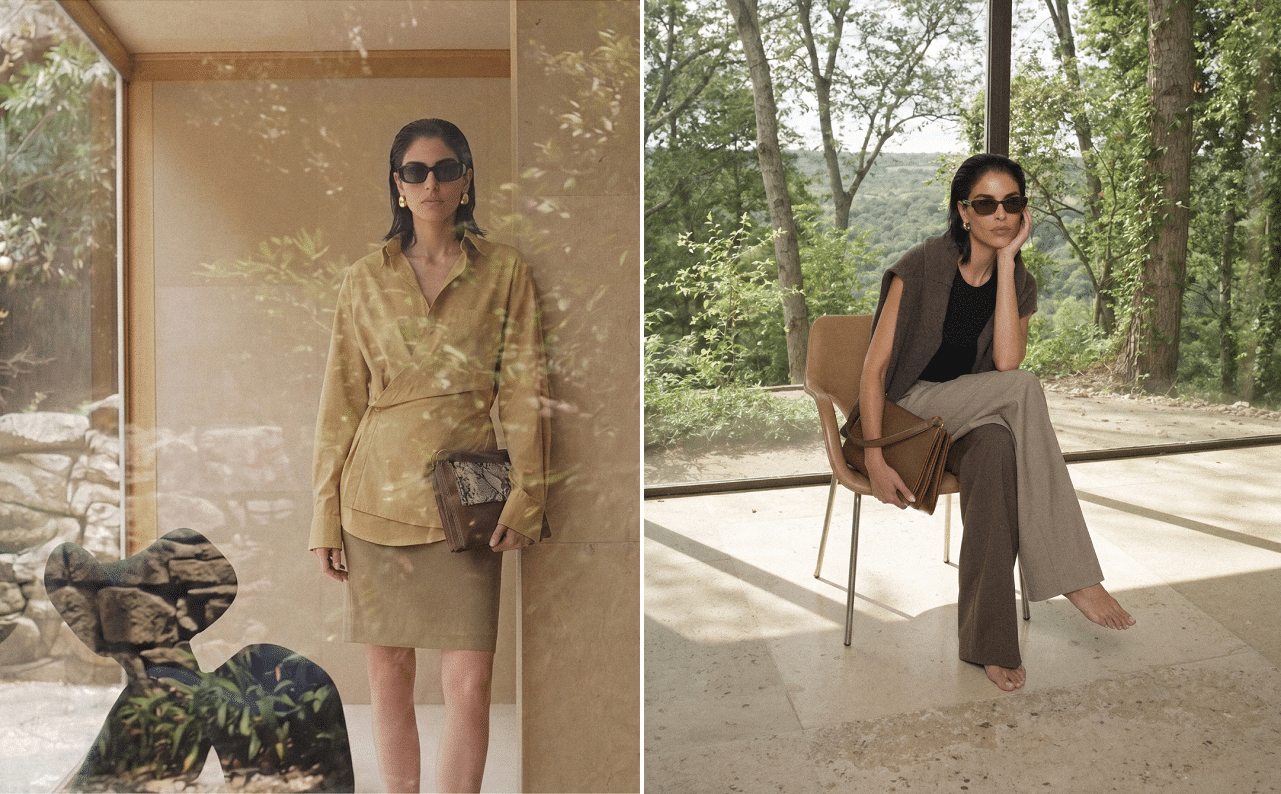
Images: BOUGUESSA Instagram
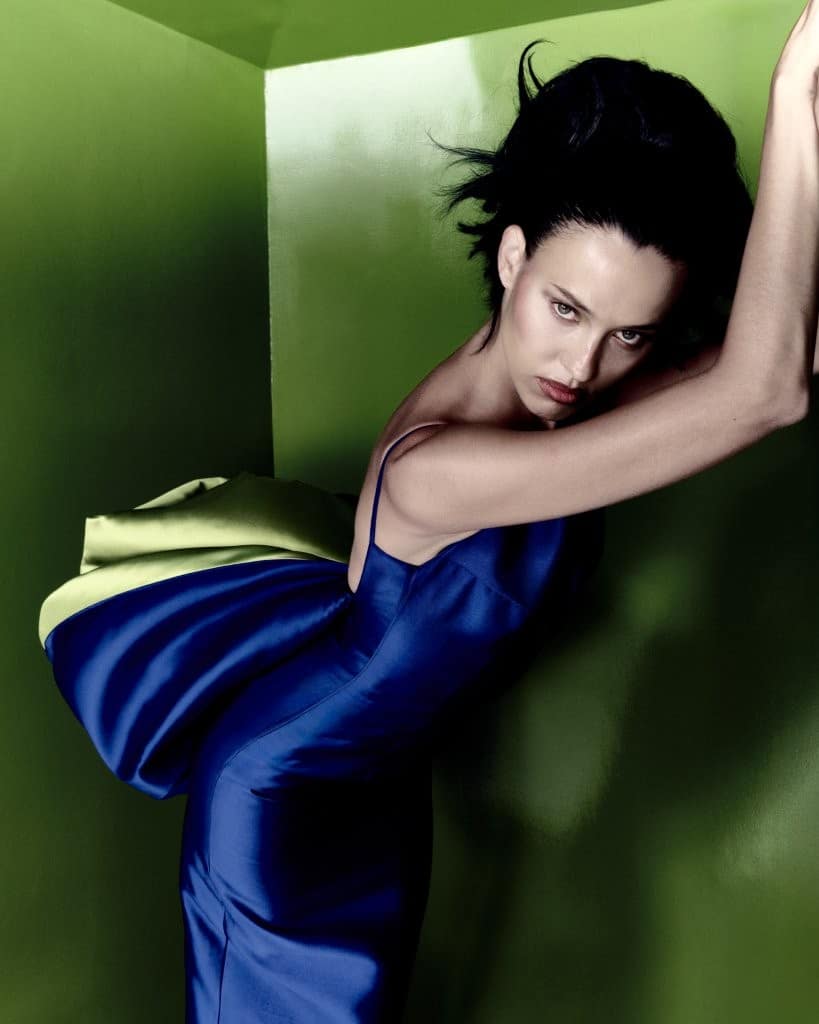
A decade after launching from Dubai Design District in 2014, Bouguessa unveiled a reimagined identity and a new online storefront at the end of September 2025, with the SS26 collection debuting straight on the brand’s own site rather than through a seasonal showroom or third-party retailer. The label has also leaned into hospitality and music lately: a first-ever fashion capsule with Emirati hotel chain Jumeirah, the Heritage Club, and uniforms designed for the UAE National Orchestra’s seasonal debut.
Faiza Bouguessa’s minimalist silhouettes trace back to her childhood in France, where she grew up learning how to knit and sew from her Algerian grandmother. That lineage is still visible in her geometric kaftans, which translate Middle Eastern silhouettes into minimalist Western tailoring, a signature she calls the “global abaya.” Within a year of launching, Vogue Italia invited her to present at Milan Fashion Week, marking the global abaya’s runway debut. Beyoncé’s styling team later commissioned a kaftan from that collection.
RAMI AL ALI
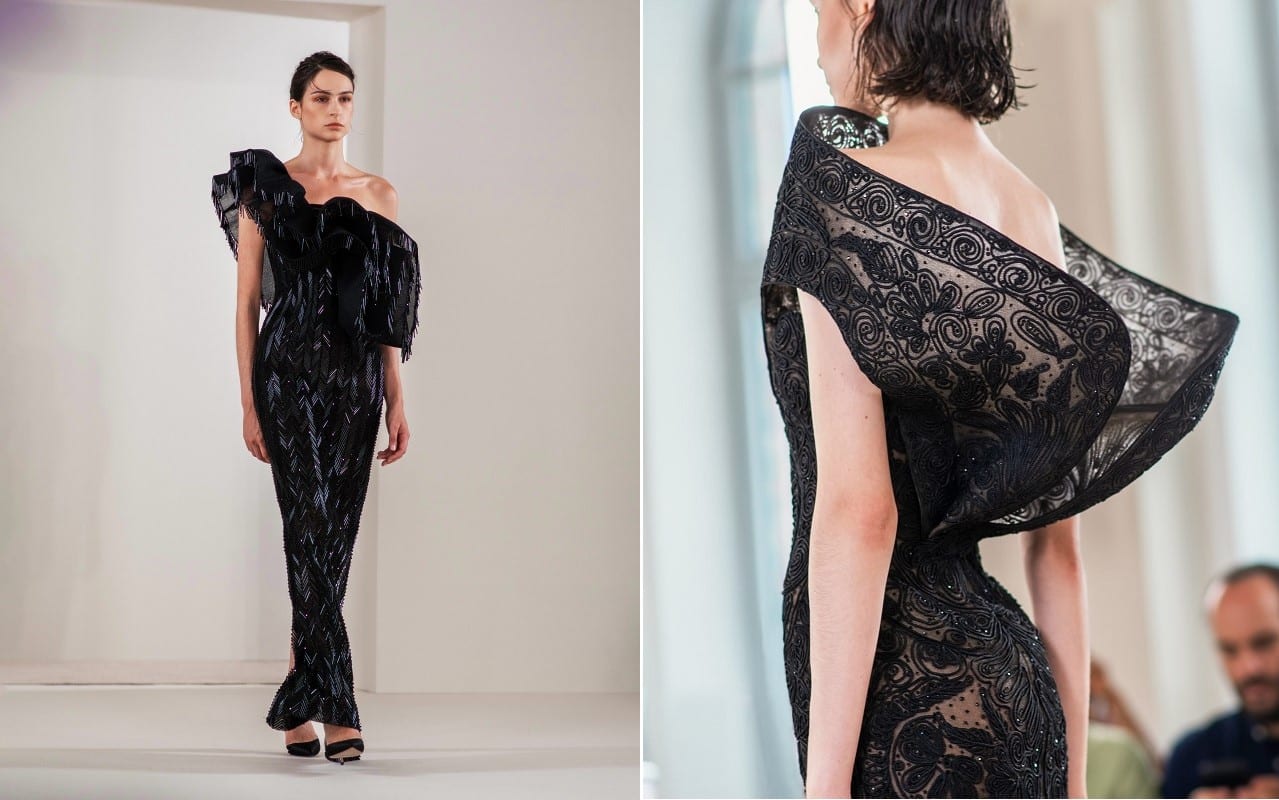
Images: RAMI AL ALI Instagram
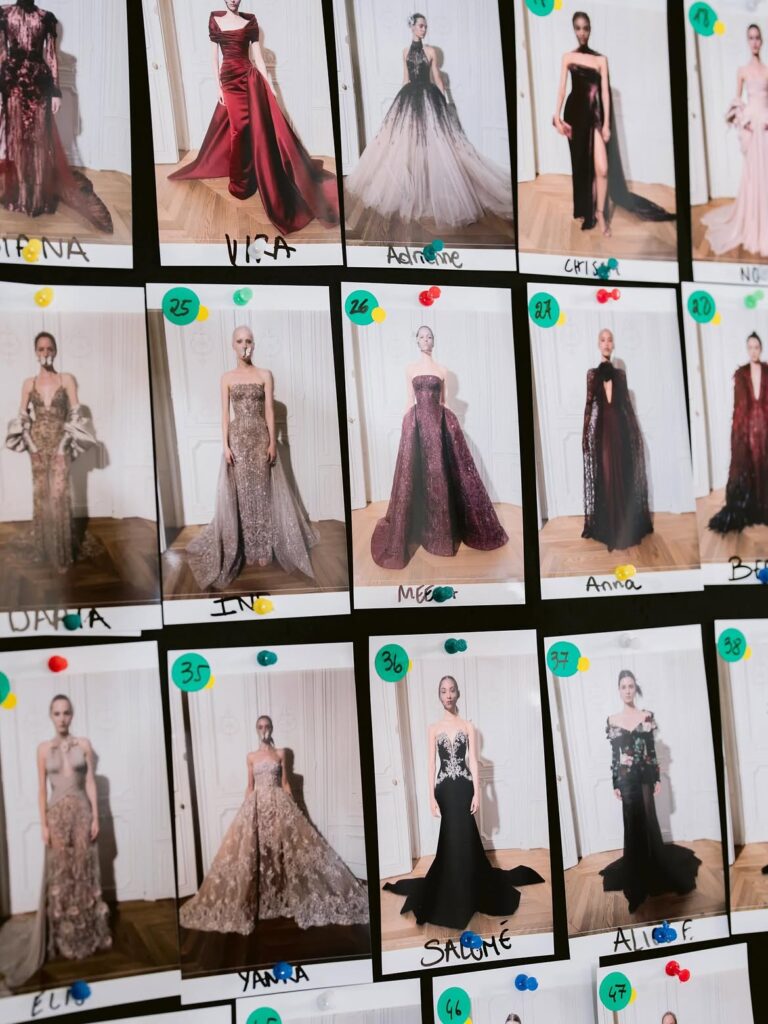
At Paris Haute Couture Week’s FW27 show, Rami Al Ali sent out “Threads of Light: A New Dawn,” a collection built around the ties that have shaped the Arab world’s cultural landscape for centuries, with a color palette that reads like sunrise over the desert. It’s couture that argues beauty and hope persist even in moments of uncertainty, and the latest chapter for a designer who made history as the first Syrian designer on an official Paris Fashion Week calendar. He’s since dressed Beyoncé, Jennifer Lopez, and Amal Clooney. Syrian-born and Dubai-based, his design instincts came from both parents: his mother’s elegance and appreciation for art, and his architect father’s eye for form.
ARWÁ
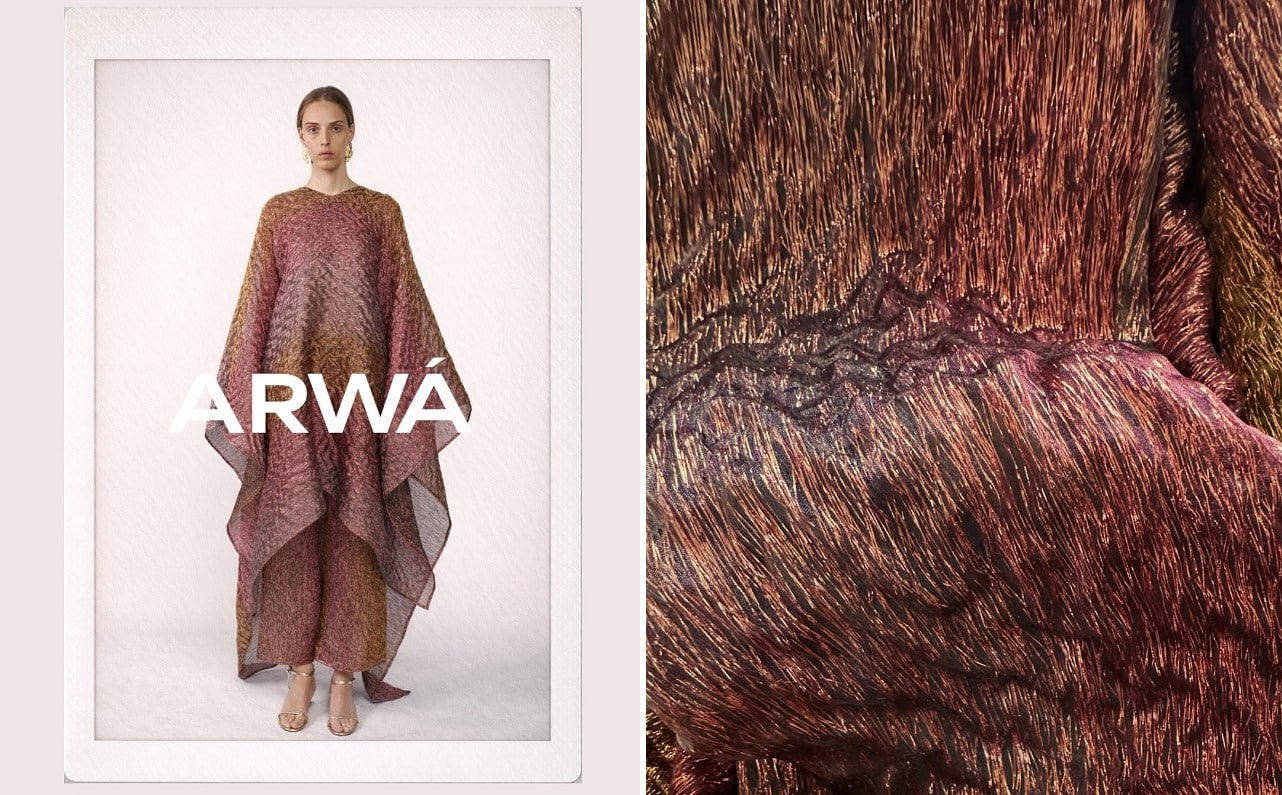
Images: ARWÁ Instagram
A season earlier, at a salon-style show in Riyadh, Arwa Al Banawi had staged her own presentation, “Sahra 02: Riyō Soleil,” around dusk instead of dawn. Two designers, one on a Paris couture runway and the other in a Riyadh salon, both reaching for the edges of daylight to mark a moment of change.
Arwá was founded by Arwa Al Banawi, who coined the term “The SuitableWoman” with her debut collection, “The Suitable Collection,” a line of ready-to-wear suits and shirts built to move from day to night, presented at Fashion Forward Dubai in 2015. The passion to create this line traces back to her youth flipping through her mother’s collection of ’80s Vogue magazines. The day to night philosophy has carried through many of her other endeavors in the fashion world since.
Earlier on, the label built a reputation on statement tees printed with Arabic script, bringing a streetwear sensibility into direct conversation with its more tailored instincts. This duality carries into the label’s collaborations with western brands. She customized a Levi’s Trucker jacket as part of the brand’s celebration efforts, trimmed in the gold associated with traditional royal Saudi dress and stamped on the back with the same red Arabic lettering that first put ARWÁ on the map. That same gold resurfaced in the Adidas capsule, titled “P.E.,” which added suede, leather, and gold foil to the iconic Forum silhouette, with pieces meant for nights out at dinners, parties, and events. A Pepsi capsule, titled “The Saudi Dream,” blended nostalgic beverage branding with local street culture and heritage.
ABADIA
Images: Abadia Instagram
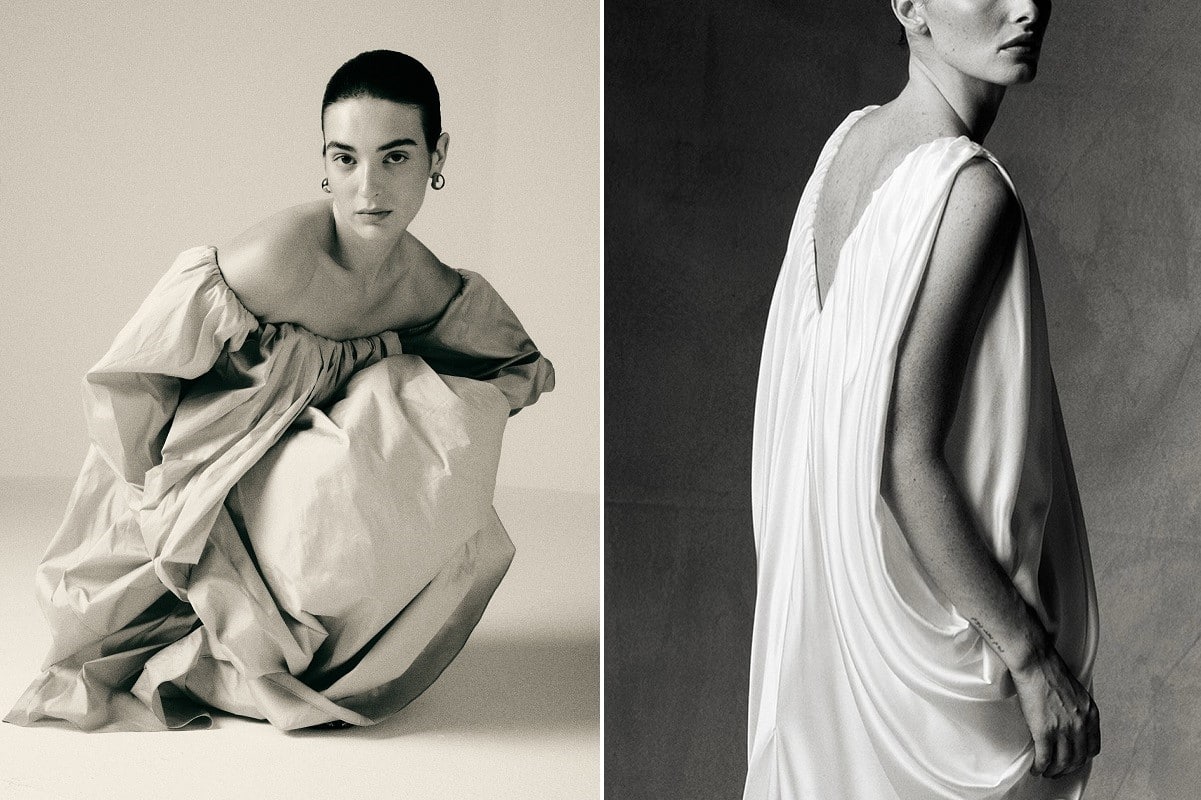
Shahd AlShehail didn’t start in fashion. She spent a fellowship year in India working on poverty-focused development projects, then co-founded Project JUST, a nonprofit built to bring transparency to fashion supply chains. That instinct, for accountability first, aesthetics second, has shaped the brand Abadia.
AlShehail co-founded Abadia with her aunt Naeema Al-Shehail in Riyadh in 2019 as a family-owned house, the name fusing the Arabic words for timelessness and desert. Abadia partners with more than 40 female artisans across Saudi Arabia and the UAE to keep techniques like Sadu weaving and Naqda embroidery alive, a craft international retailers once treated as too traditional to sell. In 2023, it became the first Saudi brand to launch on Net-a-Porter, a milestone that put the label, and the country’s ready-to-wear industry more broadly, on one of luxury retail’s most selective platforms. Today, she says, Net-a-Porter and Selfridges build their buys around the label’s Sadu-woven pieces.
That momentum carried into this June, when the label launched simultaneously at Harrods, Selfridges, and Browns in London, marking its biggest UK expansion yet, anchored by a London residency built around its pre-fall 2026 collection.
HINDAMME
Images: HINDAMME Instagram
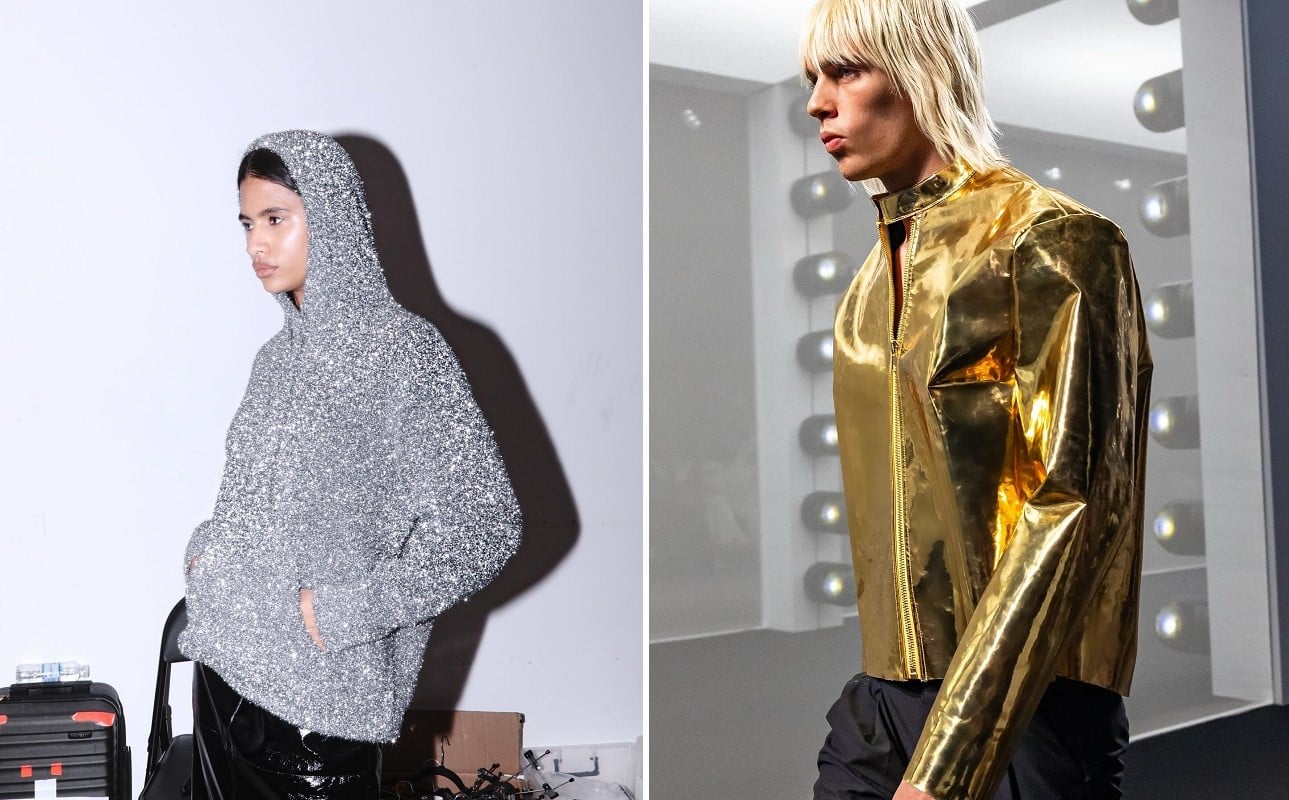
In 2016 Mohammed Khoja launched HINDAMME, an Arabic term describing perfect harmony of form, and made it a mission statement: East meets West, filtered through his own experience as a third-culture creative moving between
Al-Khobar, Houston, Paris, and London.
The label made international headlines early with a black bomber jacket stamped
“June 24, 2018,” marking the day Saudi women were legally allowed to drive.
The Netherlands’ National Museum of World Cultures bought it, and HINDAMME has since been archived by the V&A. In May 2026, Khoja returned to one of his longest-running muses, releasing a collection with AlUla’s Madrasat Addeera, co-created with more than 26 local artisans and drawing on petroglyphs found at sites like the ancient library of Jabal Ikmah. His fall 2026 show, “Hejaz,” went
further still, tracing his father’s homeland through mohair, red vinyl, and kufiyah-inspired sculptural headpieces, closing on a model performing a traditional Hijazi bridal walk in fuchsia.
RAZAN ALAZZOUNI
Images: RAZAN ALAZZOUNI Instagram
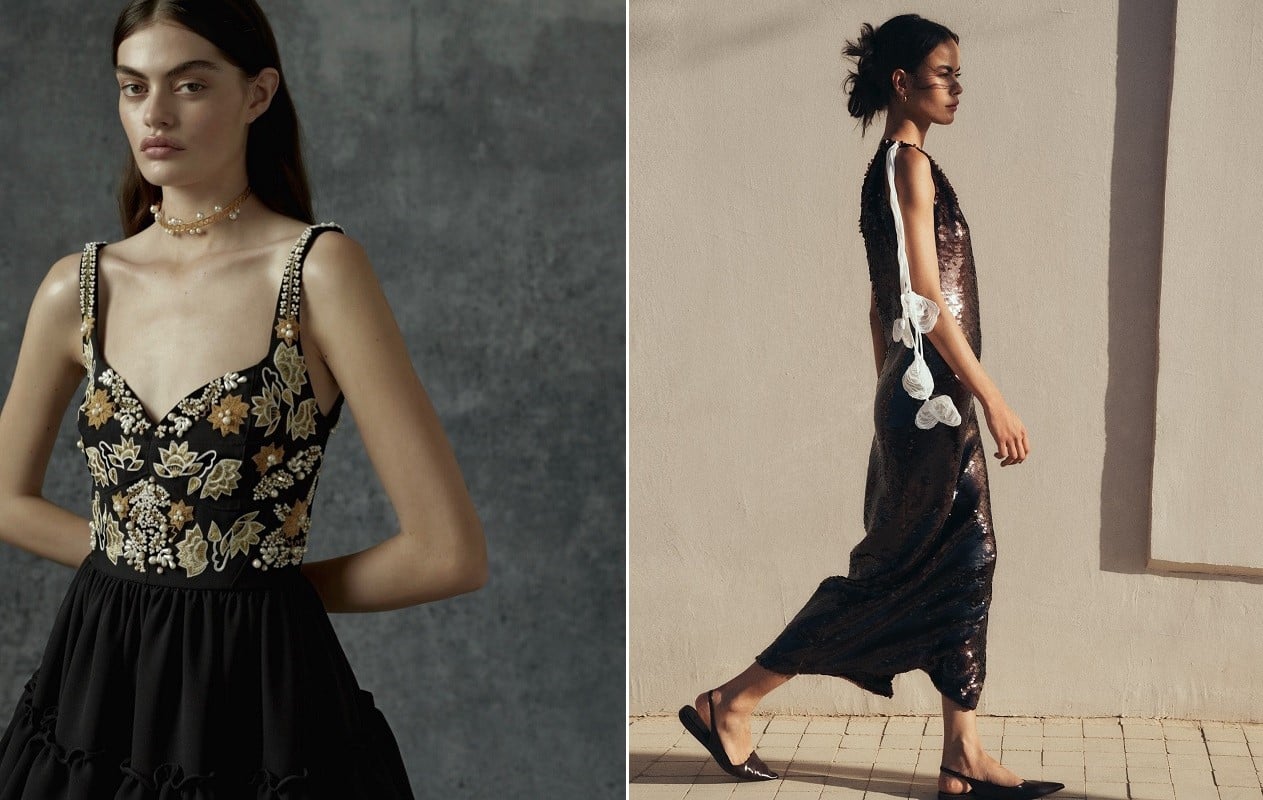
Embroidery, hand-beading, and sculptural silhouettes built for movement have carried Razan Alazzouni’s various collaborations: a Disney collection reimagining Snow White (Disney’s first-ever partnership with an Arab designer), custom
embroidered artwork for Piaget’s Possession Decor Palace line, and shoes designed alongside René Caovilla. This year, her work is also featured in Ithra’s “Continuation of Craft” program on Saudi traditional costumes, a nod to how
deliberately her pieces are rooted in inherited technique even as they read as thoroughly contemporary.
Before she ever cut fabric, Alazzouni was studying sculpture and papermaking at Tufts University in Boston, a background that still shows up in how she talks about her clothes: not as garments so much as a kind of architecture for the body. She returned to Al-Khobar in 2008 and, with her sisters Salwa and Raya, opened a manufacturing studio inside a 1950s house, later expanding to Riyadh.
Salwa now runs the business side as CEO, Raya leads visual arts, and the whole operation remains, by design, a family one.
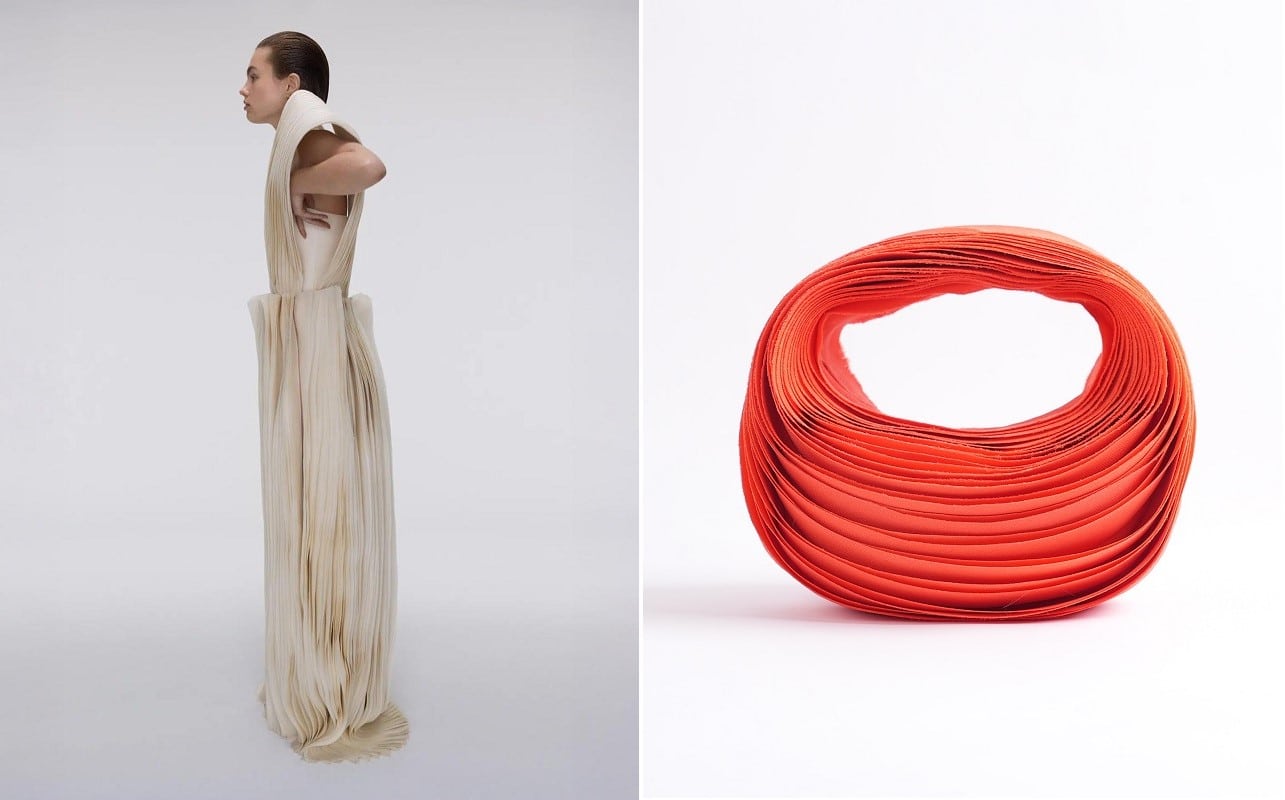
Alazzouni calls her garments “a kind of architecture for the body.” A continent away in Doha, Yasmin Mansour builds toward that same idea from the outside in: her pleating and architectural silhouettes take shape the way an architect builds a structure, drawing on landmarks like Jean Nouvel’s National Museum of Qatar, its petal-shaped form modeled on a desert rose mineral.
YASMIN MANSOUR
Images: YASMIN MANSOUR Instagram
In June 2026, Mansour’s designs landed at Harrods for the first time, with an Ounass partnership following later in the summer, retail moves she’s described as intentional rather than fast, chosen to reflect the brand’s values rather than to chase scale. She opened her first atelier in Doha in 2014.
Her eveningwear has drawn recognition. She won the Eveningwear Prize at Fashion Trust Arabia and went on to become the first Egyptian designer selected as a semi-finalist for the LVMH Prize, one of 20 chosen out of 2,300 applicants in 2025. With a craft for structure, Mansour has added an unexpected but distinctive category to the label: her Cycas handbags, built with the same signature mille-feuille layering technique as her gowns, have become their own line following two years of soft-launching through preorders across the Gulf.
These days she moves between Doha and Paris, where Qatar Museums’ innovation hub M7 hosted a dinner in her honor during Paris Couture Week, staged in an apartment on Rue de Rivoli and drawing guests like Natalia Vodianova and Giambattista Valli. It’s the kind of room most designers spend a career trying to get into. Yet what grounds her hasn’t changed: she still returns to the classic Egyptian films and old Hollywood she grew up sketching, the same references that shape her draping today.
The map of where fashion labels are born and thrive is expanding, and these seven MENA-based designers are redrawing it in real time, one collection, collaboration, and city at a time.