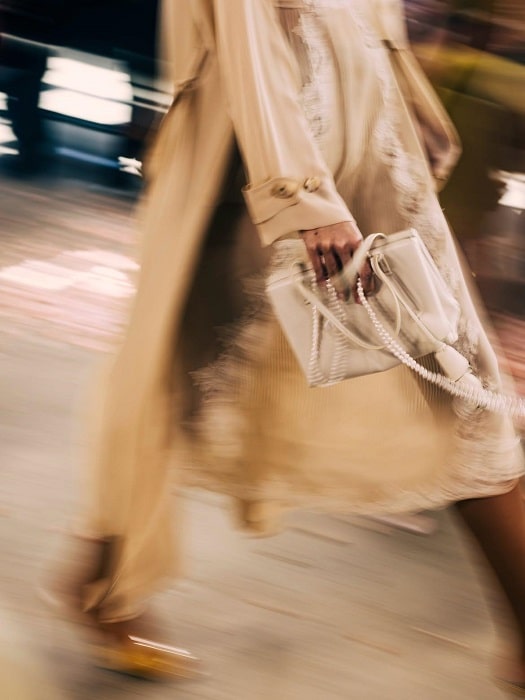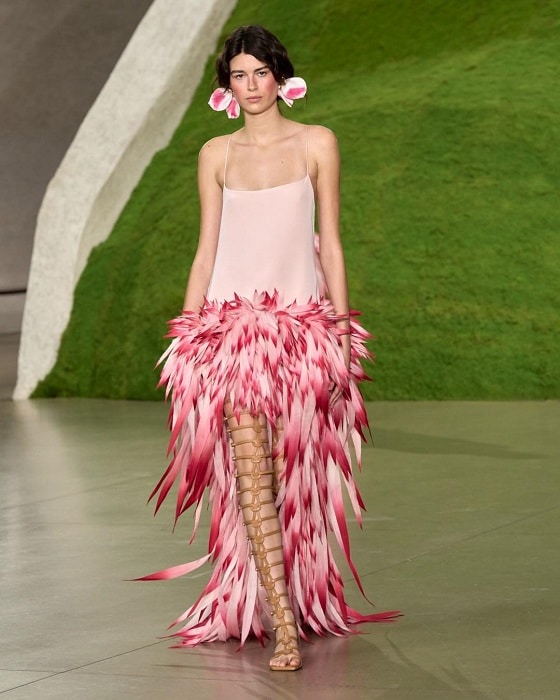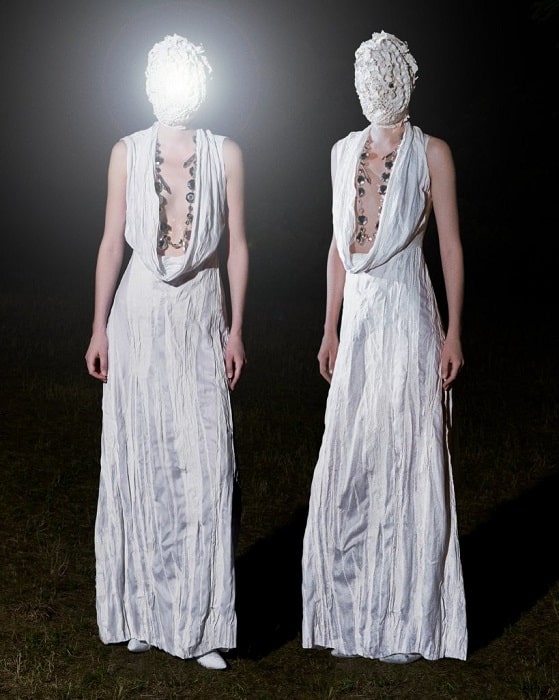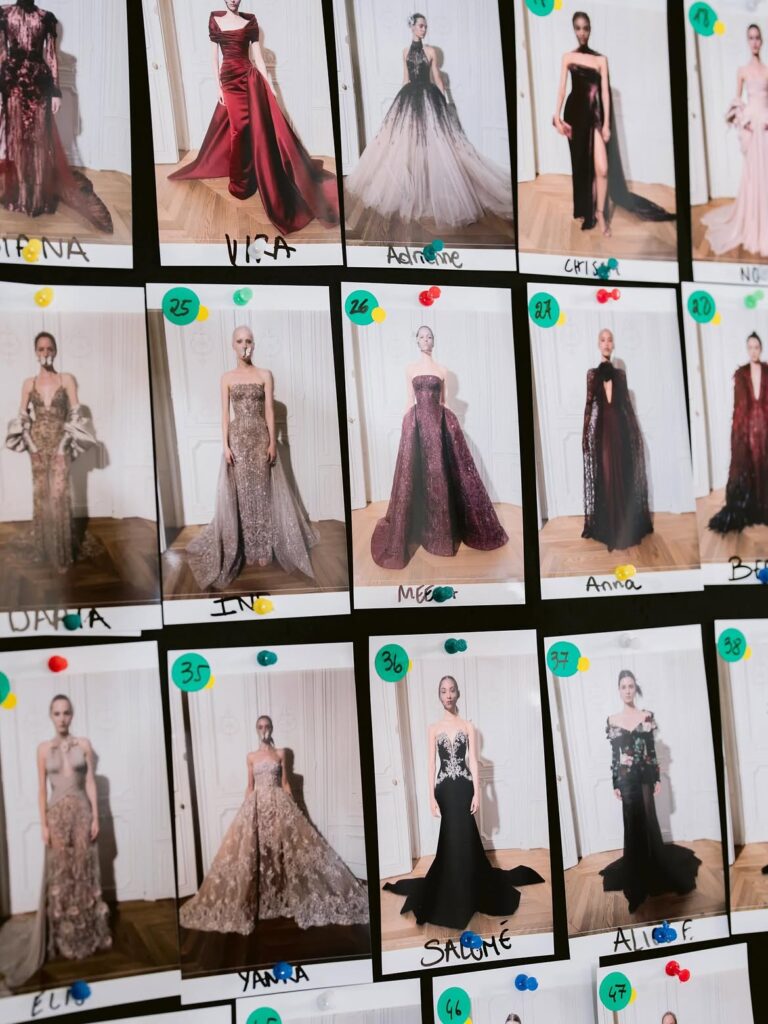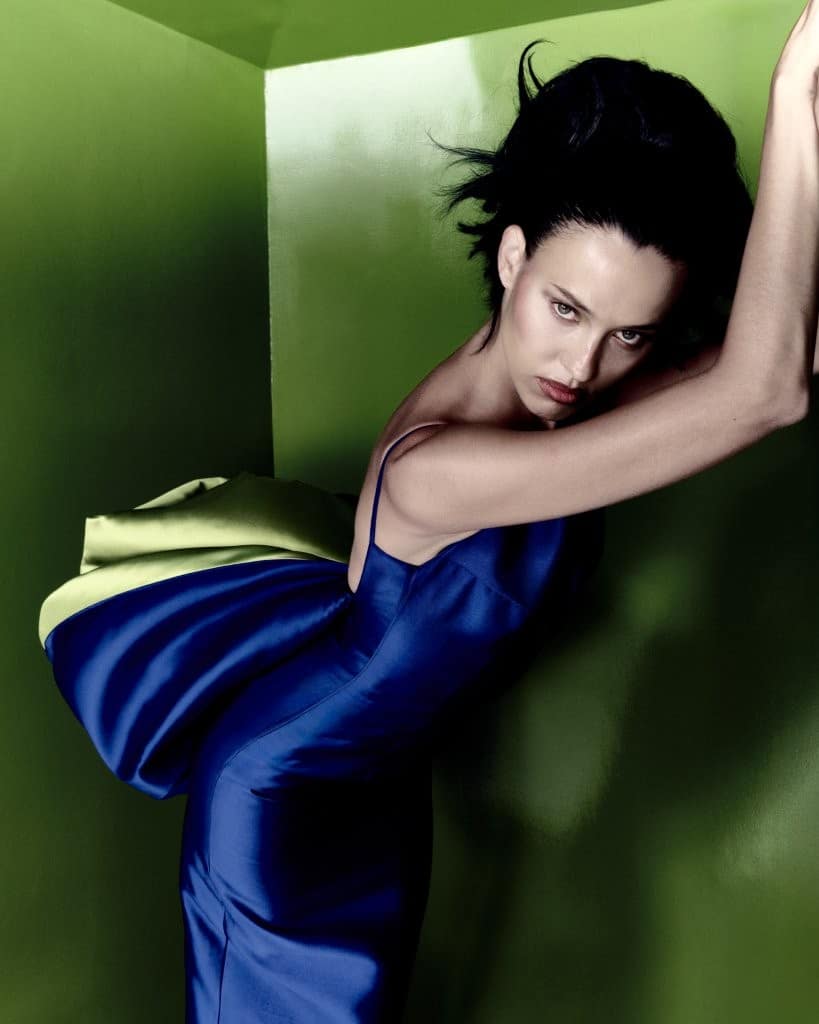
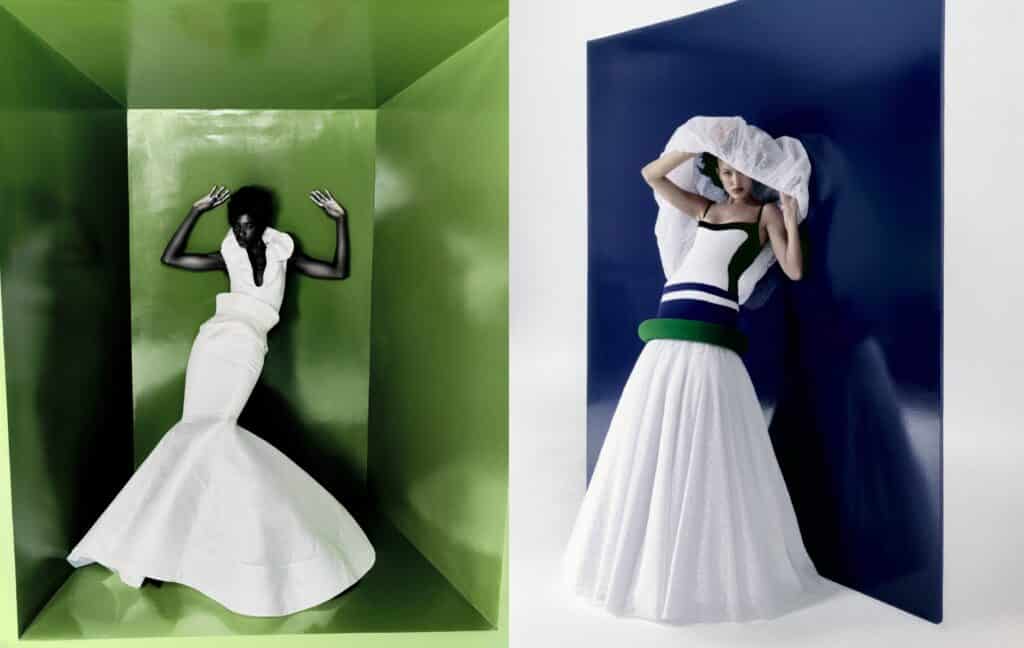
Shaped by two cities, it draws on Beirut, with its deep couture lineage, for the softer, more embellished pieces: intricate detailing and femininity. Dubai is present in the scale, the architecture and the silhouettes that demand space. Connecting the two is a ladybug, a symbol that kept appearing in Krayem’s life as he entered a new chapter as a designer, structuring twenty couture looks.
The image credit: Fouad Tadros

The image credit: Fouad Tadros
Each silhouette feels less like a refinement of the past than a proposition for what Oscar Kraye might become. There’s something both freeing and exposing about working that way. I spoke to Krayem about what it means to build a couture house in real time.

The image credit: Fouad Tadros
On Beirut’s couture lineage — was there ever a pull to sit within it?
I’ve always had enormous respect for Beirut’s couture heritage. It’s impossible not to admire the designers who put the city on the global fashion map. At the same time, I never felt the need to fit into an existing lineage. My ambition has always been to contribute something of my own. I hope Lady B reflects where I come from, while speaking in a voice that’s distinctly Oscar Kraye.
Lady B begins without an archive. Did that feel liberating, or did it create pressure?
It felt incredibly freeing. I always knew what Oscar Kraye stood for creatively. The challenge wasn’t defining the identity; it was expressing it in a way that felt true to where I am today. Lady B became the collection that allowed me to do that, through both the story it tells and the confidence of its silhouettes and colour.
Beirut for softness, Dubai for scale — was that contrast planned?
It wasn’t something I consciously planned, but it wasn’t accidental either. Beirut and Dubai have both shaped the way I see design for years, so it felt natural that those influences would come through. Looking back, I can clearly recognise Beirut’s softness and Dubai’s boldness woven throughout the collection.
The ladybug is an unexpected foundation for a couture collection. What convinced you it could sustain an entire narrative?
I realised the ladybug wasn’t just an interesting image. It had been appearing in my life long before I started the collection. The more I designed, the more I understood that it wasn’t there to inspire one dress or one detail. It became the thread that connected every idea and gave the collection its meaning.
There’s a constant dialogue between delicacy and structure throughout. How did you navigate that?
For me, those two ideas were never separate. Every look began with the same intention, and from there it naturally developed into what it needed to become. Some pieces leaned into softness and fluidity, while others called for stronger lines and sculptural forms. I trusted the design to tell me which direction it wanted to go.
Were there pieces that ended up defining the collection more than you expected?
Definitely. A few pieces became much more important than I expected. By the end of the collection, they no longer felt like individual garments – they felt like the beginning of something I want to keep developing.
Three or four collections from now — what do you hope people recognise as unmistakably Oscar Kraye?
I hope people begin to recognise the way I think about design. Not through one signature silhouette or one particular detail, but through a consistent point of view. If someone can look at a collection and immediately feel that it’s Oscar Kraye, then I know I’m building something lasting.