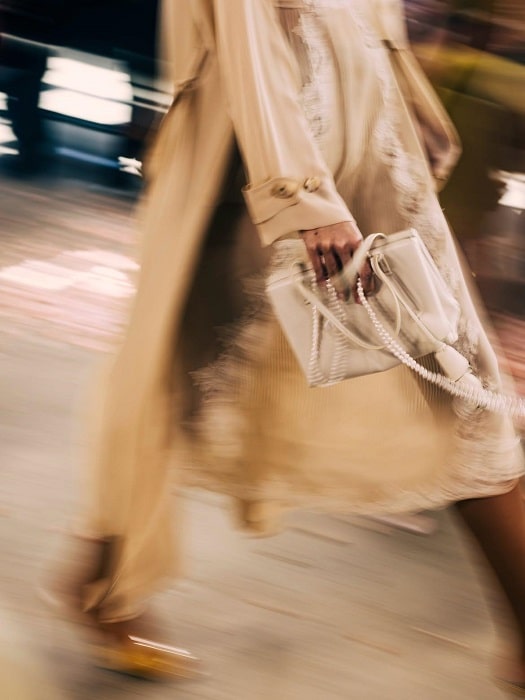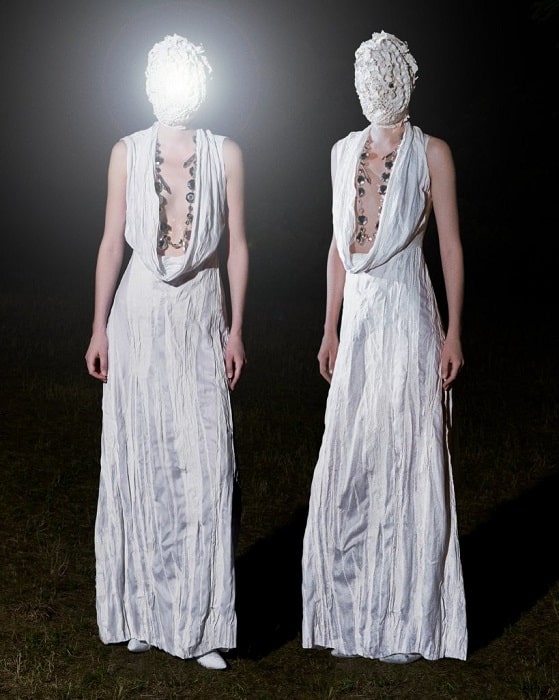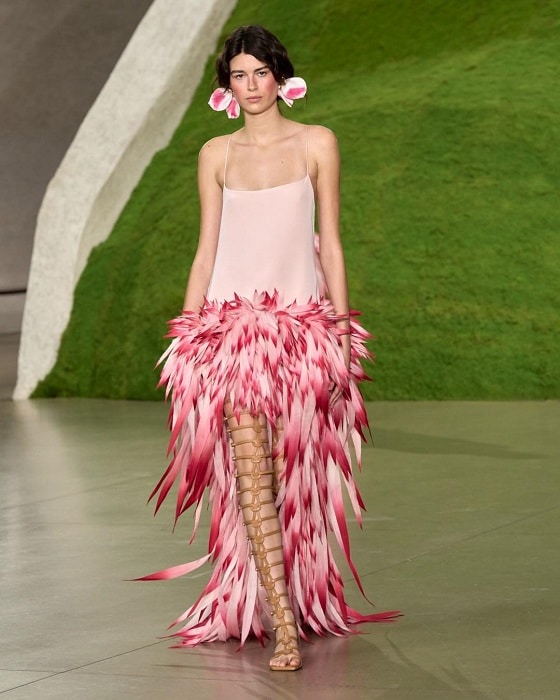
The label’s SS27 show, Behesht, is Cult Gaia’s second runway show, arriving as Act II to their previous season. Each show enriches the other, one setting the emotional foundation, the other carrying it forward.
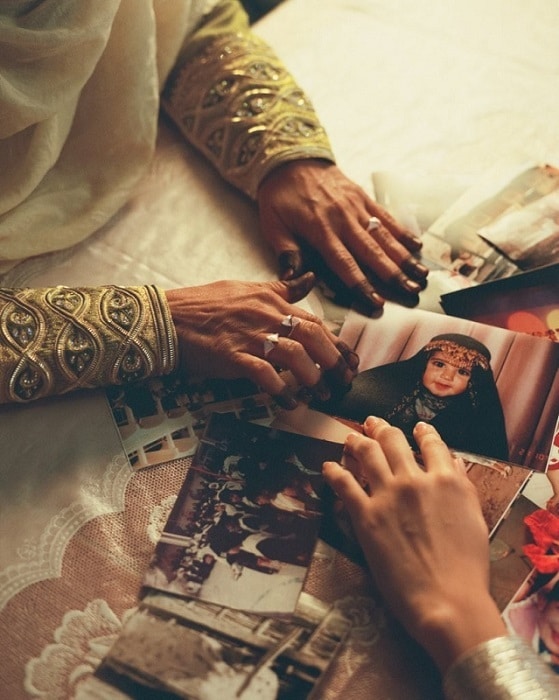
This past February, founder Jasmin Larian Hekmat staged Cult Gaia’s runway debut at an Art Deco venue in Brooklyn, months after losing her grandmother, “Mommy Aghdas.” The FW26 show, Shirzan, Persian for “lioness,” opened with her grandmother’s voice: an adaptation of Marzieh’s “Sooratgareh Naghash-e Chin,” a song about being undone by beauty so powerful it alters you irreversibly. Hekmat has said her grandmother’s voice is the “fiery material” she works from, one that carries memory, displacement, celebration, and endurance. Behesht, Persian for “heaven,” or “paradise,” comes as an afterlife of that reverence, the point in anyone’s life when hardship settles in after a loved one’s passing, and the question of what grows from it. The show argues that
paradise isn’t the absence of hardship but the rose that grows from concrete, the way a person’s legacy continues to bloom in those who carry it forward. That arc played out in the colors that moved from earthbound neutrals, closed and protected, toward the punctuated colors of a garden in bloom, open and alive. Material grounded the transition with chintz, sheer organza, airy silk, and rustic knits creating sculpture when still and lightness in movement, hardship giving way to bloom.
Walking into the venue felt like stepping into an extension of Cult Gaia’s own retail world. The label’s SoHo store and its newly opened Upper East Side location both echo the same off-white, biomorphic architecture. Curved, organic forms echo shapes found in nature that define the atrium itself. Guests were seated along a winding path on the museum’s first floor. The venue’s architecture would have just about sufficed on its own, but there was additional set design. The centerpiece was a run of grass lining the grand staircase, echoing imagery from the label’s social teaser videos. The show notes made the connection explicit: underfoot, soft satin footbeds were built to feel like walking through grass.
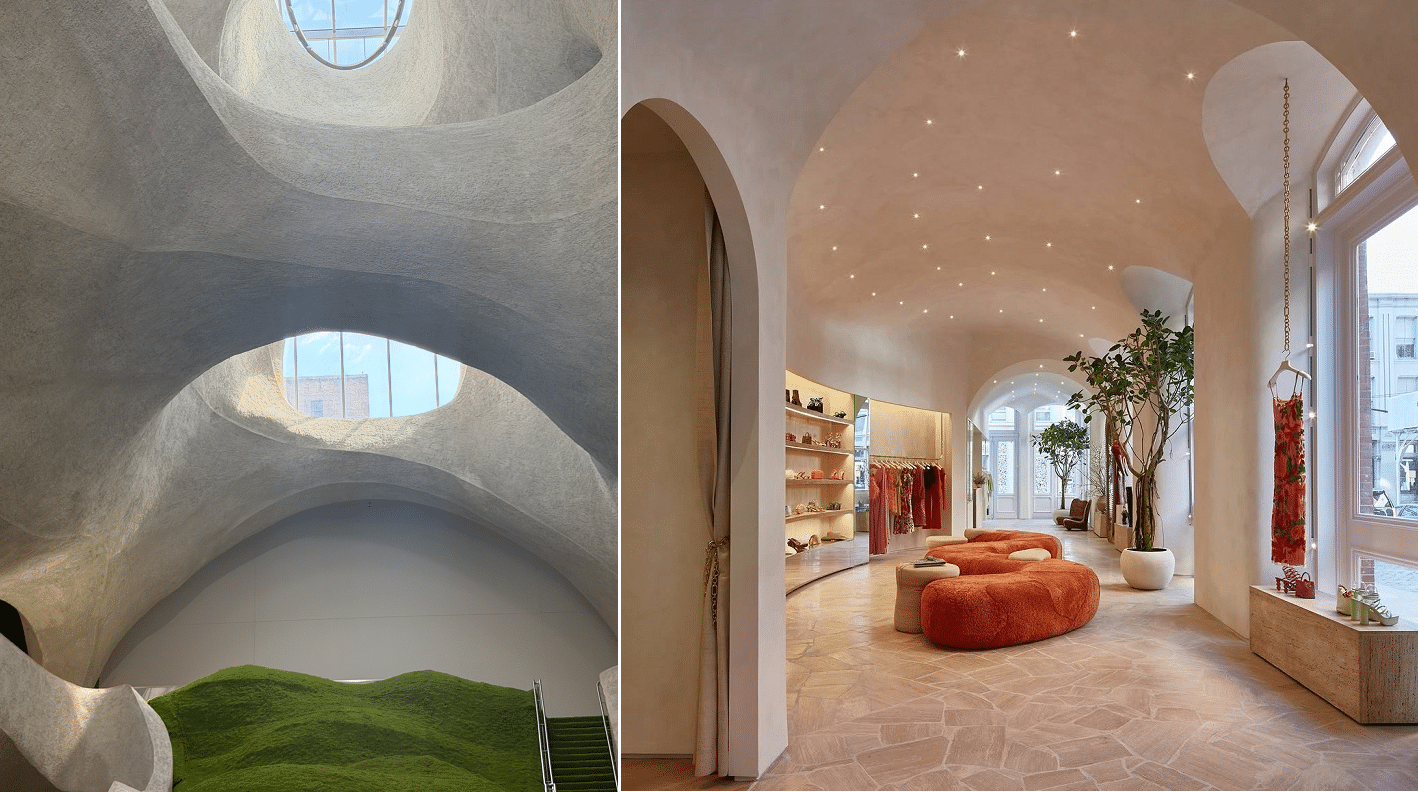
Image 1: Cult Gaia SS27 show venue, Image 2: Cult Gaia Soho retail location from @sugarhousedesign
There were a few exhibits on the walls that surrounded the first floor: seashells, fossilized teeth, aged coral. It was the same raw material language that later surfaced on the runway in the charcoals and earthbound neutrals. A sign posted beside one display asked how small details can breathe new life into what we already know. It’s a detail easy to walk past, but a serendipitous echo of the continuity running through the venue, the label, and their SS27 collection. That idea of new life turned up in the label’s bamboo Gaia’s Ark bag: a signature silhouette, rounded at the bottom so it almost rocks like a boat. The same bamboo appeared in the menswear reshaped into something closer to a briefcase, while other iterations of the bag were spotted among the attendees.
The teaser videos released on social media ahead of the show featured an image of her grandmother seen through a retro View-Master, alongside two fragments of Tupac
Shakur’s poem “The Rose That Grew from Concrete.” The Tupac lines didn’t just preview the show’s motifs, they signaled the hip-hop influence running through the show. That influence showed up most in the runway’s remix of Eric B. & Rakim’s “Paid in Full,” a revolutionary hip-hop track. It also ran through the visual language of the menswear, one of the strongest categories in the collection: sweaters worn with one arm through the sleeve and the other hanging loose, open knitwear worn over bare chests layered with chain necklaces.
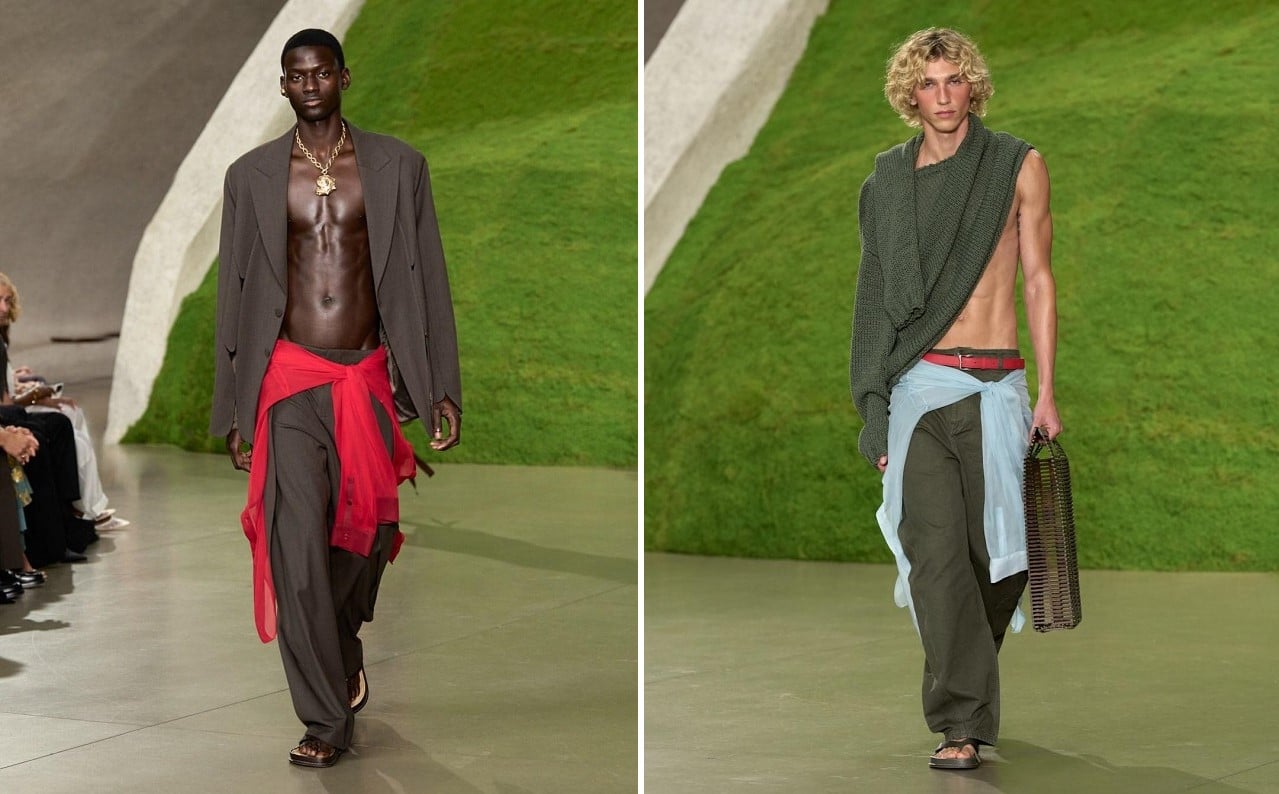
Images: Cult Gaia Instagram
Other looks included metallic wool basket-woven into tweed alongside pieces made from custom hammered armor-like rings, some containing more than 2,000 individually assembled by hand. The color story echoed a garden coming into its own, culminating in a final three looks that gave an almost time-lapse effect of a flower reaching full bloom. It was a duality that ran through the collection as a whole, an effect the show notes describe as sitting somewhere between armor and fragility.
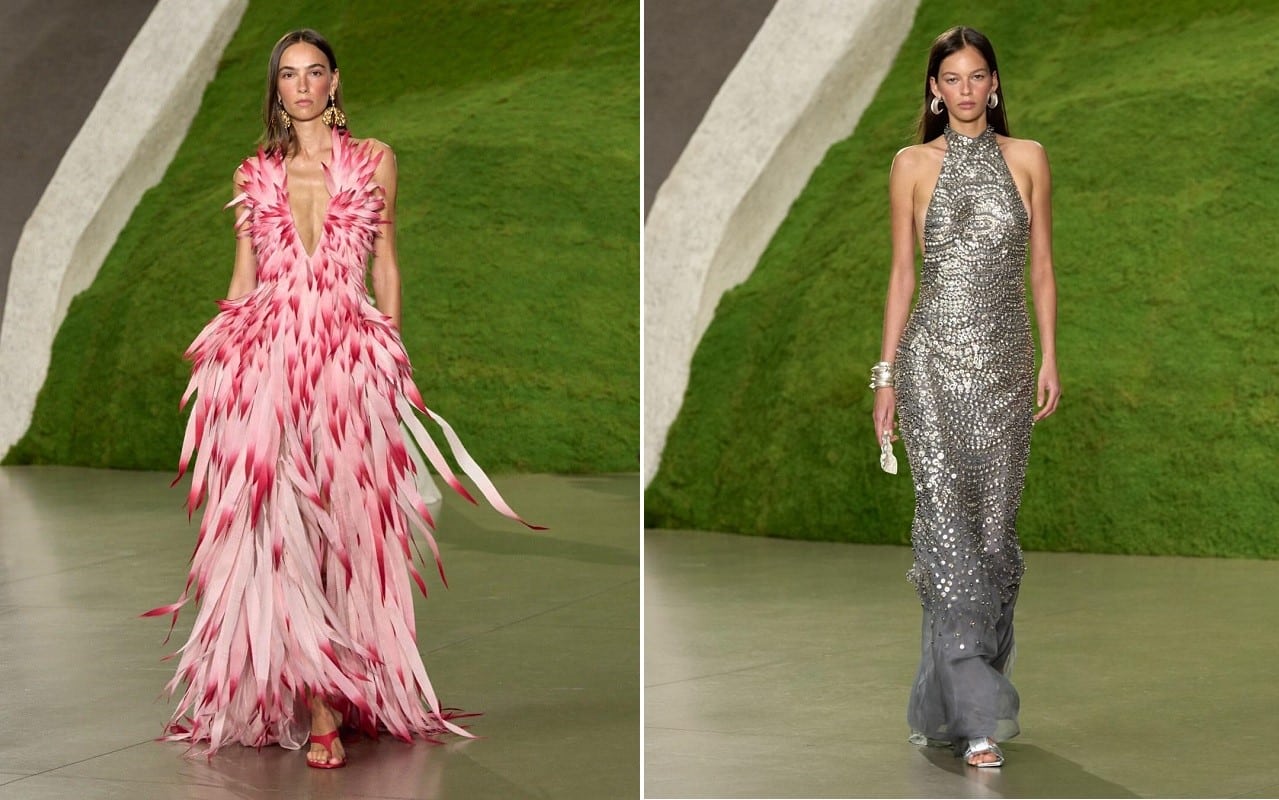
Images: Cult Gaia Instagram
The show’s most prevalent accessory was a wide-brimmed woven hat, one side dipped low while the other pinned up, a shape that echoes both 17th-century military style and the tilted Eugénie hat that became a casual icon of 1930s womenswear. That evolution, the shift from statement to ease, ran throughout the show.
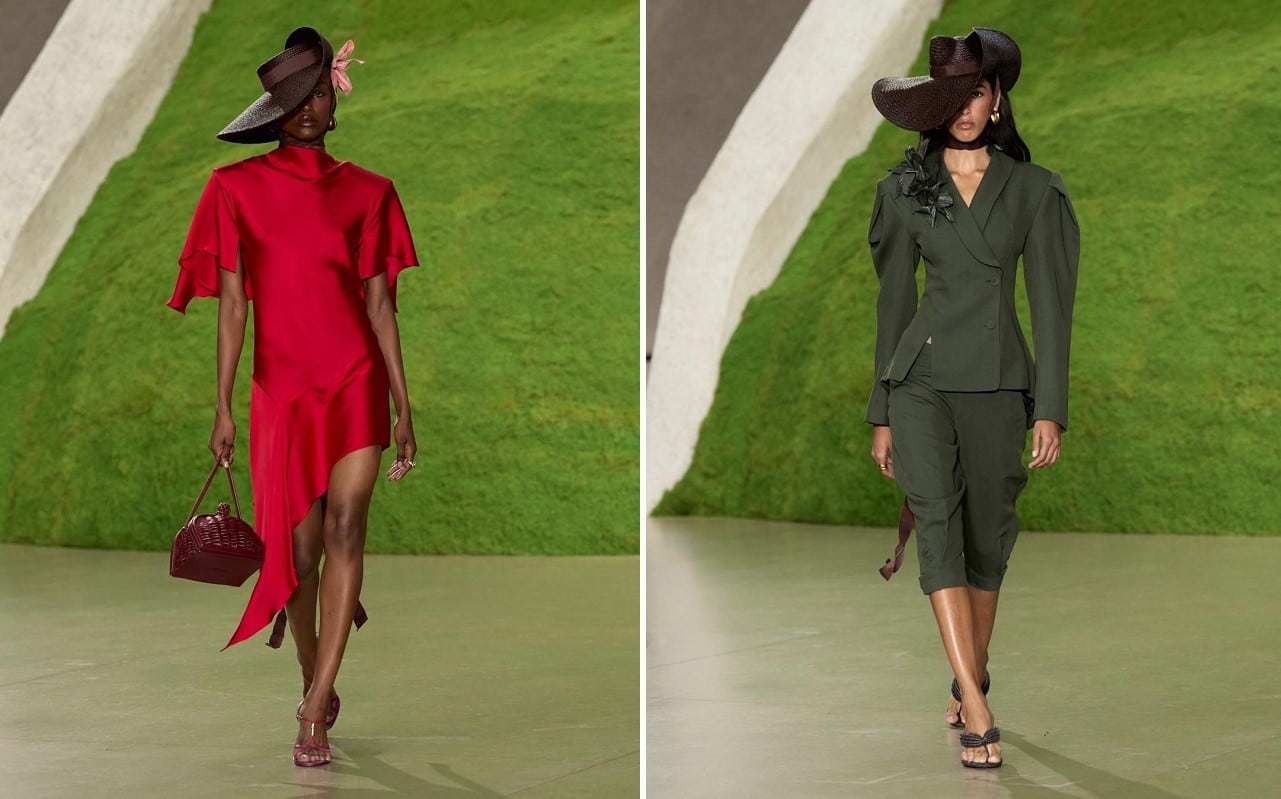
Images: Cult Gaia Instagram
At the finale, Larian Hekmat’s children ran over to hand her a bouquet after flower petals dropped from the ceiling above. The scene transcended attendees into one that felt like Cult Gaia paradise. For a label built on turning the natural world into Objets d’Art, it was a fitting final image. It didn’t take long for euphoric guests to start reenacting the finale, tossing petals into the air themselves. Whether Behesht marks the next chapter in the arc that started with Shirzan, or its perfect close, the show was a transportive reminder that life finds a way through.