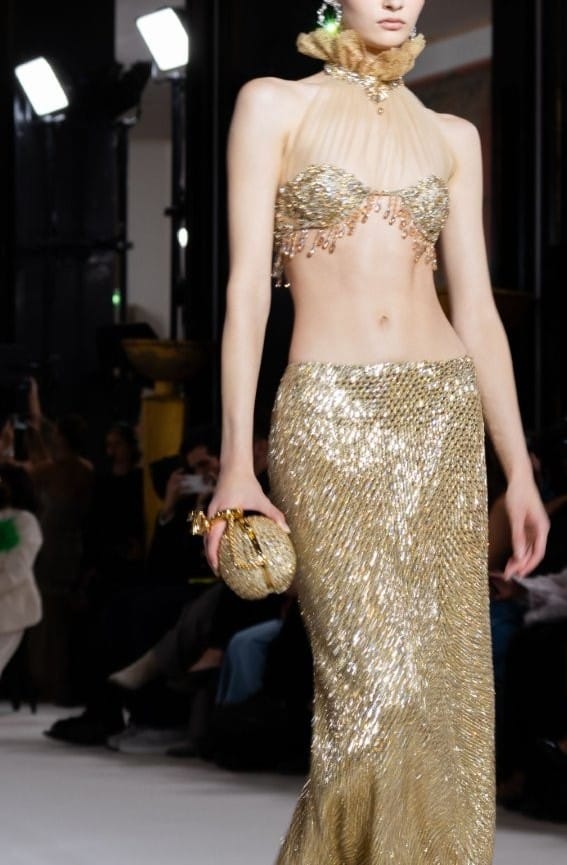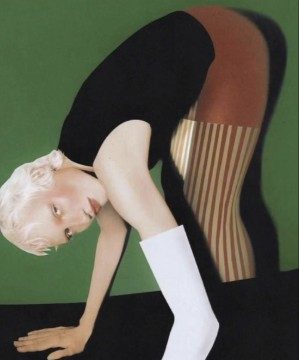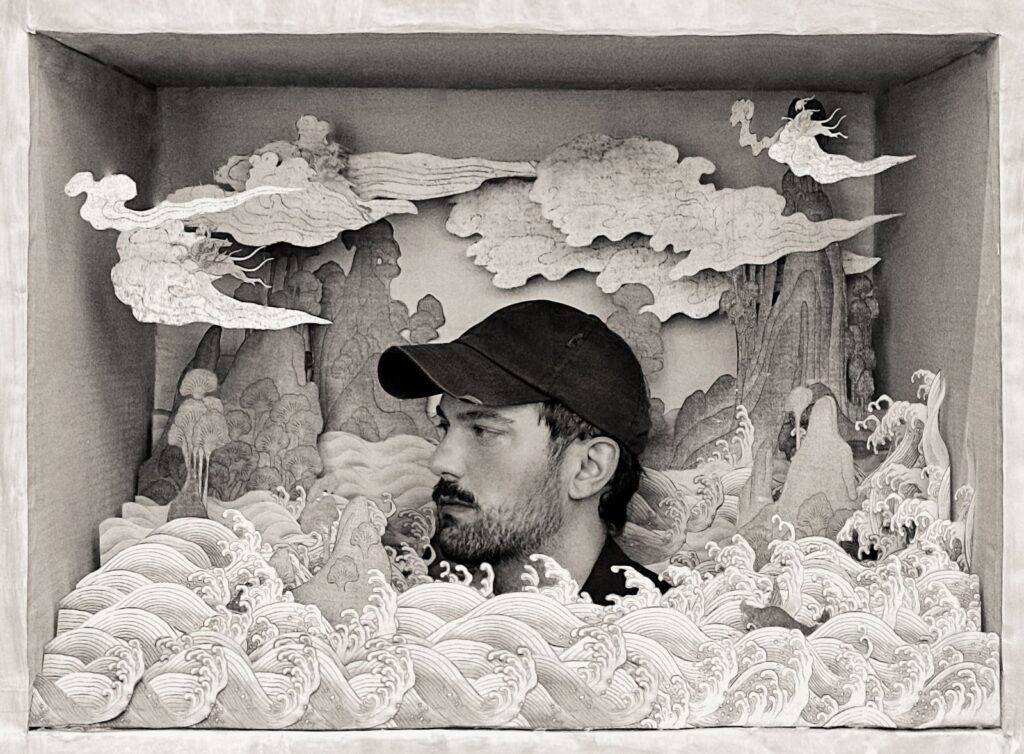
The brief for Dafoe’s GQ Italia magazine cover had called for something clean: a suit, shot in black and white. To Makó, that was an image seen a thousand times. To capture Dafoe’s intellect and his obsession with art, he leaned on his subconscious. “Unconsciously, I tug scraps from the architecture of my personality,” he says of his process, “later seeing a splinter of myself translated into the images.”
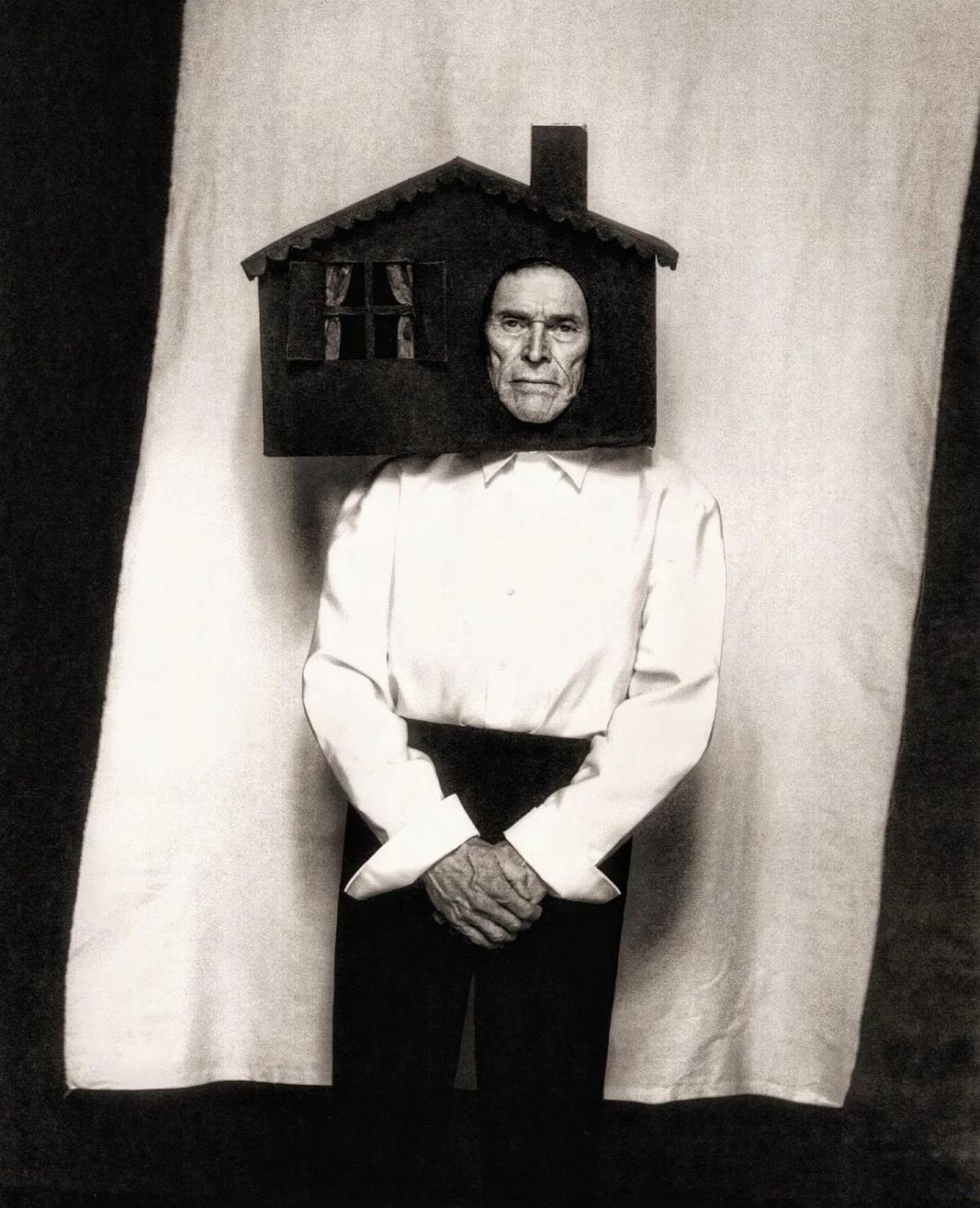
Willem Dafoe for GQ Italia’s Men of the Year cover, 2023. Courtesy of Szilveszter Makó’s Team
Months earlier, on a visit to his grandparents in Hungary, he had come across a picture of himself in kindergarten. It was taken at Farsang, Hungary’s carnival season, when schools and kindergartens hold costume parties as a farewell to winter before Lent. While other children dressed as knights, princesses or clowns, his grandparents, who raised him, believed a child should look “elegant and smart.” So Makó went in his formal school clothes, with a homemade cardboard headpiece modelled on the house they lived in. Decades later, in 2023, a version of that costume sat on the head of an Oscar-nominated actor for a magazine cover.
On set, Makó explained where the house came from and asked Dafoe to embody the emotions of that childhood moment. “Once he understood the reasoning, he trusted the process,” Makó says. “It was as if the air around him changed and he became a stubborn child.” The photograph marked the start of what he calls his “fixation with a face placed inside a house.”
His fixations continue to shift, from the house to the box that frames his recent work. Over the last few months his photographs have appeared on covers across fashion’s biggest magazines, featuring Gigi Hadid, Hunter Schafer and, most recently, Alicia Keys, a run so prolific it has drawn criticism for both its volume and its sameness. “How many more covers is Szilveszter Makó doing this season?” Jo Ellison, a former British Vogue features director who now edits the Financial Times’ luxury magazine, asked on Instagram.
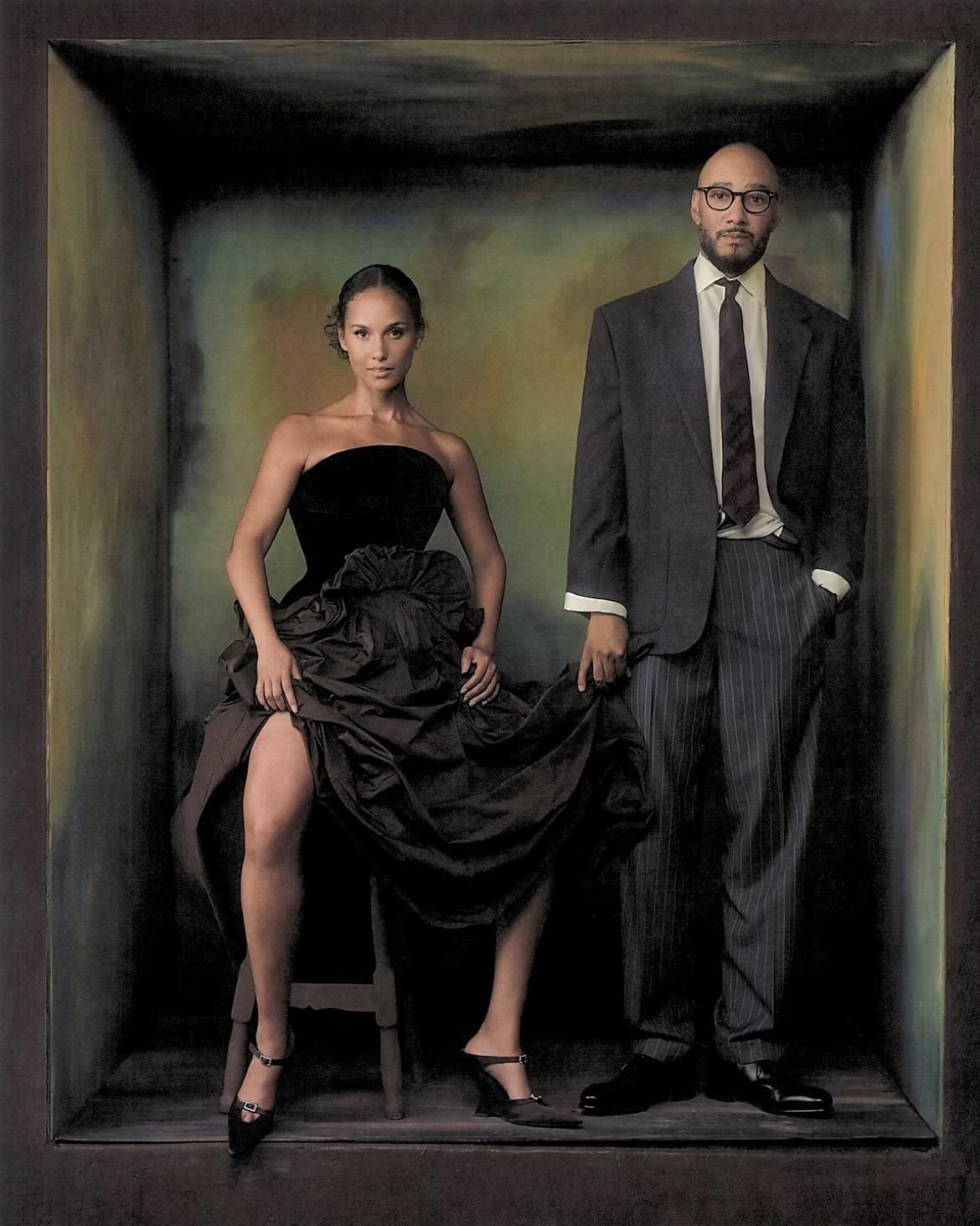
Alicia Keys and Swizz Beatz for Vogue Italia’s November 2026 issue, announcing their first joint album, Lovers Rose. Courtesy of Szilveszter Makó via Instagram
Makó sees it differently. “If there is recognisability, it is the result of repetition over time,” he says, “the persistence of certain instincts, but those instincts do not remain identical, they mature, they narrow, they darken, they soften.” His work follows his life. “My images are the by-product of my passage through the world,” he says, “the traces of what I have noticed and retained.”
The repetition is easy to spot at a glance, but what sets his covers apart is what lies beneath it. Readers get more than a famous face or a magazine’s brand; they get an intimate look at the photographer’s life, and an invitation to keep uncovering the cultural references woven into each set.
The references in Makó’s work are often quiet nods. He moves between the Renaissance, Dada, Bauhaus and folklore, and says he studies the social history behind each one before drawing on it. He places them in the set and on the subject like figures in a novel: “You encounter them and then you leave them behind.” It is a more intentional kind of looking than the endless scroll.
His approach is also a stand against an industry built on speed, where images are produced, posted and discarded within a single news cycle. “I resist that,” he says. Cardboard, painted bedsheets and wood that has lived many past lives make up his sets, each piece reused until he has exhausted every possibility in it. “It is the waste that is the enemy of creation,” he says.
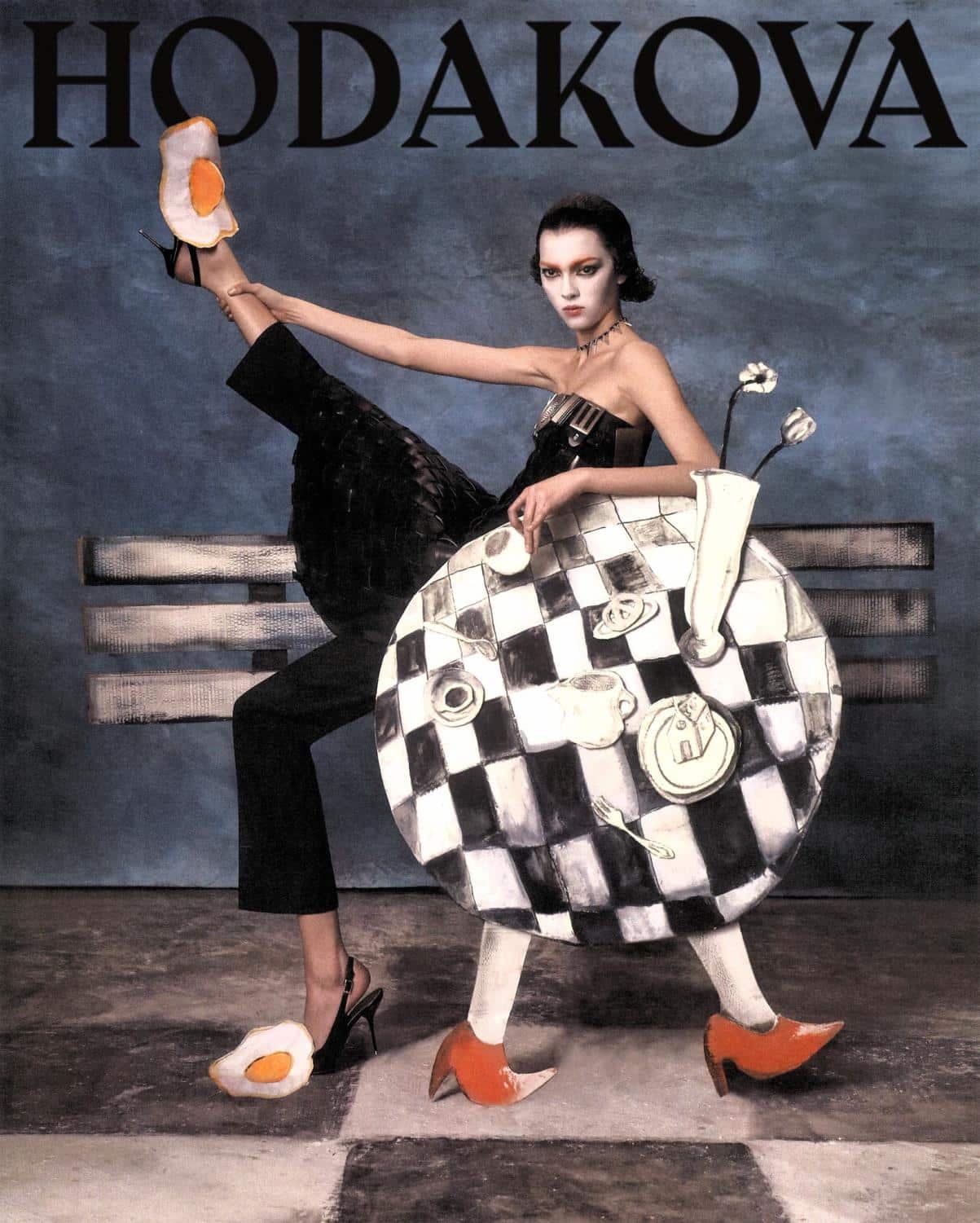
Hodakova campaign, 2024. Makó says this shoot is where cardboard became central to his sets. Courtesy of Szilveszter Makó’s Team
What comes next for Makó is as unknown to the world as it is to him. “What emerges on set is not a repetition of the past, but a reflection of who I have become in the interval between shoots,” he says. His goal, though, stays the same. “After a day on set, I want to end knowing at least one image feels timeless.”