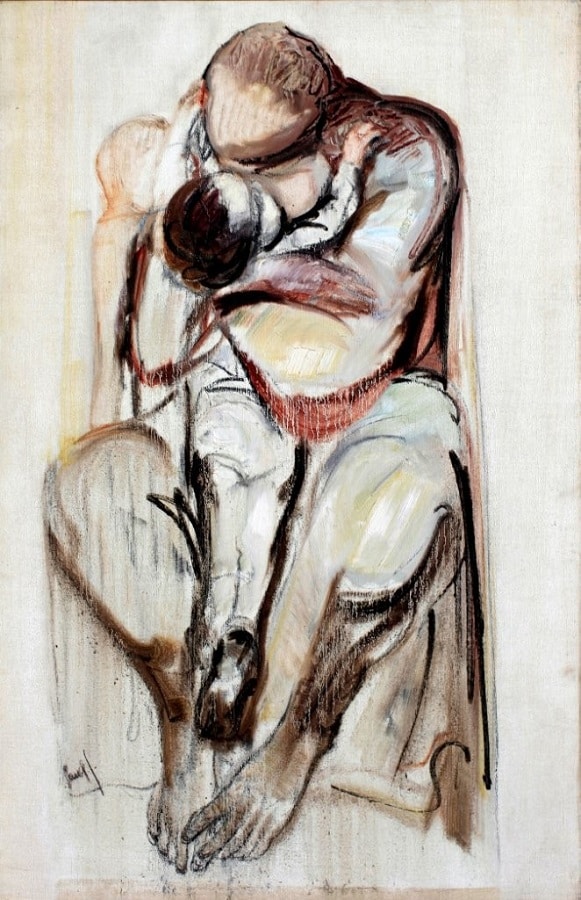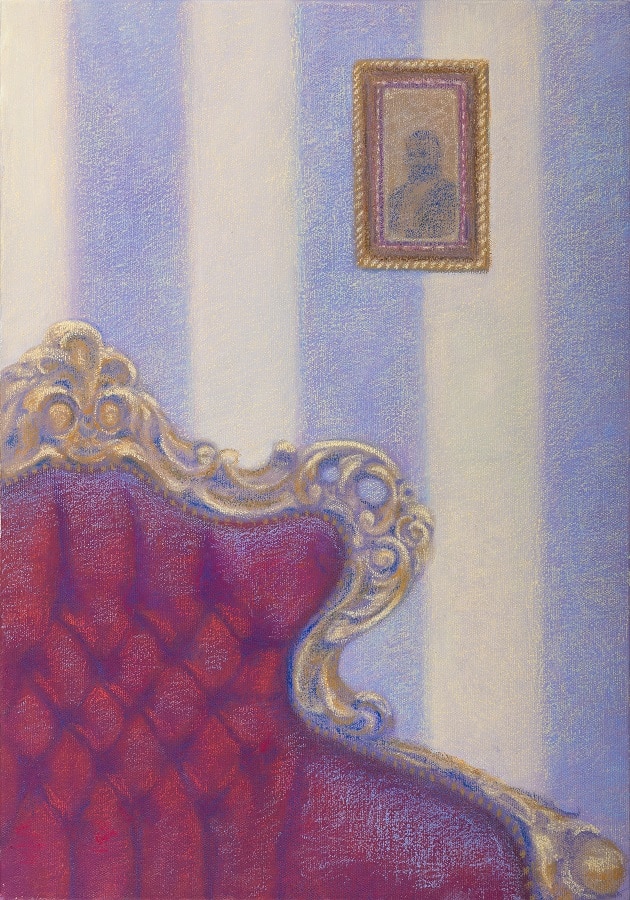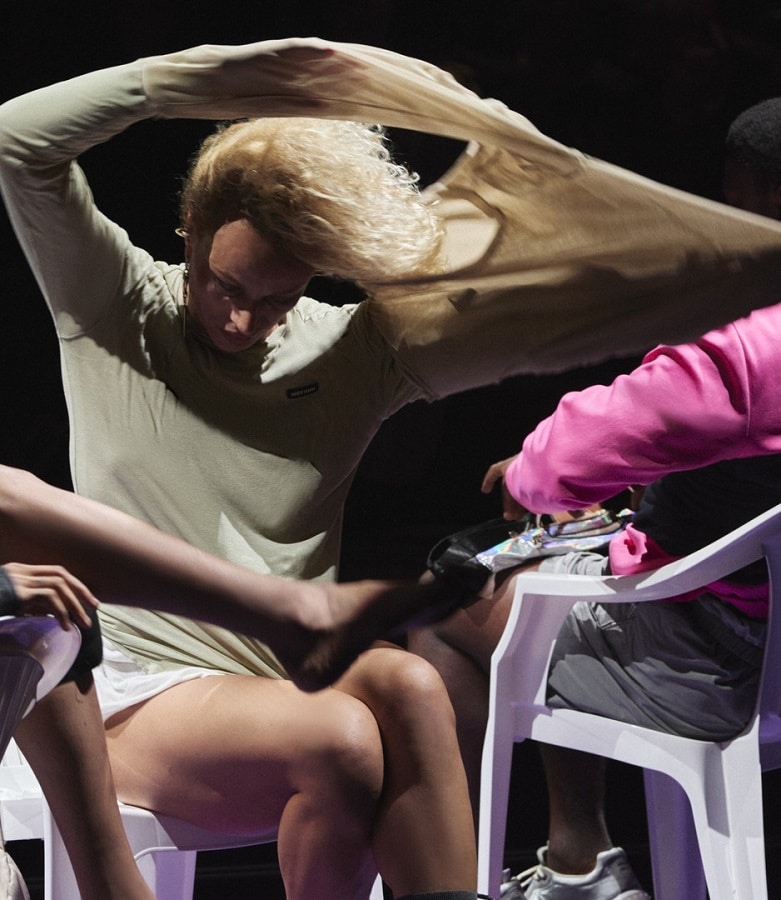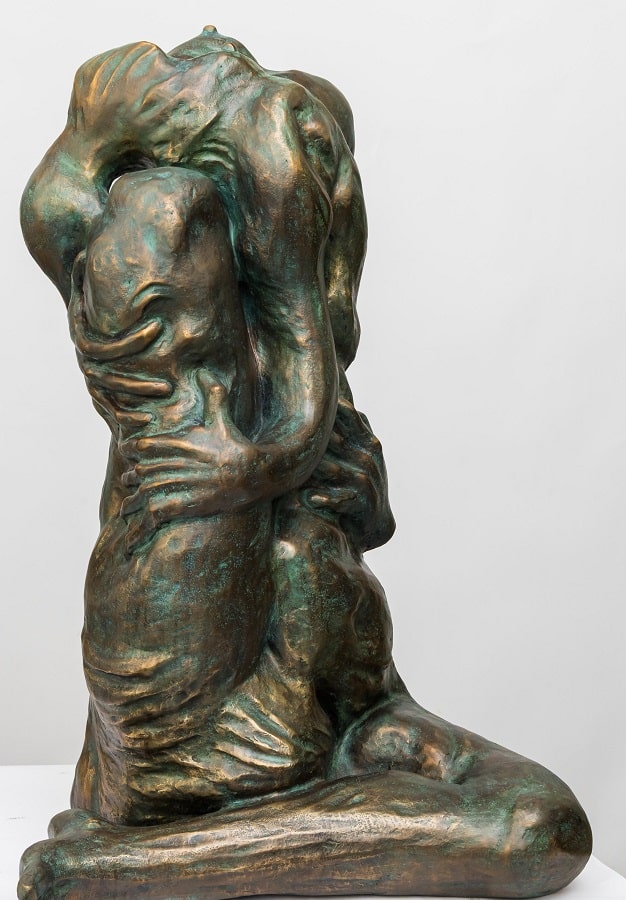
A painting on papyrus, a landscape reduced to a grid of colours, a wave repeated across two decades. Each belongs to an artist from the Middle East and North Africa who worked out their own version of modernism, often far from the places that later wrote its history.
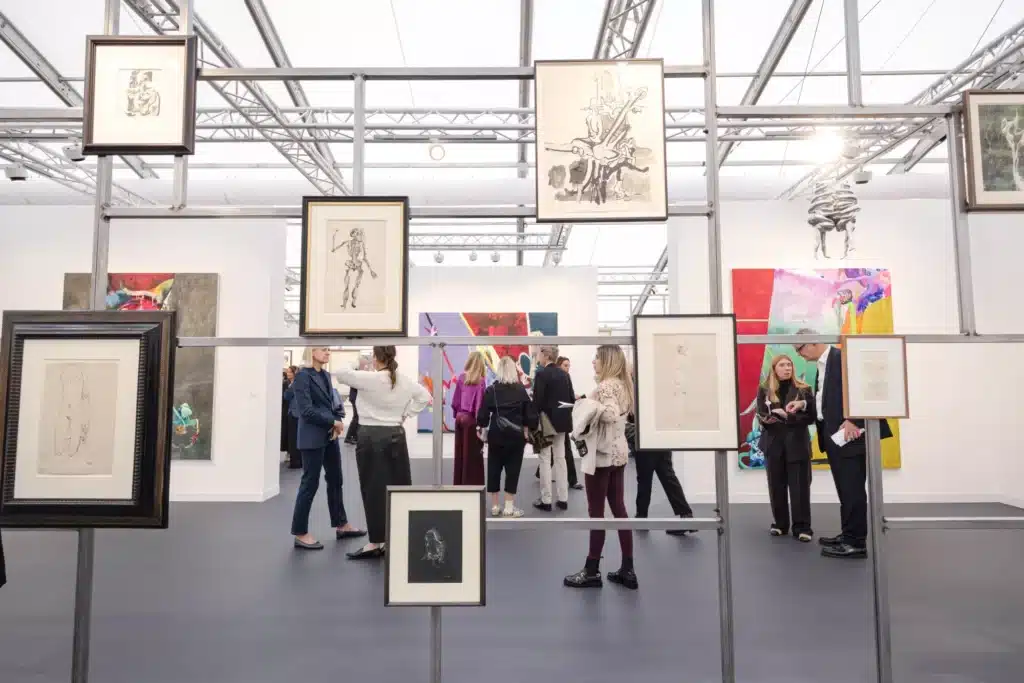
As Frieze London and Frieze Masters open today, 14 October, several of those artists are in Regent’s Park. Frieze London focuses on contemporary practice, while Frieze Masters spans antiquity to the 20th century, and this year Masters holds most of the region’s presentations: early works by Ibrahim El-Salahi, paintings by Saudi pioneer Mounirah Mosly, Mohamed Melehi’s waves and Maliheh Afnan in the Spotlight section. At Frieze London, Dastan brings several generations of Iranian artists into a single presentation.
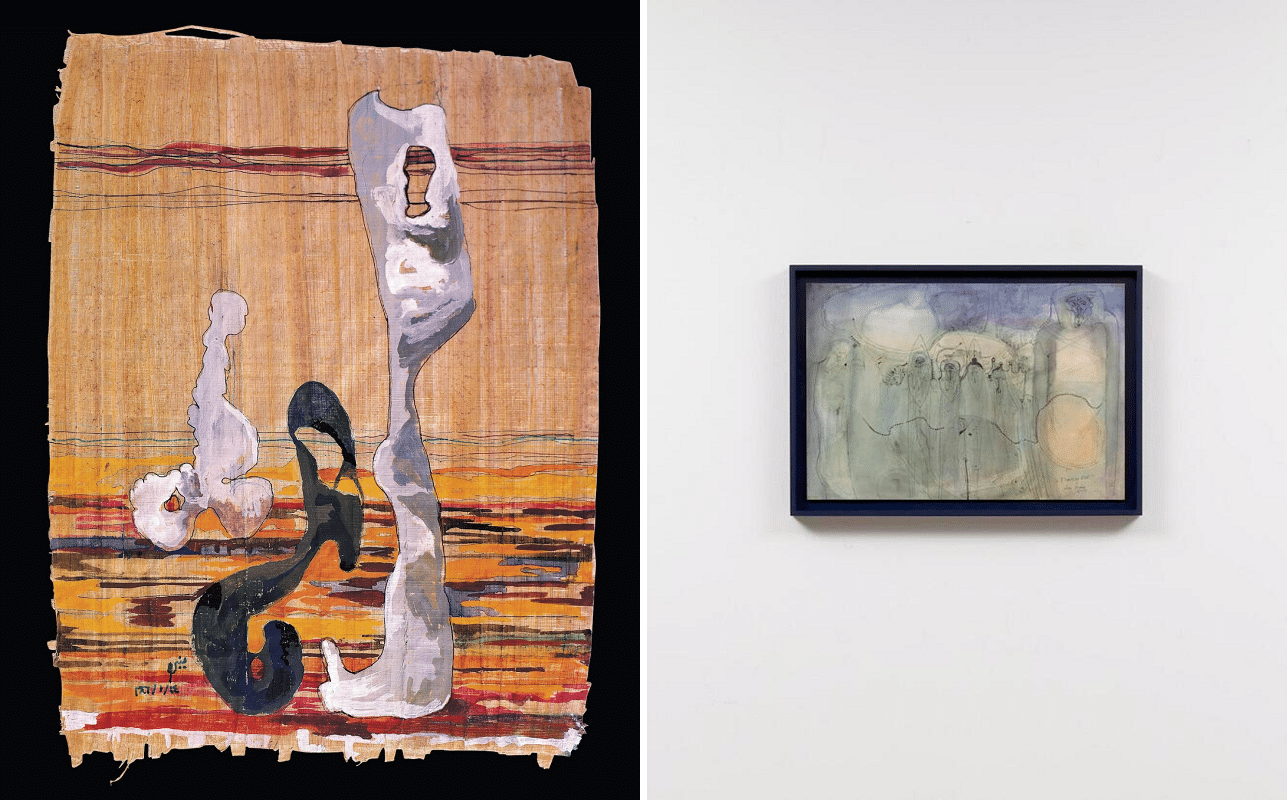
Jeddah gallery Athr brings together Mounirah Mosly and Abdulrahman AlSoliman, two figures who helped shape Saudi modern art. In 1973, Mosly became the first Saudi woman to hold solo exhibitions in Jeddah and Riyadh. She worked across painting, etching and mixed media, often on papyrus, leather and handwoven textiles, at a time when women artists in the Kingdom had very few places to show. Her work hangs alongside five decades of AlSoliman’s abstraction, a second route into the beginnings of modern art in Saudi Arabia.
Images: Ibrahim El-Salahi IG
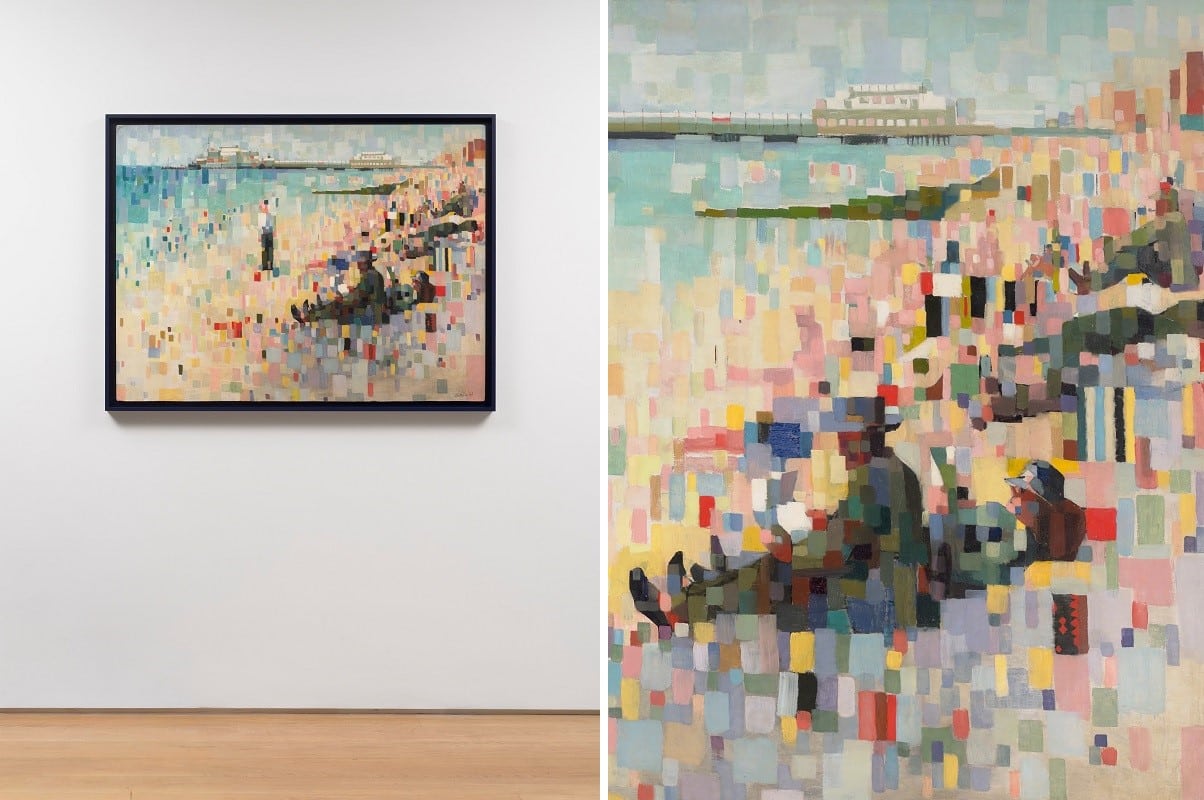
A few stands away, Vigo Gallery goes back to the years before Ibrahim El-Salahi became one of the leading figures of African and Arab modernism, when he was a student at the Slade School of Fine Art in London. Pre-Pixel brings together paintings from 1954 to 1957, drawn from the artist’s family collection and available commercially for the first time. Landscapes begin to break apart into modular blocks of colour, an early sign of the visual language he would develop over the following decades. Seeing them in London, almost seventy years after they were painted here, is part of the appeal.
Mohamed Melehi, meanwhile, returned to the wave throughout his career, changing its colour, scale and rhythm each time. Loft Art Gallery’s Wave Forms gathers paintings from
the 1960s through to 1980, and hung together, they show how much range a single motif could hold.
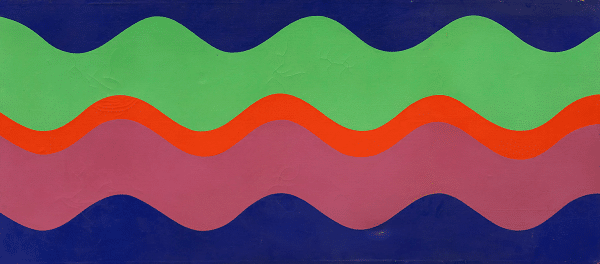
Image: Mohamed Melehi, Loft Art Gallery
In the Spotlight section, Dubai gallery Lawrie Shabibi presents Maliheh Afnan. Born in Palestine, Afnan lived between Beirut, Paris and London, and displacement runs through her work. She rarely painted places directly. Instead, layered marks and textured surfaces hold traces of them.
Iran is present across both fairs. At Frieze London, Dastan’s Letters from Iran brings modernists Behjat Sadr, Parviz Tanavoli, Farideh Lashai and Fereydoun Ave together with contemporary artists including Arghavan Khosravi, Reza Aramesh, Bita Fayyazi and Sahand Hesamiyan. There is no single thread. Memory, displacement and change surface differently in each practice, and the distance between generations is as telling as what connects them.
At Frieze Masters, Rossi & Rossi shows photographs from Abbas Kiarostami’s Snow Series, part of a photographic practice he kept up for more than two decades alongside his films, in which snow strips the landscapes almost to abstraction. The gallery also presents Siah Armajani’s mid-1960s works incorporating computer-programming code and dot-matrix printouts. Gallery Isabelle gives Fereydoun Ave a solo presentation, including his 1990 diptych Twigs and works from his 2000 Landscape series, with his long friendship with Cy Twombly as a backdrop, and Ab-Anbar revisits Bahman Mohassess through an overview of his work and a new monograph on his largely unseen assemblages, part of the fair’s Queering Modernism programme.
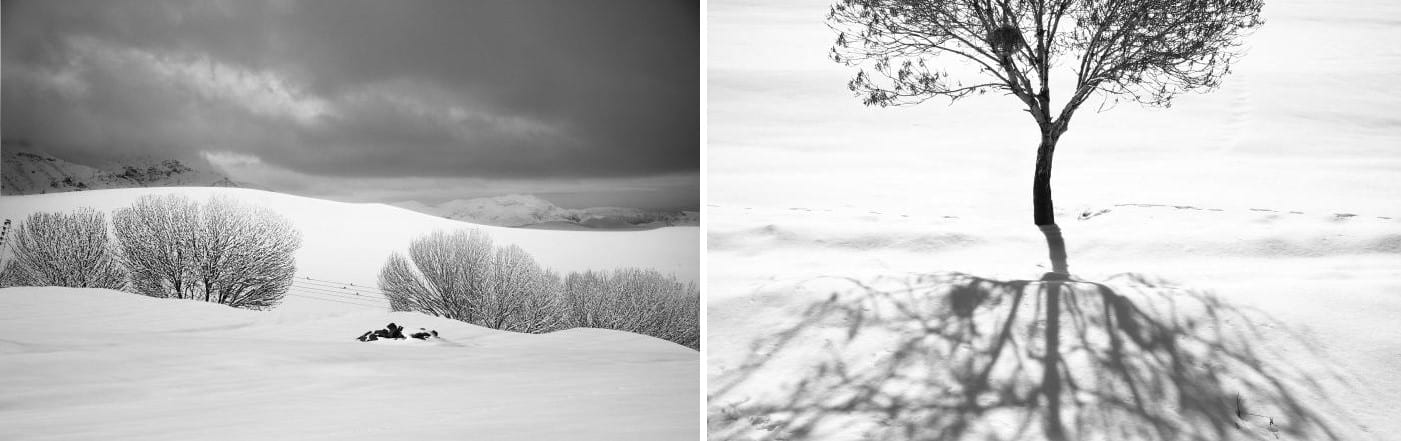
Images: Rossi & Rossi
The Abu Dhabi Culture Lounge returns with a pavilion dedicated to Hassan Sharif, the artist most responsible for conceptual art taking root in the Emirates. Work from his Objects and Semi-Systems series shows his method at its plainest: everyday materials, repeated actions and rules he set for himself, used to question what an artwork could be.
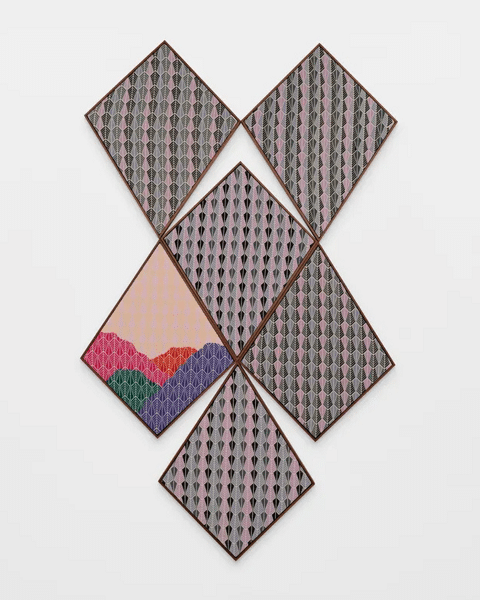
Image: Frieze – Jordan Nassar
Away from Regent’s Park, Dubai gallery The Third Line has taken over No.9 Cork Street for No History of Shapes / لا تاريخ للأشكال, new embroidery works and mosaics by Jordan Nassar. Nassar takes Palestinian embroidery as his starting point and builds something of his own from it, keeping the technique while shifting what it describes. The exhibition runs until 24 October, worth the detour from the fair.
Mosly and AlSoliman were building a modern art scene in Saudi Arabia while Melehi was working through abstraction in Morocco. El-Salahi was moving between Sudan and London, and Iranian artists were responding to a country in constant change. No single movement joined them. Seeing them side by side at Frieze, the differences are the point.
Frieze London and Frieze Masters take place at Regent’s Park, London, from 14 to 18 October 2026. The opening day, 14 October, is invitation-only. Jordan Nassar’s No History of Shapes is at No.9 Cork Street until 24 October.