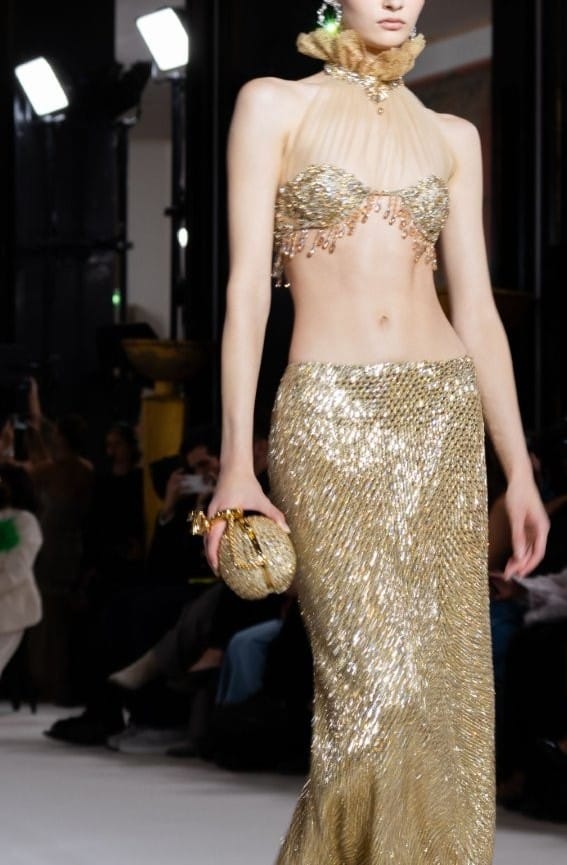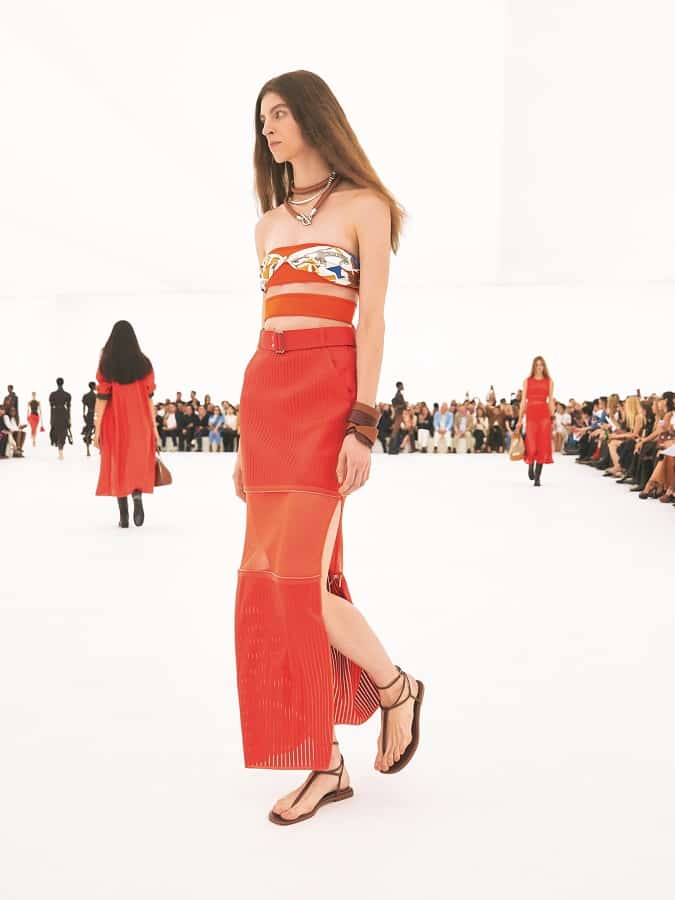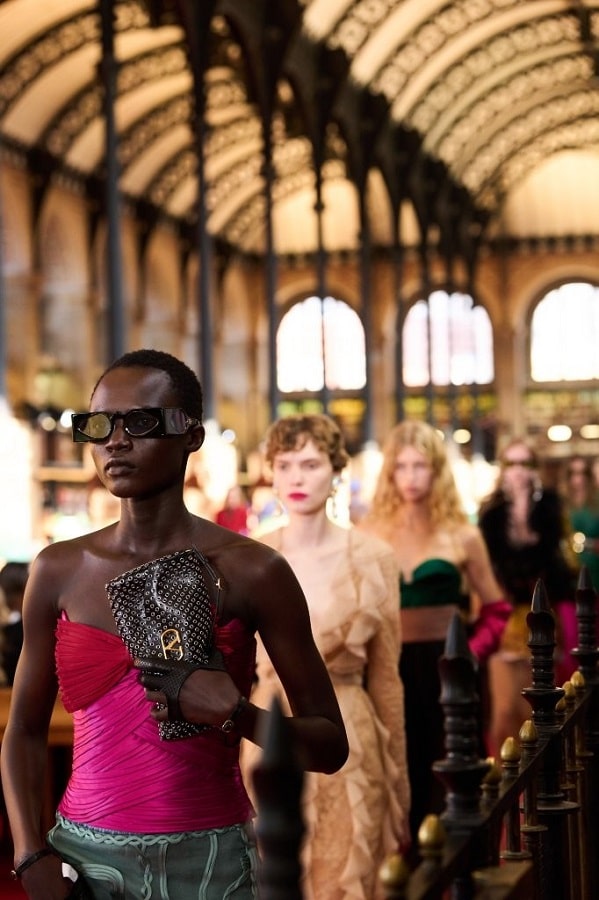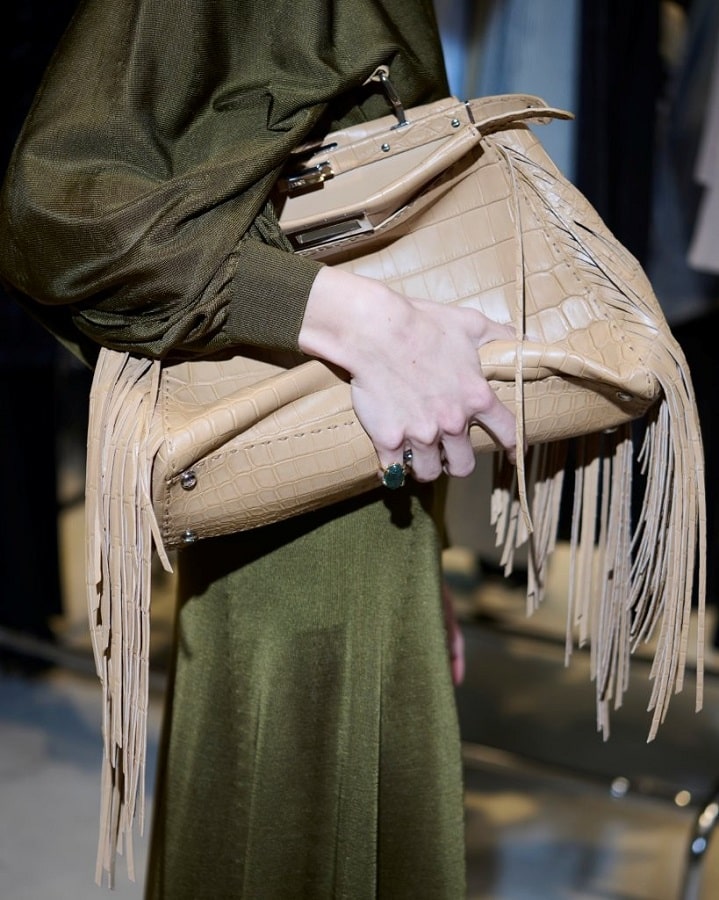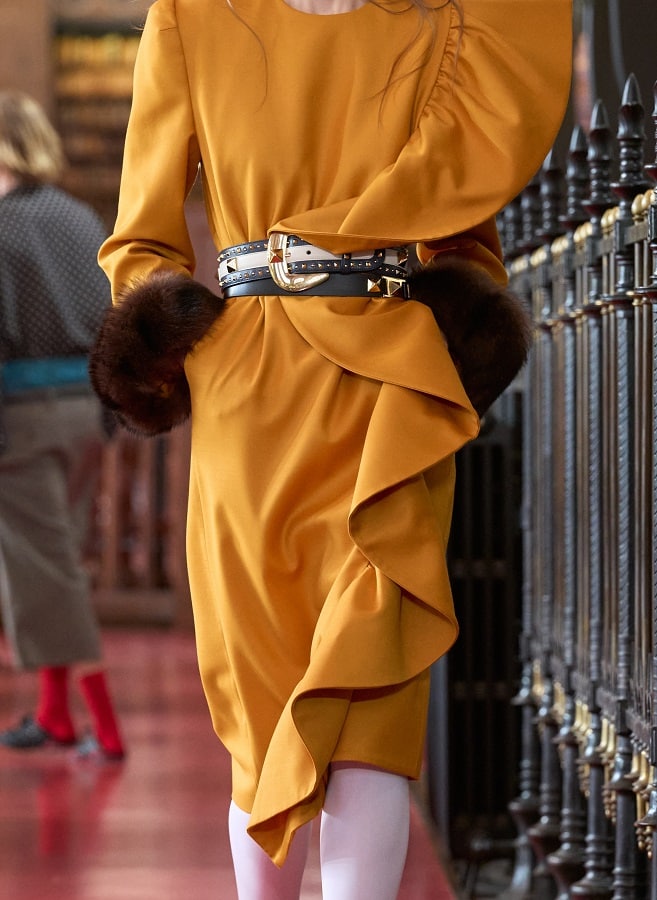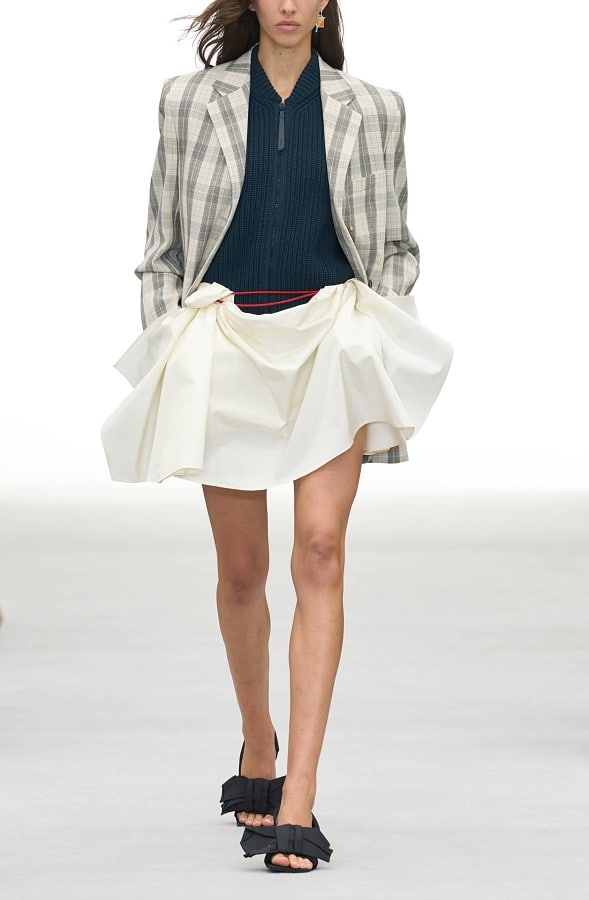
What I love about fashion is its ability to hold something of our lives. A shirt takes us back to a distant summer, a jacket recalls a city, and a pair of shoes becomes our choice whenever we need to feel like ourselves. This is why the idea Jack McCollough and Lazaro Hernandez propose for Loewe Spring/Summer 2027 caught my attention: a wardrobe rooted in personal history, with clothes that carry traces of the experiences, places and women that shaped their understanding of elegance.
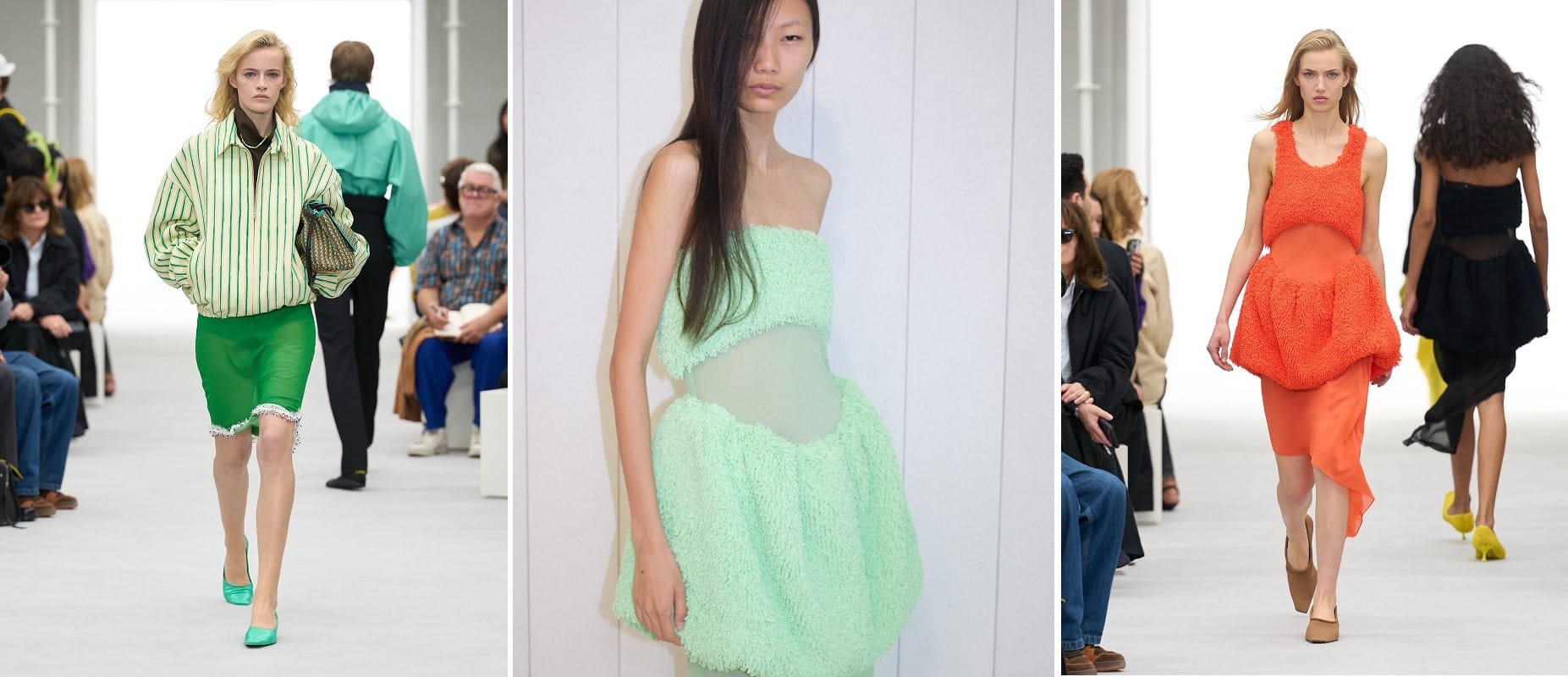
Images: Courtesy of Loewe
Presented in Paris on October 2, the collection opens a conversation between two worlds: coastal New England and sunbaked Andalusia, American pragmatism and the dramatic gestures of Spanish Baroque. These references might seem far apart, but they come together through an attempt to give Loewe’s language a place in everyday life. How do creative vision and craft become a wardrobe we want to wear, and in which we recognise something of ourselves?
I find this question compelling, particularly at a house that gives materials and craftsmanship such attention. There is a particular pleasure in a piece that first draws us in with its idea, then allows us to imagine it in our lives. Here, McCollough and Hernandez begin with clothes we know well: polo shirts, anoraks, trench coats and boat shoes. They establish that familiarity, then change a detail just enough to shift our relationship with the garment.
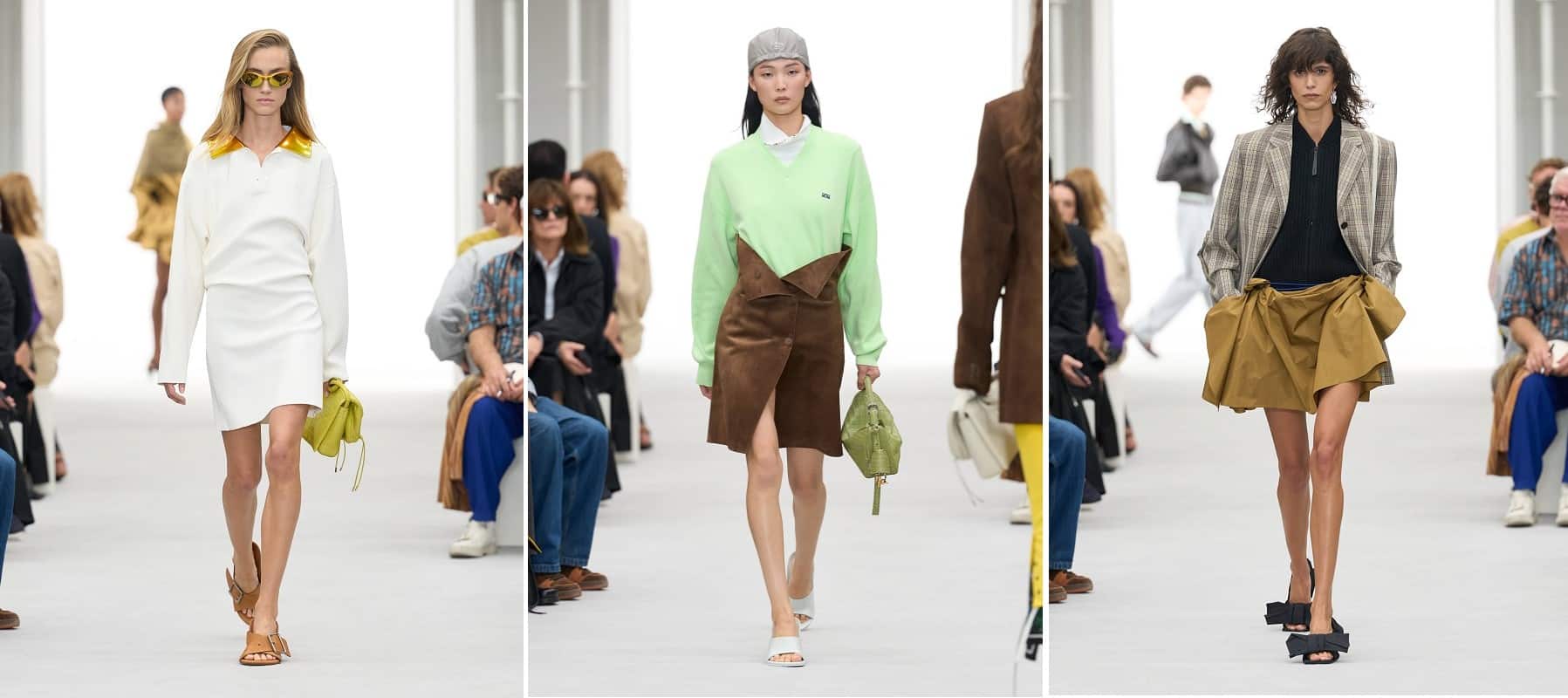
One of the ideas I liked most was the polo shirts cut backwards on the body, as though their wearer had taken them off and hastily put them back on in the heat. There is something of summer’s spontaneity in this image: those moments when perfect composure matters less, and clothes acquire their appeal through the traces of being worn. I am intrigued by the way this fleeting gesture becomes a starting point for design, and how a small, everyday disarray is given aesthetic consideration.
Images: Courtesy of Loewe
A chiffon slip dress with beaded fringing borrows the simplicity of a basketball jersey. I love this transition from a familiar sportswear piece to a light dress. It retains the freedom of the original, while the fabric and embellishment give it a different feeling. Movement becomes the connection between the two: the body moving inside a loose jersey, and chiffon and beads moving around it.
This transformation returns in anoraks rendered in silk, intended to be slipped on against bare skin. Here, the idea feels particularly sensory. We recognise the jacket’s practical shape, but the touch of silk against the body changes the experience entirely. For me, details like this make a discussion of craftsmanship convincing. Its effect becomes tangible when the garment is worn: in its weight, its texture and the way the fabric responds to movement.
Images: Courtesy of Loewe
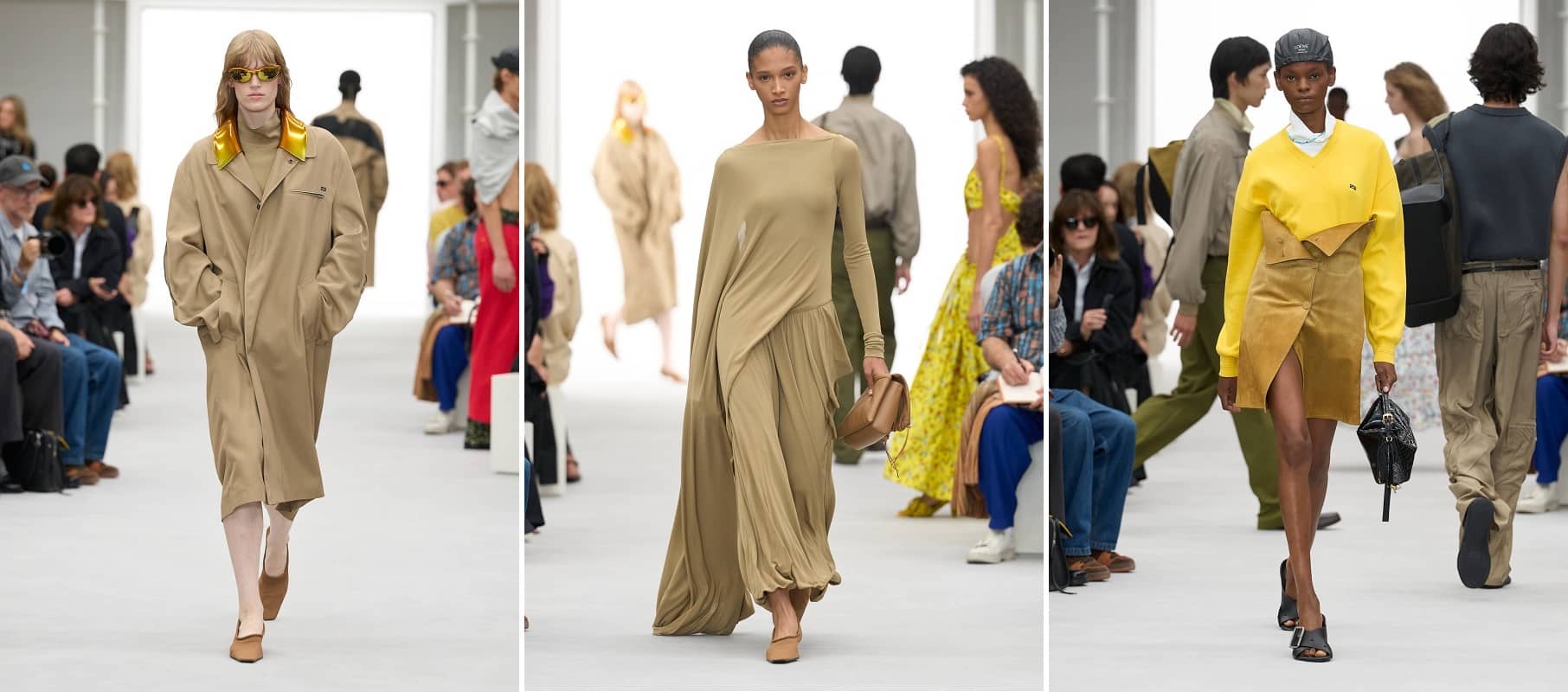
Collars made from sunglass resin, appearing on light knits and trench coats, introduce something more unexpected. I am drawn to this use of a material usually associated with a summer accessory, now becoming part of the clothes themselves. There is a curiosity about what a material can do, and how it can alter the character of an otherwise familiar piece.
Even the boat shoes receive this treatment, softened and finished with contrasting laces. I appreciate that the attention extends to something associated with walking and life beyond the show. Through them, the reference to coastal New England becomes tangible, and the conversation between cultural influences finds expression in a detail we can imagine using.
What draws me to McCollough and Hernandez’s proposition is the way memory enters through the choice of a shirt, the feel of a jacket or an apparently instinctive way of dressing. This feels close to our actual relationship with clothes. We carry our experiences within small choices, and sometimes it takes years to understand why we have become attached to a particular piece.
Image: Courtesy of Loewe
For me, this is where the collection’s appeal lies. It leaves room for a woman to add her own history to that of the designers: to wear the polo her way, choose the silk jacket for a day of her own, and leave the imprint of her steps on the shoes. The clothes begin in one person’s memory, then become part of someone else’s.
In Loewe Spring/Summer 2027, the wardrobe becomes a place where imagination meets daily habits, and craftsmanship finds its value in its closeness to the body. This is precisely the space that interests me: between a piece I admire and a piece I can imagine living in.