When a gallery participates in an international fair, it selects the pieces through which it will introduce itself to a new audience. Its stand becomes a concentrated expression of its taste: the artists it supports, the materials that interest it, and the relationship it proposes between art, design and domestic space. At this year’s PAD London, the presentations by Lebanon’s PIK’D and the UAE’s Booroom offer a window into those choices, and into the role galleries play in bringing works from their places of production to an international market.
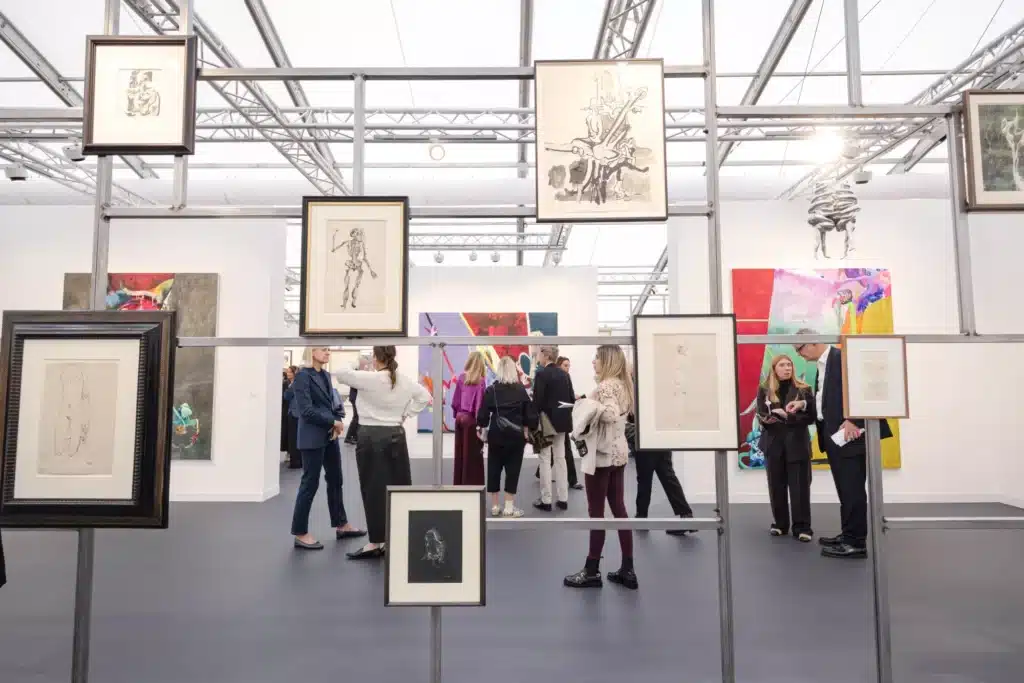
The fair’s eighteenth edition takes place in Berkeley Square, Mayfair, from 13 to 18 October 2026. It brings together 67 exhibitors from 18 countries, including 12 newcomers. Contemporary design and craft sit alongside museum-quality historical pieces, making each gallery’s selection and presentation an essential part of the experience of looking and collecting.
PIK’D: From Beirut, Nature’s Rhythms in Clay
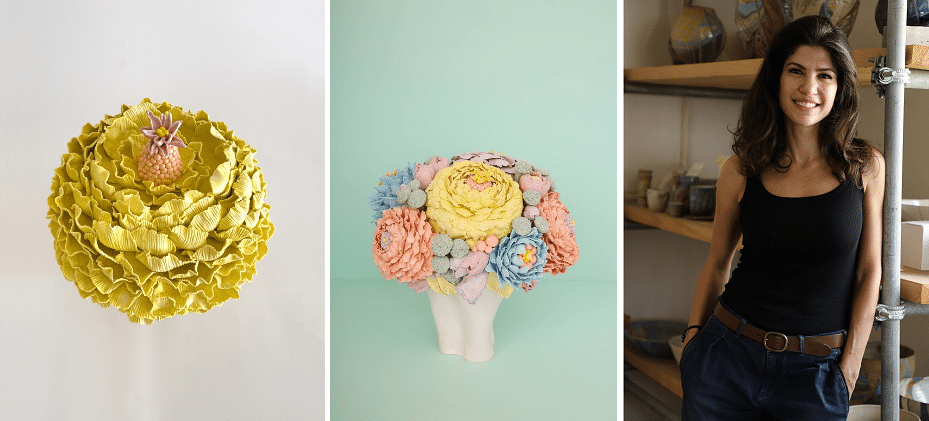
As part of its presentation, PIK’D is showing work by Andrea Nassar, an Australian-born ceramic artist based in Beirut. Nassar draws inspiration from botanical structures and the quiet repetition found in natural systems, in a practice described as an ongoing dialogue between nature, memory and material.
These references offer a starting point for considering her work: how does a form emerge through repeated details? How can a material evoke the rhythm of growth? In ceramics, form also carries traces of its making. Volume, surface and detail are shaped by what the hand can achieve and what the material allows.
For a gallery coming from Beirut, Nassar’s participation adds another dimension to the idea of representation. Her connection to the city comes through where she lives and works, while her personal history extends to Australia. The gallery becomes a meeting place for intersecting creative trajectories, introducing them to a London audience through individual works.
Images: Courtesy of PAD London
Booroom: UAE Craftsmanship and the Desert Rose
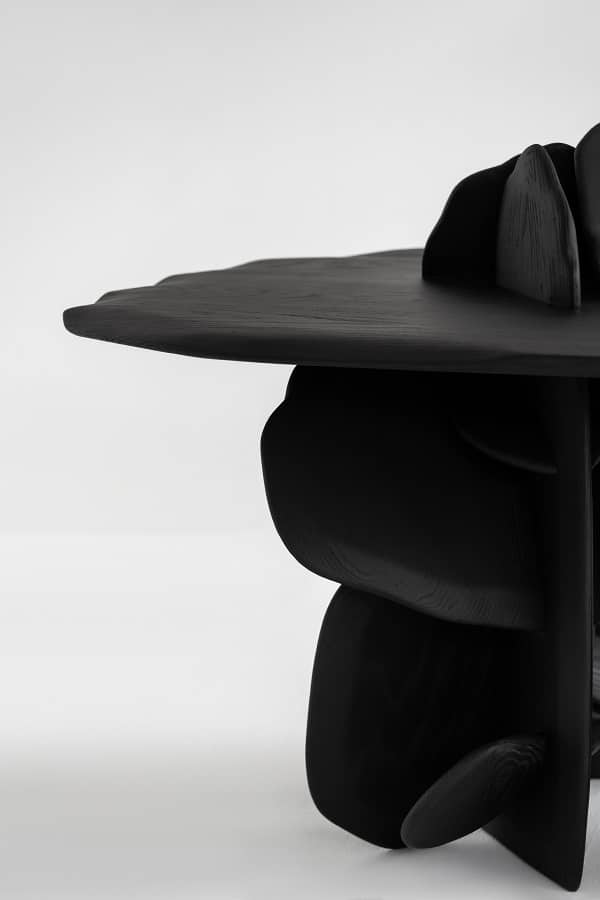
The UAE’s Booroom Gallery presents KAMEH 0.6 by Nikita Erokhin, a collection of charred timber furniture made by local artisans in the Emirates. Its forms explore the delicacy and resilience of the desert rose: a mineral formation that crystallises beneath arid sands, its layers resembling the petals of a flower.
The collection makes an intriguing journey between materials. A mineral formation becomes the reference for wooden furniture, while charring gives the timber a surface that bears the marks of transformation. Through this relationship between natural source and chosen material, the furniture can be read as an attempt to give a small structure formed beneath the sand a presence within the home.
The works’ connection to the Gulf is evident in both their inspiration and their production. Artisans working in the UAE help turn the idea into finished pieces, placing their skills within the story the gallery brings to London.
Booroom’s presentation brings Erokhin, known as KAMEH, into dialogue with Rui Matos, Ksenia Breivo and José Zanine Caldas, spanning different generations and practices. This selection broadens the picture of the UAE gallery, showing how its location in the region can serve as a starting point for a varied international programme.
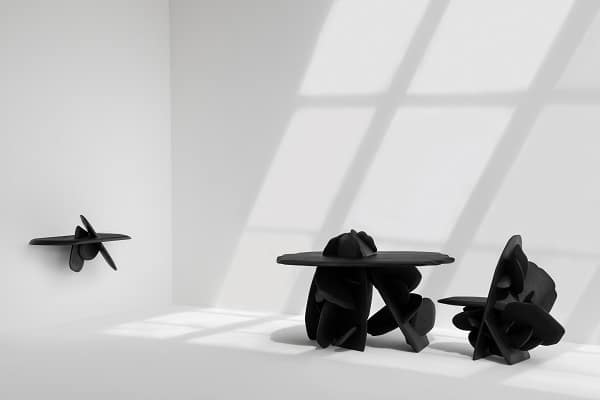
Image: Courtesy of PAD London
Arab Designers, International Galleries
Other connections to the region emerge through Arab designers represented by galleries based elsewhere. Their participation adds another layer to the story, showing how individual practices travel through international networks of representation.
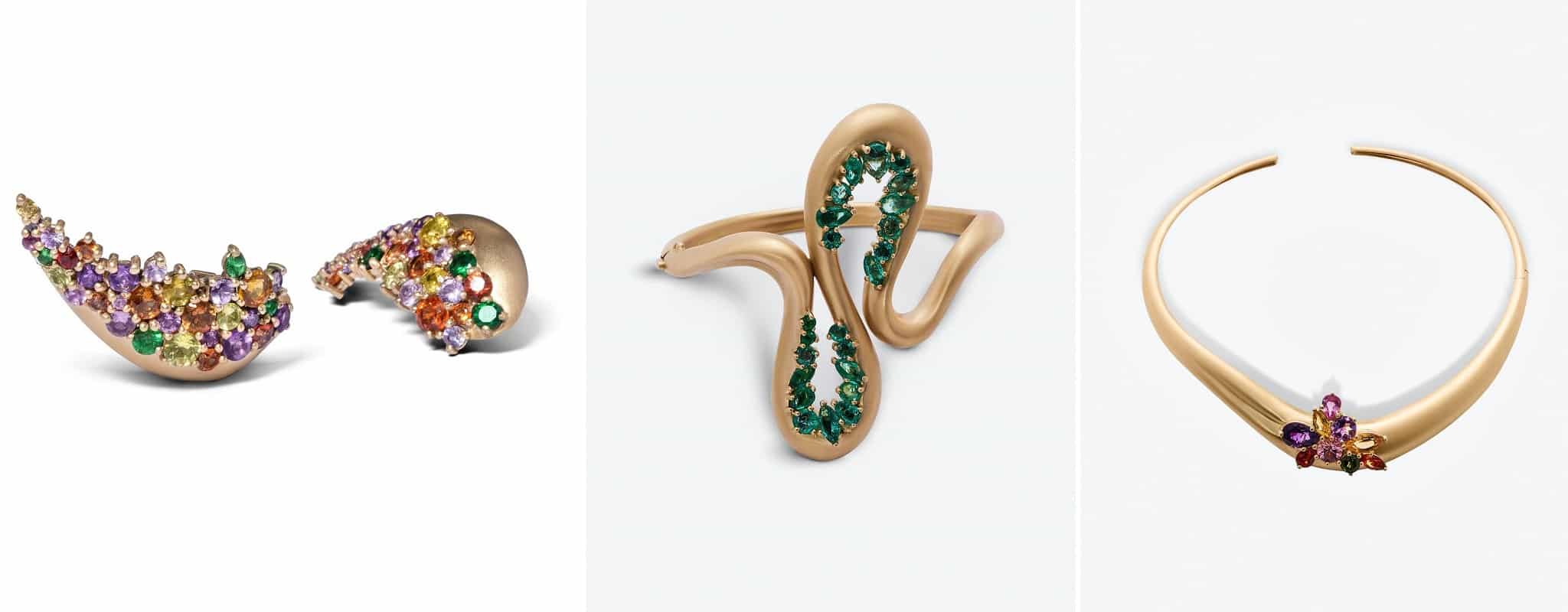
At Second Pétale, Lebanese jewellery designer Nada Ghazal presents Echoes, her first full high-jewellery collection. The gallery describes it in five chapters exploring enduring light, dreams, freedom, grace and memory. Working between London and Beirut, Ghazal brings the conversation to the scale of the body, where a collectible object becomes something worn and experienced at close quarters.
Images: Courtesy of PAD London
Paris-based Moroccan designer Moulay Hafid Sdikiene offers a further connection through Galerie Boketto, one of this year’s first-time exhibitors. He presents Halocline, a collection comprising a cabinet, a dining set and a ceiling light, made using reclaimed aluminium and jade-green onyx. The combination of metal and stone gives the collection a distinctive material identity, inviting consideration of the pieces through the contrasting qualities of their components.
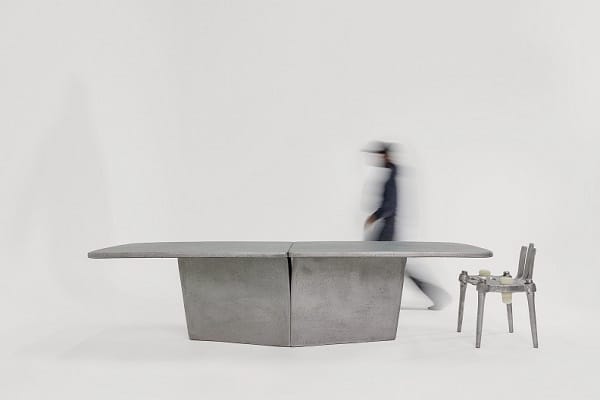
Image: Courtesy of PAD London
What a Gallery Brings to London
These presentations show how the region’s presence at PAD London takes shape through concrete decisions: introducing a ceramic practice based in Beirut, furniture made in the UAE, or Moroccan design that brings two materials together in domestic objects. In each case, the gallery acts as an intermediary, selecting the work and giving it a context for exhibition and acquisition. Those choices are the starting point for a story about how the works reach a new audience, and the place they might find in its collections and homes.
PAD London takes place in Berkeley Square, Mayfair, from 13 to 18 October 2026.