“We find beauty not in the thing itself but in the patterns of shadows, the light and the darkness, that one thing against another creates.” Jun’ichirō Tanizaki wrote in 1933, in an essay that seems an apt way to try and describe why Japanese independent watchmaking feels so different to its European cousin: smaller cases, quieter dials, and a studied refusal to shout. But even without the megaphone marketing, Naoya Hida & Co., a Tokyo atelier that has made fewer than 300 watches since 2019, has generated a buzz.
It’s website notes, almost regretfully: “All watches scheduled for production in 2026 are sold out.
We do not offer a backorder list, cancellation list, or mailing list. We accept purchase applications only once a year. We do not provide brochures or catalogs.”
The company invites would-be owners to apply for a watch – once a year, please, and with no promise of the answer you were hoping for.
Images: Naoya Hida Instagram
The origin story is disarmingly practical. In 2012, while overseeing the Japanese market for Ralph Lauren Watch & Jewelry at Richemont Japan, Hida met Kosuke Fujita, then a watchmaker at Seiko, and Keisuke Kano, an engraver at Tiffany Japan. “The three of us felt that the ‘perfect wristwatch’ we envisioned simply did not exist,” he says – and so, like all good obsessives, they set about making it themselves.
Hida names the Patek Philippe Ref. 96 and the Jaeger-LeCoultre Reverso Soixantième as touchstones, telling A7 Magazine that: “the balance between case size and movement size” and an “understated beauty [that] is, to me, irreplaceable”. The house creed is to reinterpret the pocket-watch era and the 1930s to 1960s “through a modern lens”. He has, he insists, “never set out to create a particularly Japanese watch”, though he finds it “very interesting” that so many enthusiasts see one anyway.
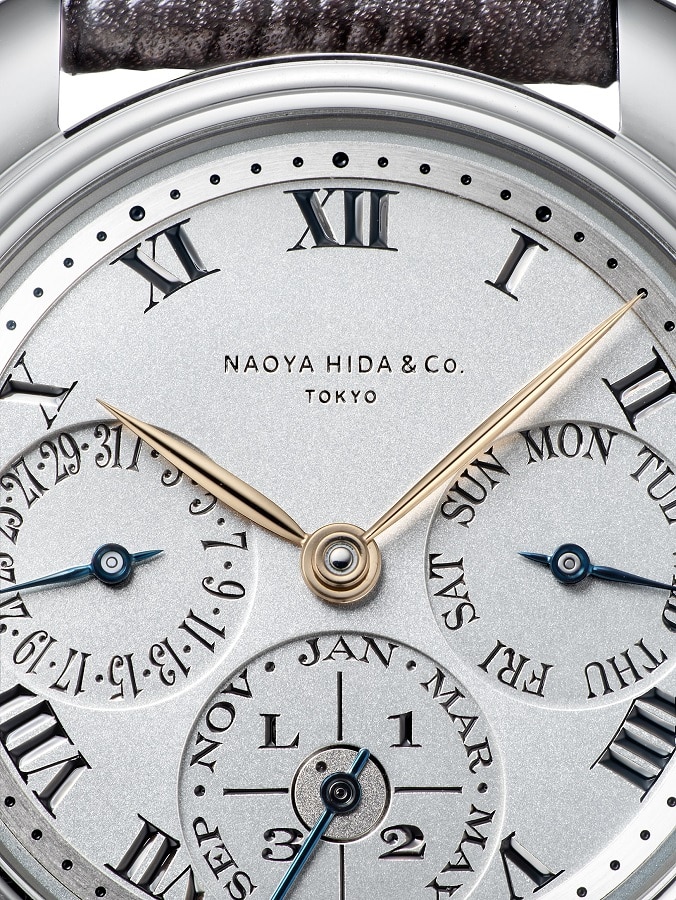
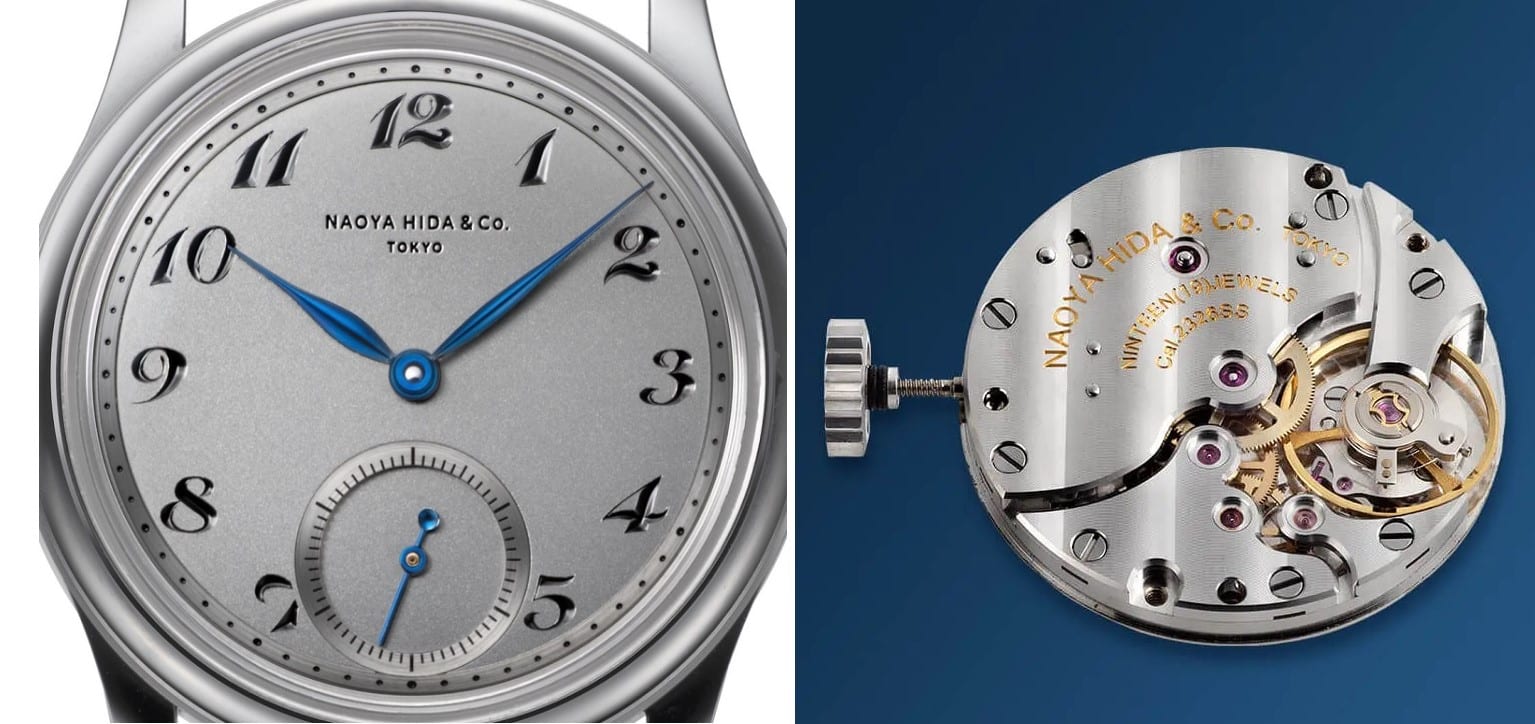
The inspiration is revealed via the dial design Each is German silver, its numerals hand-engraved by Kano and filled with Kashu lacquer, then signed ‘NAOYA HIDA & Co. TOKYO’. “For Keisuke Kano, our highly skilled engraver, handengraving the indexes on the dial did not seem particularly difficult. If anything, I feel that the most challenging aspect was developing the cleaning technique required to keep the German silver dial material in a beautiful condition,” reveals Hida.
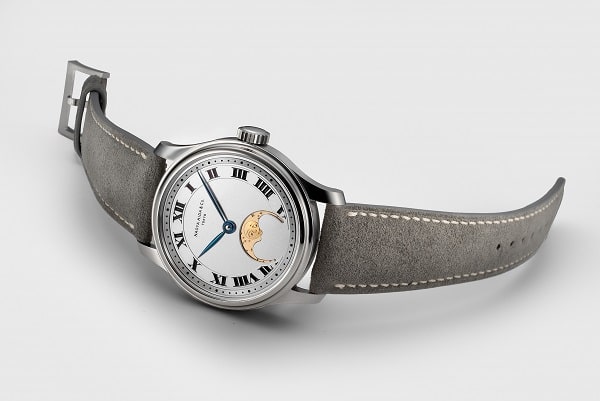
Image: Naoya Hida Instagram
He acknowledges that in-house movements are still a way off: “At present, we heavily modify Swissmade movements and components before integrating them into our watches. In the future, we intend to develop and manufacture movements with a higher degree of originality.
However, doing so requires enormous time, cost, and personnel, so it is not something we can achieve immediately.”
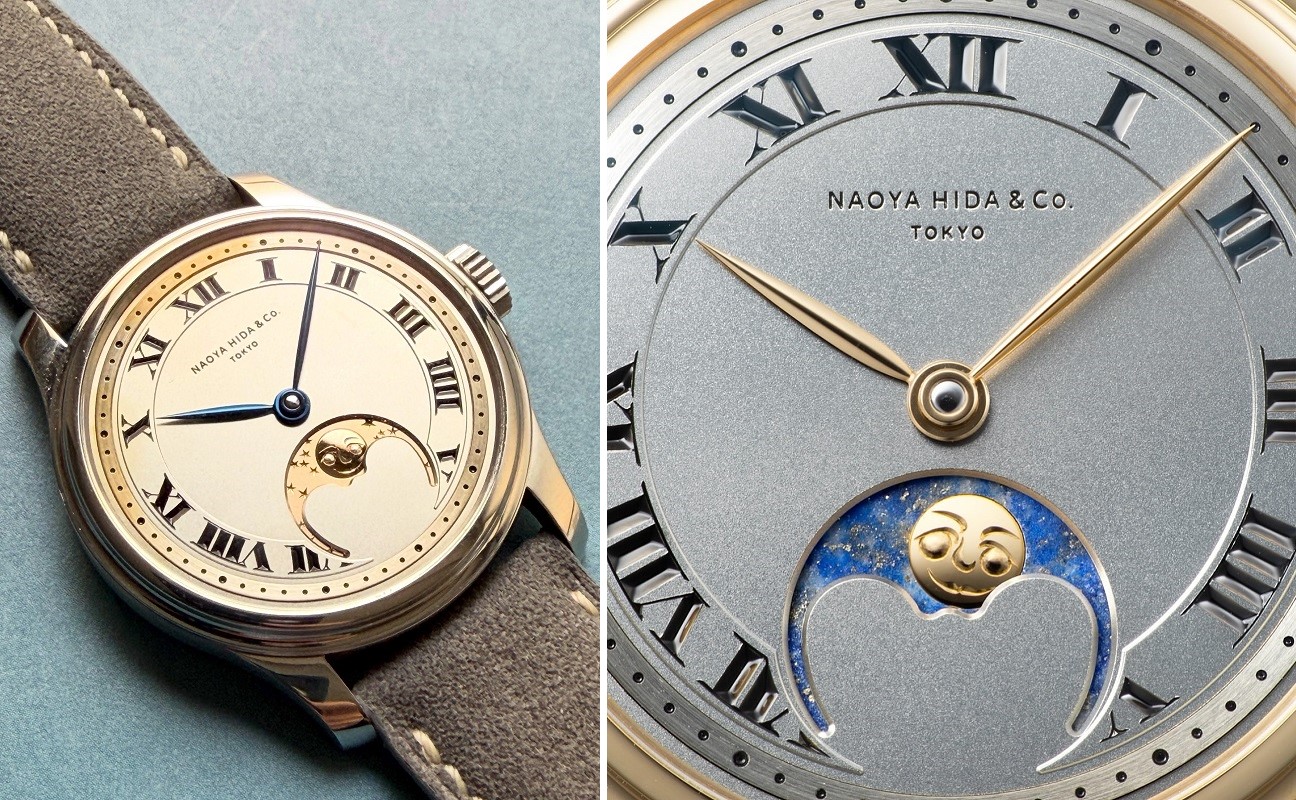
This year’s releases express the company’s commitment to high watchmaking craft. The NH Type 8A is a 31mm steel dress watch, just 8.9mm thick, with hand-engraved Breguet numerals, a small seconds at six and heat-blued hands whose minute tip is bent by hand to kiss the scale; around 20 will be made across 2026 and 2027, at ¥3.52 million. Its sibling, the NH Type 3B-3, is 37mm of yellow gold with black-lacquered Roman numerals and a lapis lazuli moonphase disc carrying a hand-engraved gold moon. Production: around two.
Images: Naoya Hida Instagram
As for what happens once an application lands, the criteria remain – forgive my pun – firmly under lacquer. Hida will say only that loyal early clients are valued, new ones welcomed, and that large social-media followings do not jump the queue: “Many of our customers have no social-media presence at all.” Does scarcity now matter more than craft? “Most of our customers simply wish to obtain and wear a beautiful watch,” he replies – which is either admirably modest or the most elegant line in contemporary watch marketing. Possibly both.
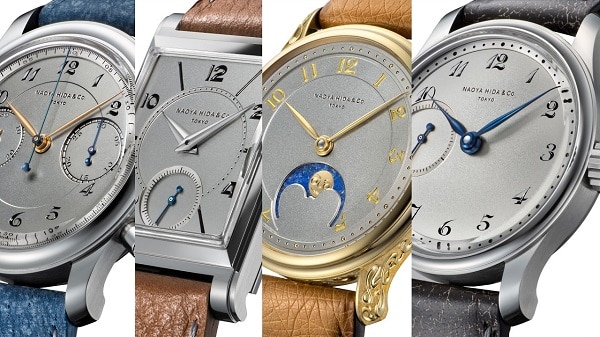
Image: Naoya Hida Instagram
It is also a nod to how tastes has changed. After a decade of oversized, overhyped watches for the algorithm and profit, the new status symbol is now a 31mm time-only piece you cannot buy, only be chosen for.
Gulf collectors have been ordering from the start, Hida notes, though he refuses to lean on any one market, and a company this small cannot tour every fair from Dubai Watch Week to Europe. This year’s Geneva Watch Days, the brand’s first, meant five days of enthusiasts “was remarkable… without a moment’s rest”.
In a market that has spent years shouting, the most desirable watch in the room is the one that whispers – and, more often than not, politely says no.