There is something particularly appealing about visiting an exhibition dedicated to design and the arts. Stepping inside brings a different rhythm to the day: the opportunity to pause, look closely and encounter something surprising.
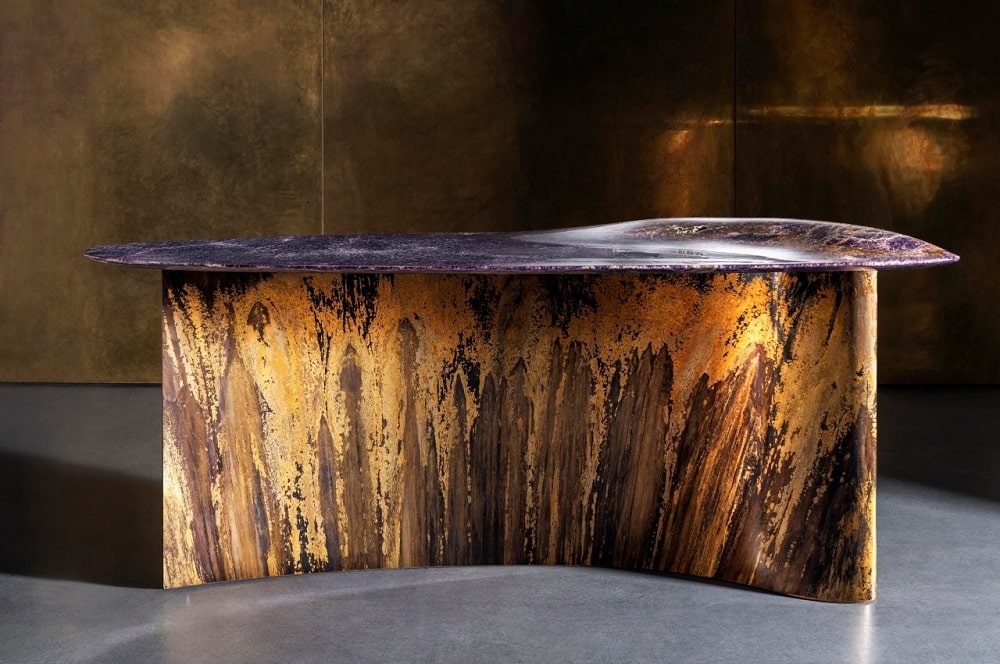
Image: Gianluca Pacchion, Courtesy of NOMAD
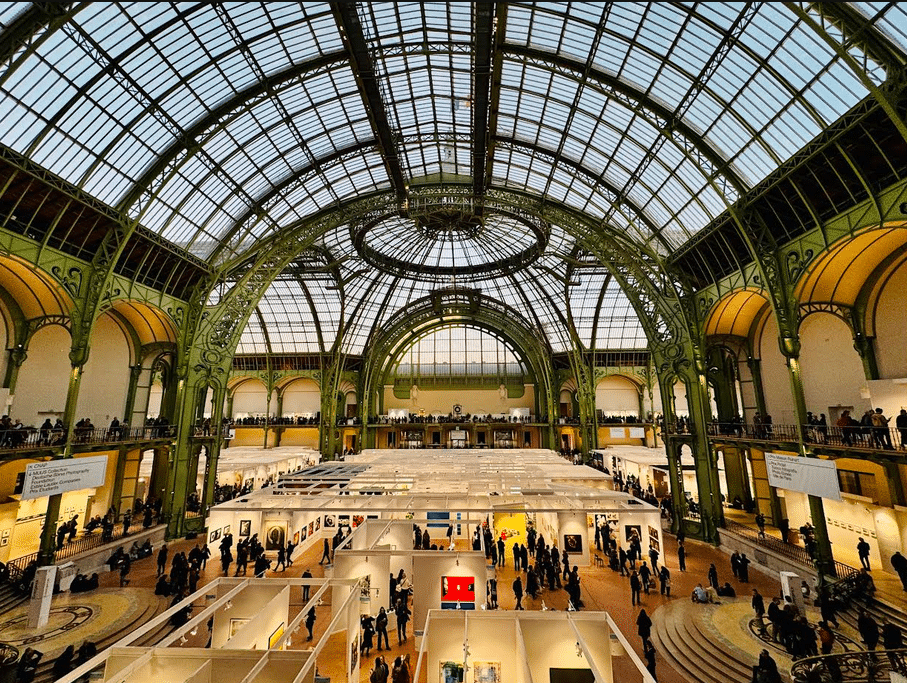
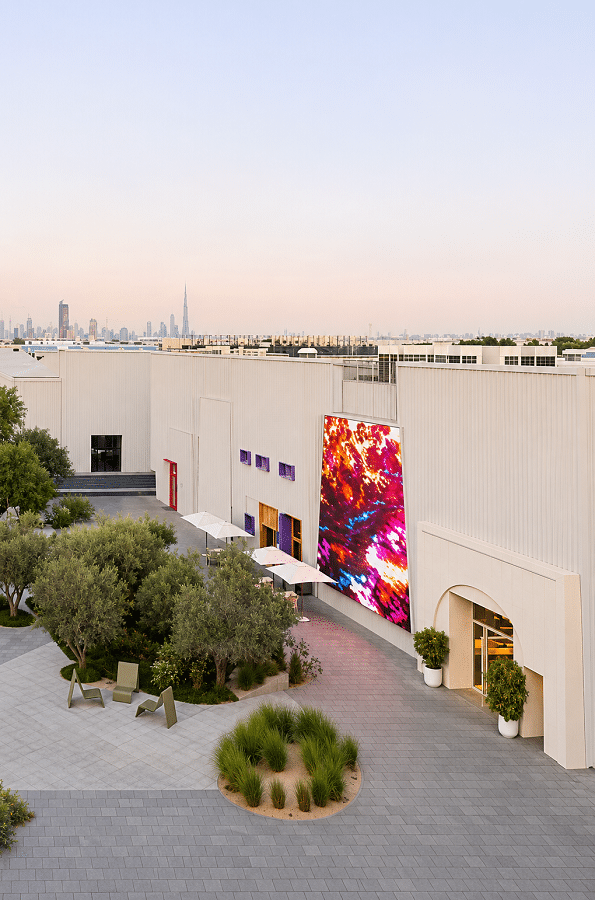
Our visit to NOMAD Abu Dhabi was filled with these impressions. The fair, which opened on 18 November and runs until 22 November 2026, takes place at Terminal 1 of the former Abu Dhabi International Airport, a landmark designed by architect Paul Andreu. The architecture itself adds a distinctive dimension to the experience.
While the UAE is currently witnessing a particularly busy calendar of art and design events, NOMAD holds a significance of its own. Organised in collaboration with the Department of Culture and Tourism – Abu Dhabi, the Abu Dhabi edition reflects the cultural and heritage context of its location within the wider international NOMAD calendar.
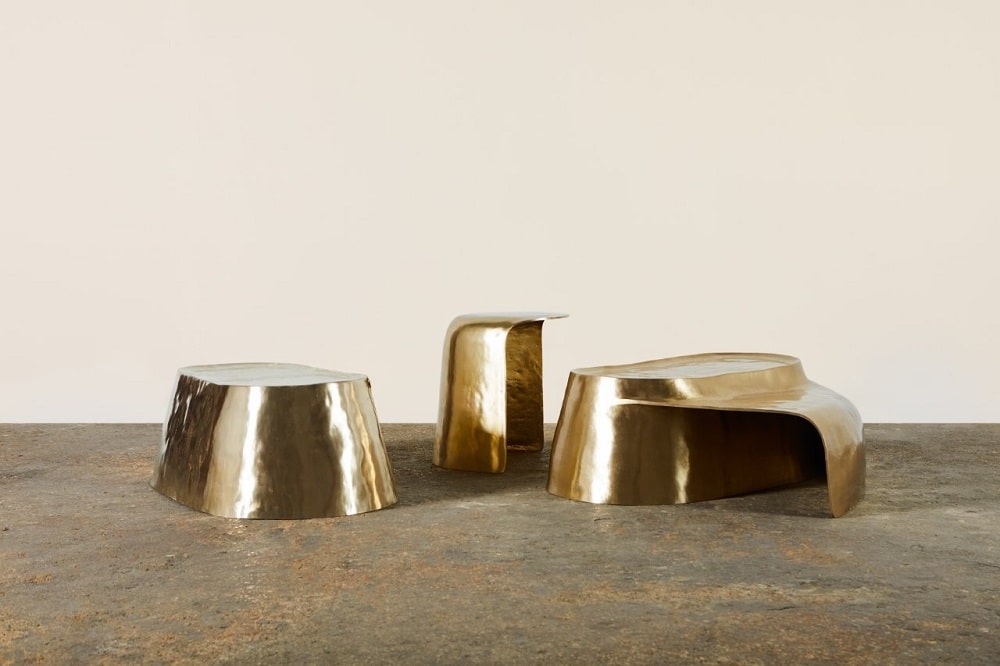
Image: Maison Integre, Courtesy of NOMAD
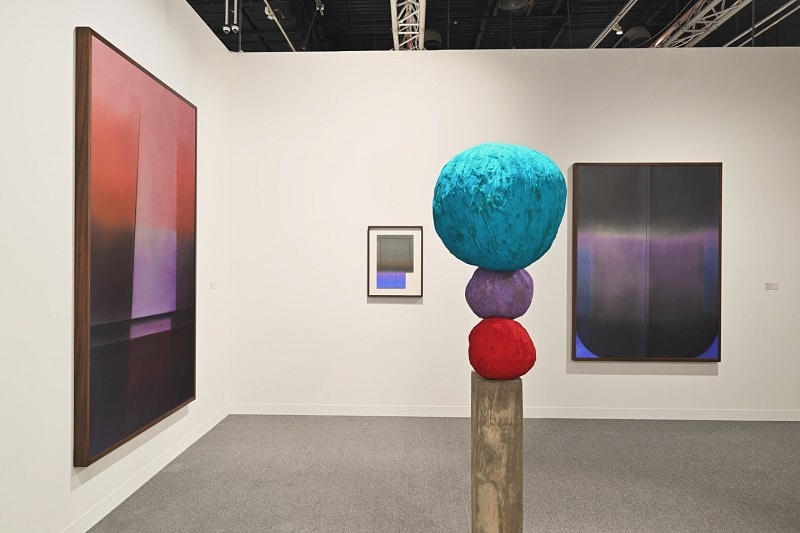
Now in its second Abu Dhabi edition, the fair brings together a varied selection of exhibitors and galleries. Walking through the venue, one aspect quickly caught our attention: the way materials and textures shaped the appearance of the works, often challenging what we expected them to look or feel like. This approach emerged as a common thread connecting pieces that varied considerably in style, scale and cultural references.
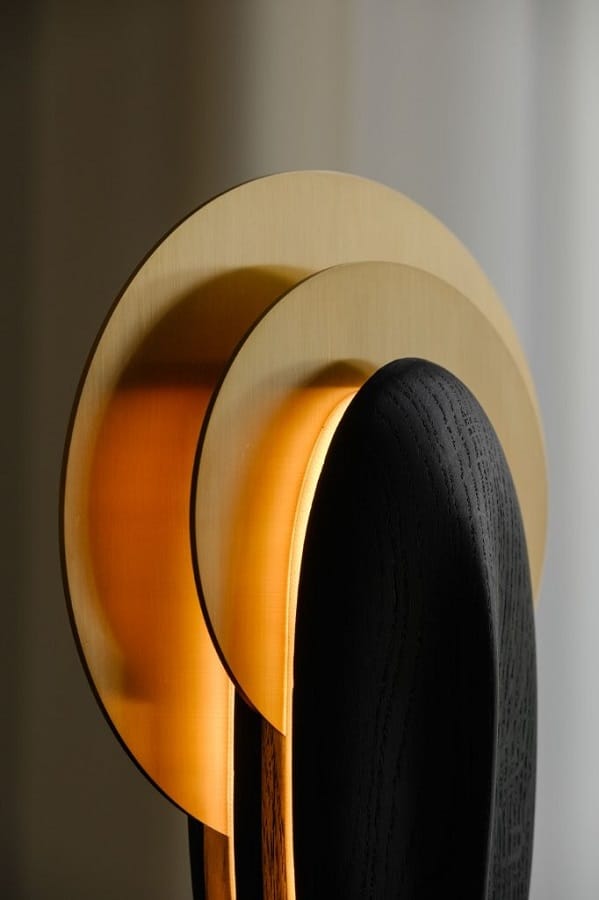
Many exhibitors explored the nature of materials, their imperfections and the possibilities they offer when approached in unexpected ways. Stone, metal, wood, woven elements and ceramics featured prominently, becoming an essential part of the identity of the designs.
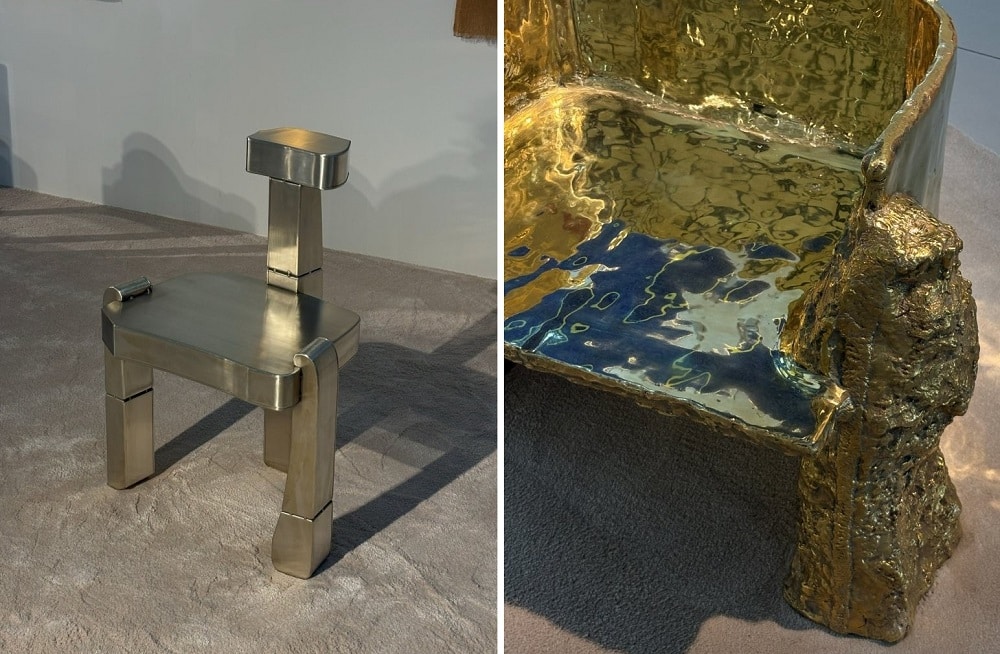
Images: Valeria Mesia
Among the examples were the works presented by ÆQUŌ, a collectible design gallery working between Mumbai and Paris. Its presentation included chairs and tables in which metal was combined with stone, contrasting metallic surfaces with the irregular character of the stone. Alongside a metal chair that brought to mind the shape of a robot, these pieces showed how familiar furniture forms can take on an unexpected presence.
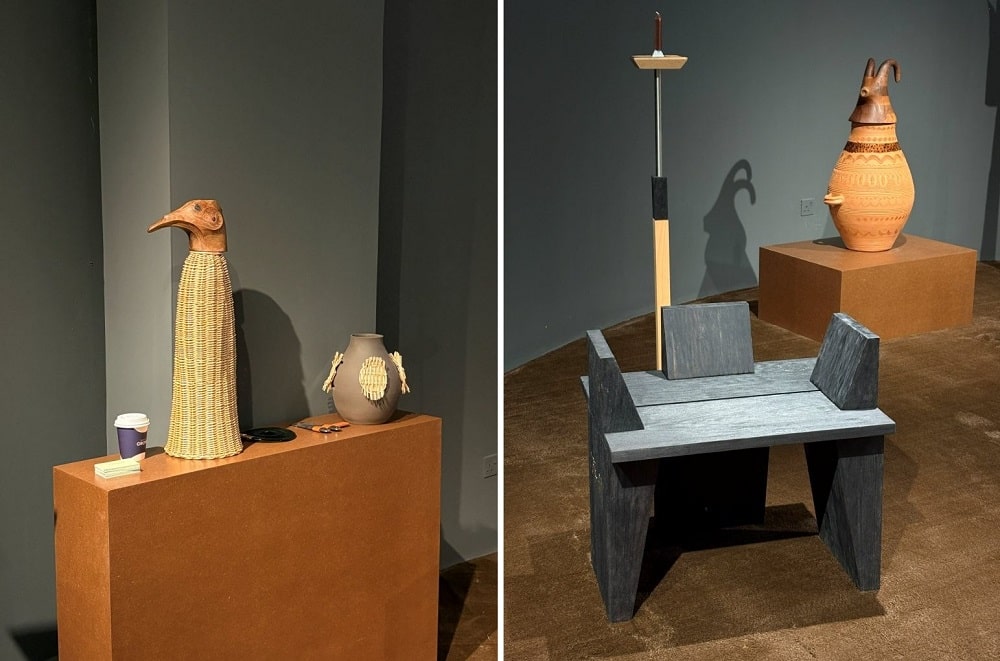
Images: Valeria Mesia
Nearby, Baku-based CHELEBI presented a collection of chairs and tables combining wood with woven details. Some stood out for their contemporary approach, with clean, straight geometric lines and a play on dimensions and proportions. Others evoked local heritage and the animals inhabiting Azerbaijan’s forests.
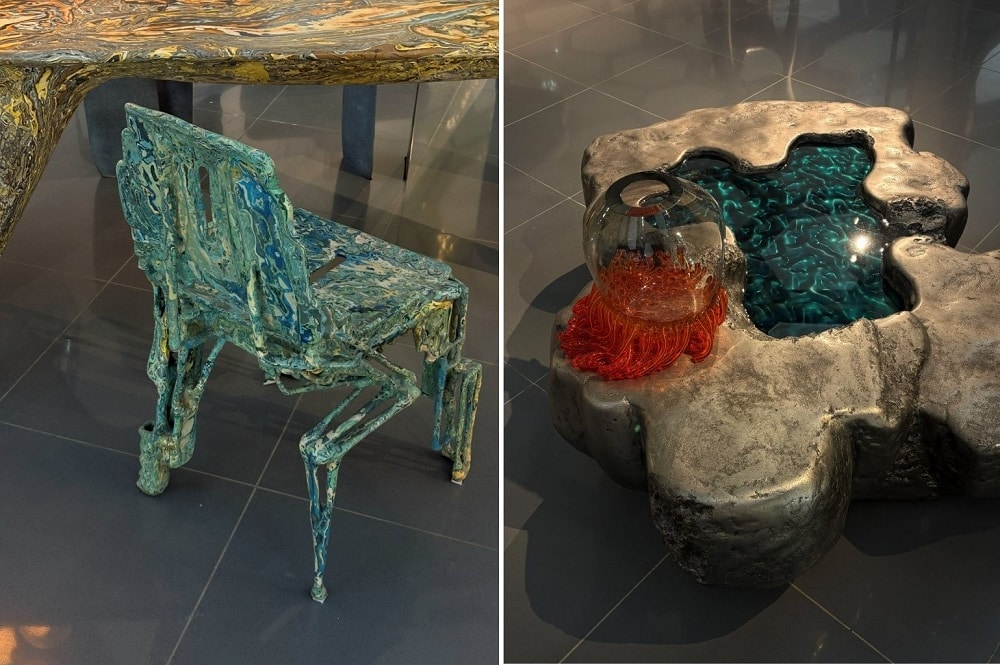
Images: Valeria Mesia
Elsewhere, the expressive possibilities of materials were equally evident. This was particularly apparent in the works presented by Milan-based Galleria Rossana Orlandi, where metal, stone and wood took on sculptural forms. Here, the character of each material was central to the finished piece, with surfaces and structures that invited closer inspection.
Images: Courtesy of NOMAD
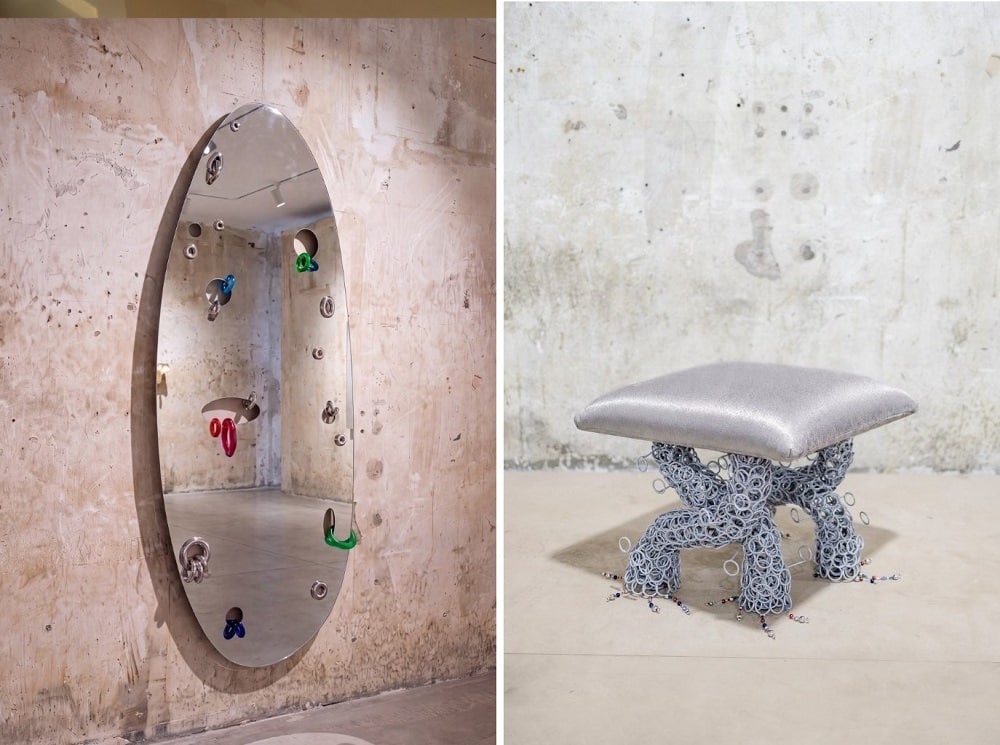
A similar approach could be seen in the designs presented by Super Loop. Several pieces combined pared-back forms with unexpected details: metal elements framing mirrors, colourful additions to a glass table, and strips of metal arranged to create a table whose structure remained part of its visual appeal.
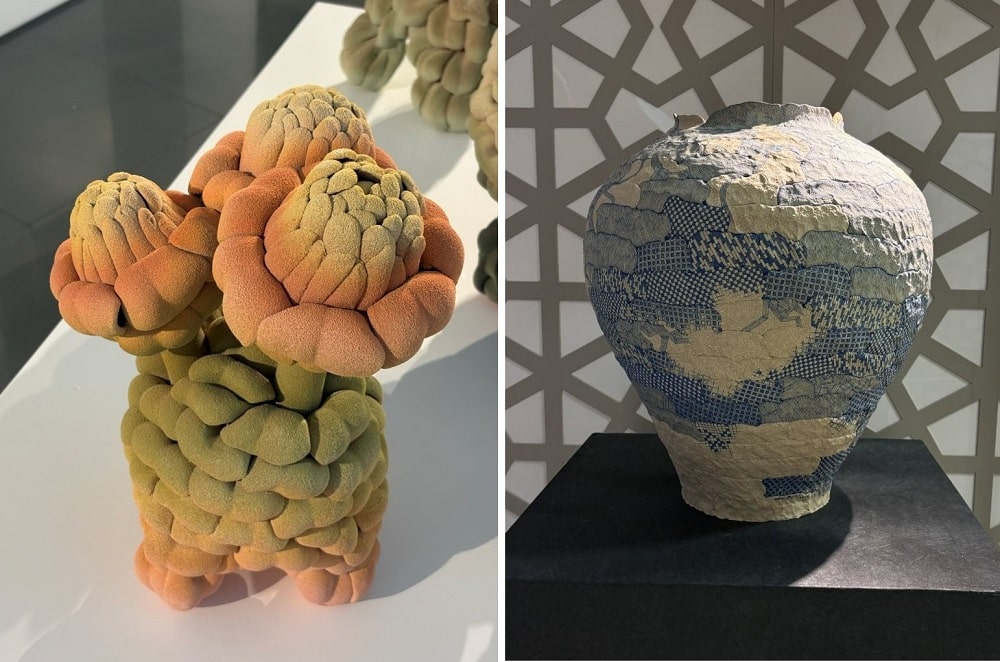
Image1: LLOYD CHOI Gallery, Image2: PIK’D Beirut, by Valeria Mesia
Lloyd Choi Gallery, meanwhile, presented ceramic pieces decorated with colourful patterns that reminded us of fabric scraps stitched together, one beside another. The result was a playful interplay between material, colour and texture, with surfaces that appeared almost textile-like.
At PIK’D Beirut, the material itself took on a more unexpected form. The Lebanese gallery presented a collection of vases by Toni Losey, whose work explores the intricate details found in nature. Inspired by patterns of plant growth, Losey translates these processes into lively forms with rich textures, paying particular attention to the interplay of light and shadow.
What caught our attention most was the contrast between the appearance of these vases and the material from which they are made. Their surfaces look almost like layers of intertwined fabric, yet they are crafted from ceramic. This approach goes beyond simply imitating nature. It challenges the properties we usually associate with materials, showing how ceramics, despite their rigidity, can suggest softness and movement.
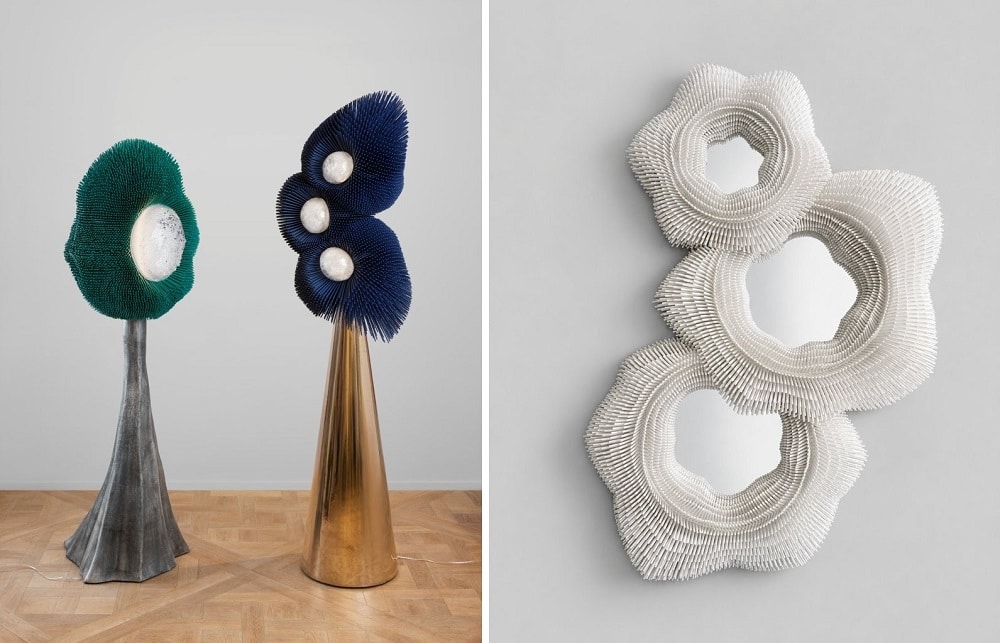
Images: Courtesy of Galerie BSL
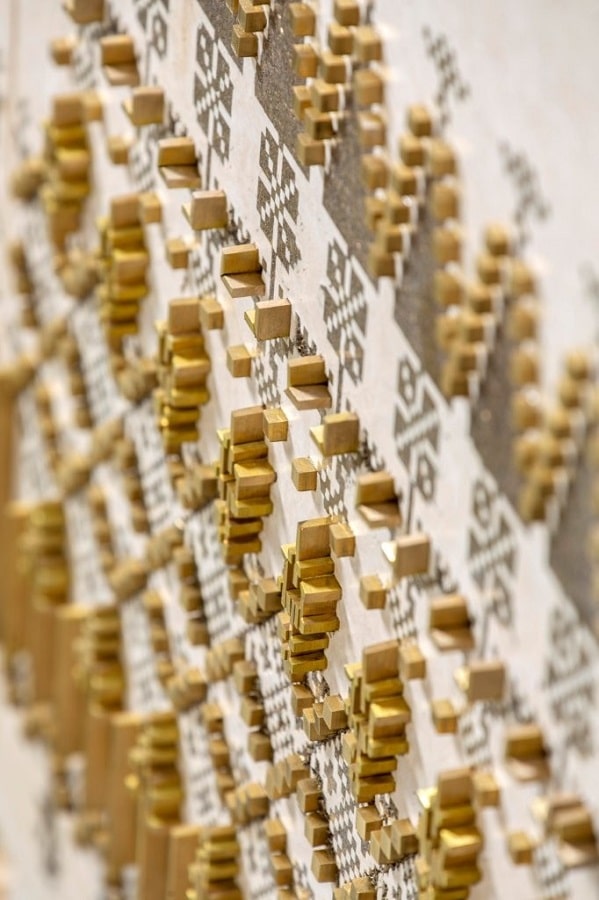
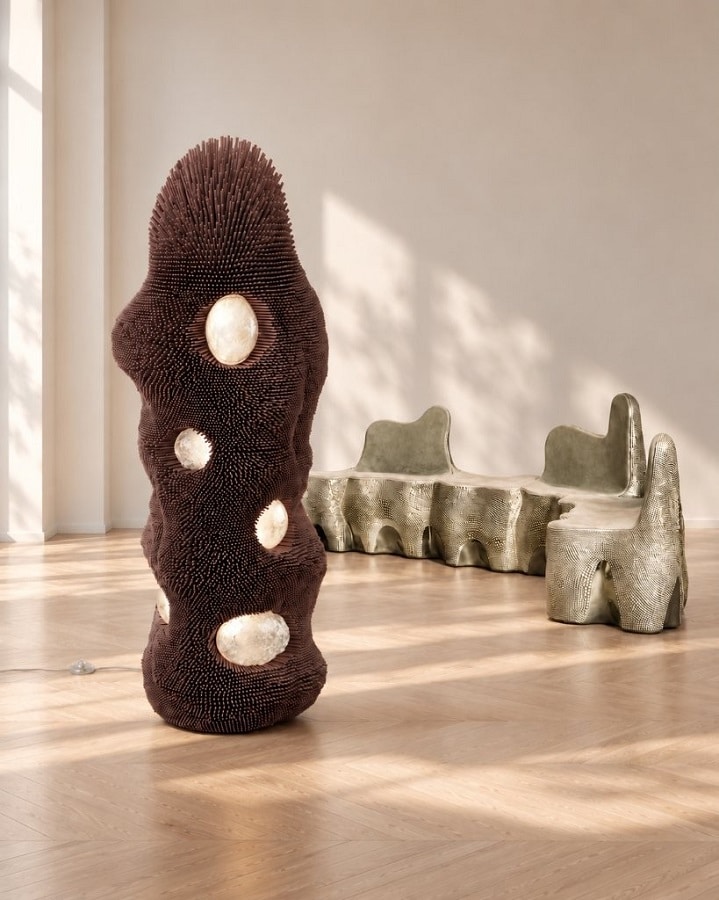
At Galerie BSL, Pia Maria Raeder’s Sea Anemone mirrors and illuminated sculptures added another dimension to the exploration of materials. Thousands of individual beechwood rods were arranged by hand to create undulating relief patterns inspired by marine organisms. At first glance, the pieces seemed almost to move, their surfaces evoking the movement of water. The transformation of wood into something so fluid made the painstaking construction part of the experience of looking at the finished work.
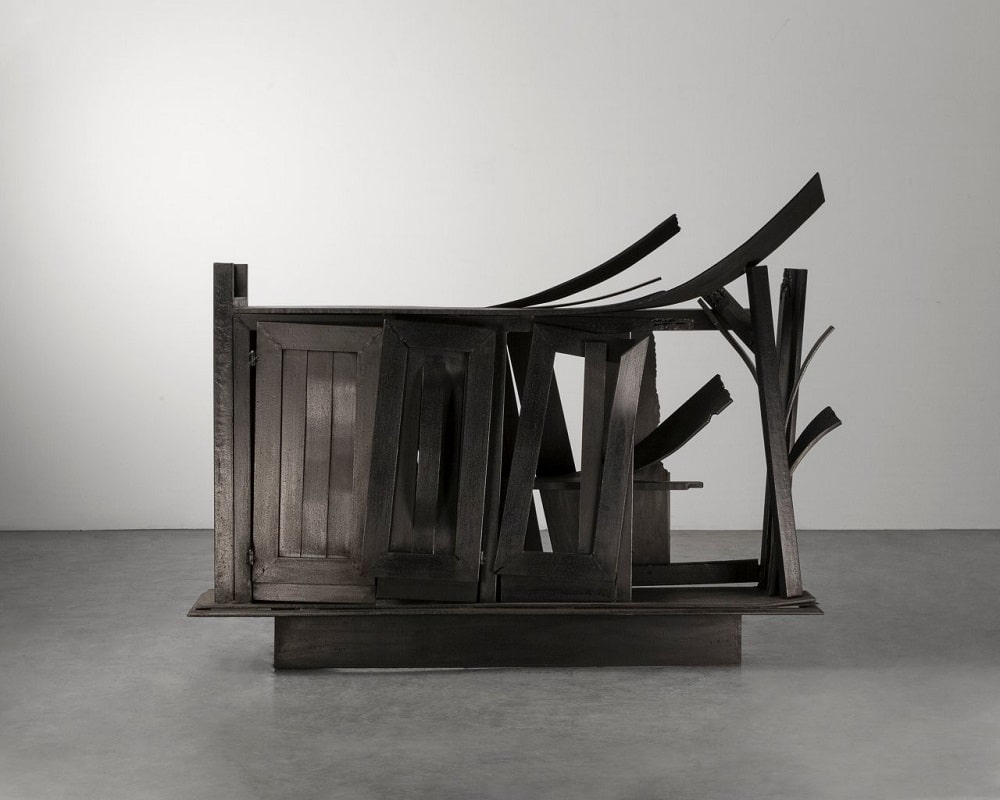
Image: Double Buffet Nouvelle Zelande, Courtesy of NOMAD
By the end of the day, we had not managed to visit all the exhibitors participating in NOMAD Abu Dhabi 2026. Still, several pieces remained in our minds, most notably Double Buffet Nouvelle Zelande by Vincent Dubourg, presented by Carpenters Workshop Gallery.
At first glance, it looked like a wooden sideboard that had been violently broken apart, although it was made from steel. What makes this design particularly striking is its ability to deceive the eye and invite us to reconsider what we are looking at. It leaves us questioning the boundaries between a material and the form it takes, between what we know it to be and what it can become in an artist’s hands.