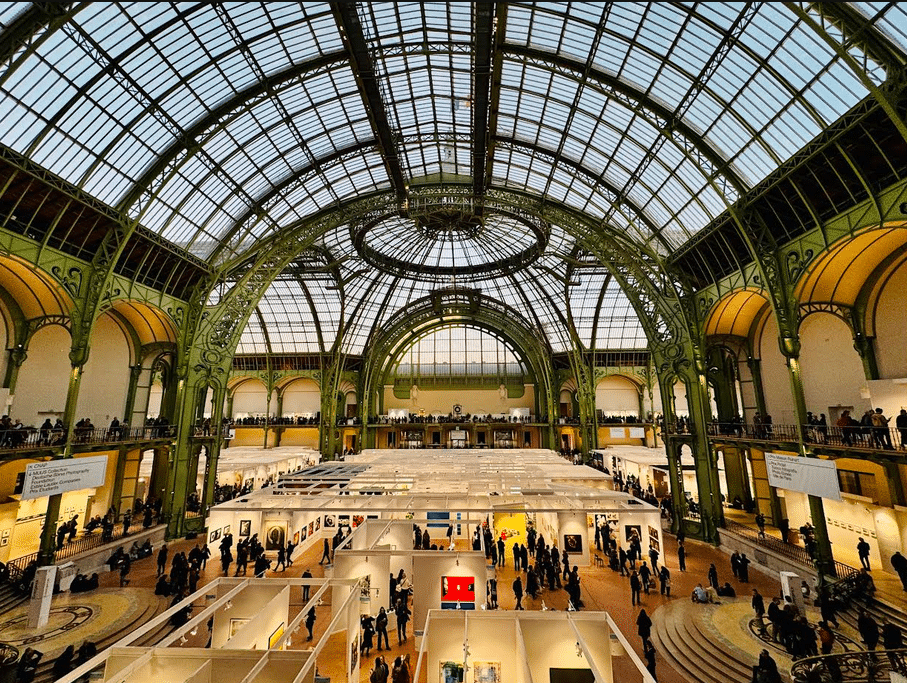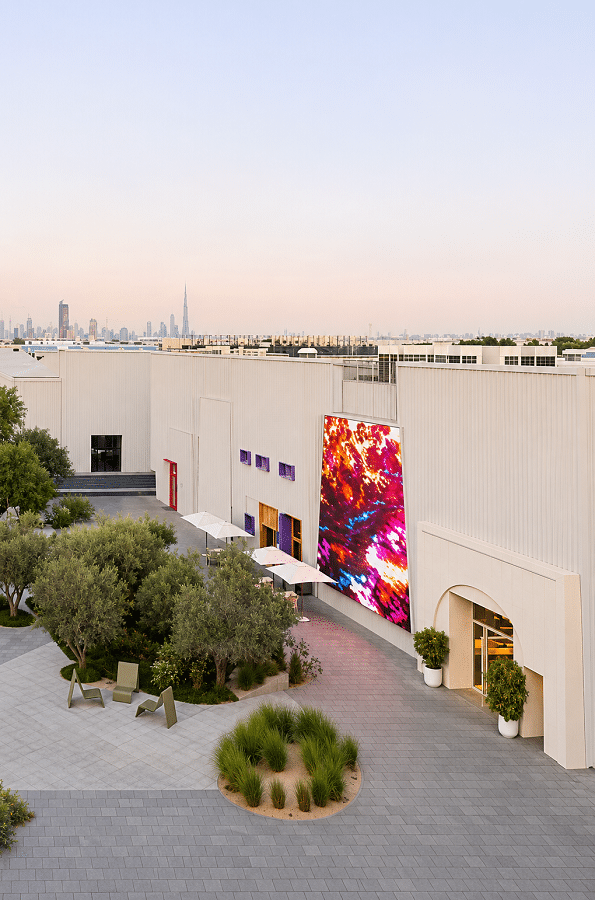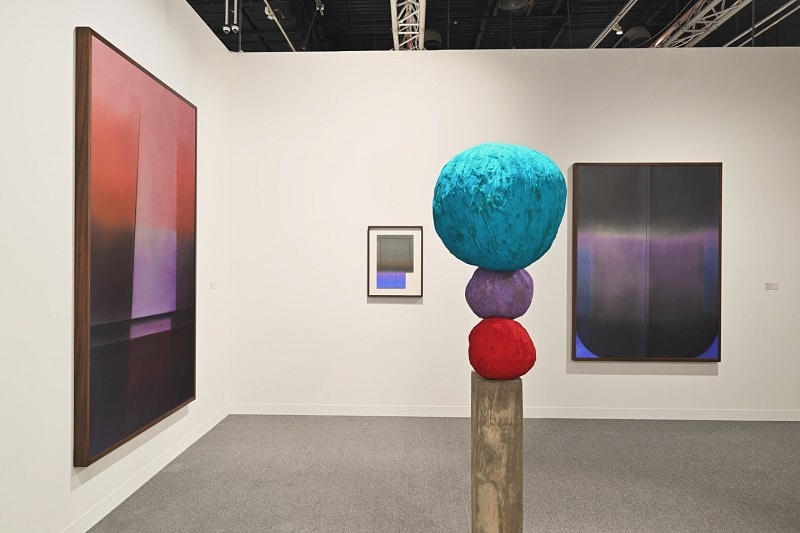
There is something that always captures my curiosity about art fairs: how does our reading of an artwork change when we discover its connection to a particular place, memory or familiar material? This question stayed with me during my visit to the inaugural edition of Frieze Abu Dhabi, taking place from 19 to 22 November 2026 at Manarat Al Saadiyat, with 89 exhibitors from 37 countries and regions.
Among the presentations, I found myself returning to works in which materials carried traces of something beyond their immediate appearance. Used fabric, coloured fibres and charcoal rubbings became ways of approaching histories that might otherwise remain distant.
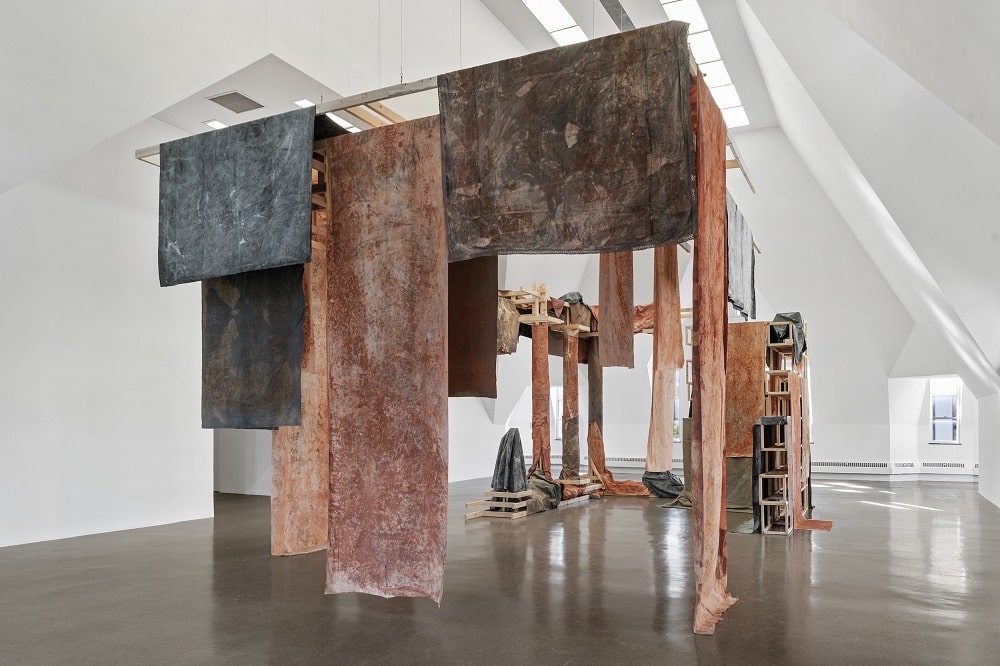
Image: Courtesy of Frieze Abu Dhabi
One work that left a particular impression on me was Qubbat Duris by Lebanese artist Dala Nasser, the recipient of the inaugural Frieze Abu Dhabi Artist Award. Curated by Nabila Abdel Nabi, the commission draws on a thirteenth-century monument near Baalbek in Lebanon’s Bekaa Valley, where fragments of Roman limestone sarcophagi rest upon eight granite columns.
Inside the fair’s atrium, Nasser evokes the monument through a timber framework draped with paintings on textile. The surfaces carry traces of the original site and its surroundings, including charcoal rubbings, ash, raw clay and terracotta. Rather than reproducing the monument, the installation brings its surfaces and material history into another setting. As a Lebanese viewer, I felt a particular connection to an artist returning to a site rooted in her country’s history. The work also raises a question that reaches beyond Lebanon: what can be preserved through an artwork when the landscape from which it comes is vulnerable to destruction?
Elsewhere, At Another Meeting Point brings together Mohammed Kazem and Alia Zaal as part of In Dialogue, a new annual exhibition pairing established and emerging artists from the UAE. Curated by Dirwaza Curatorial Lab, the presentation allows two independent practices to be considered alongside one another. Kazem’s engagement with fleeting phenomena such as sound and light meets Zaal’s interest in how images change through memory and perception.
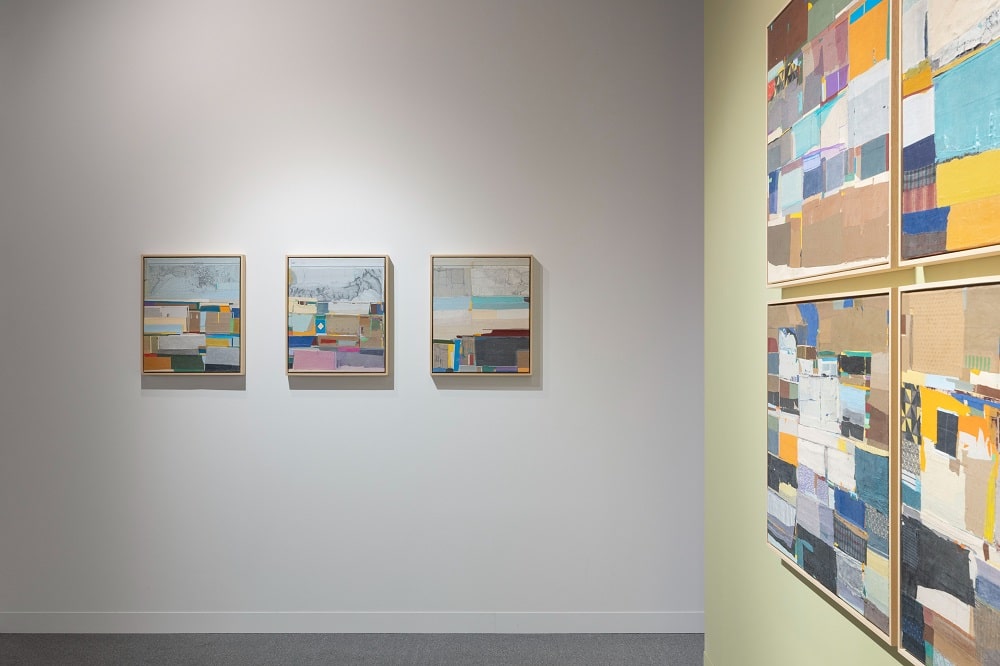
Image: Mohammed Joha, via Zawyeh Gallery Instagram
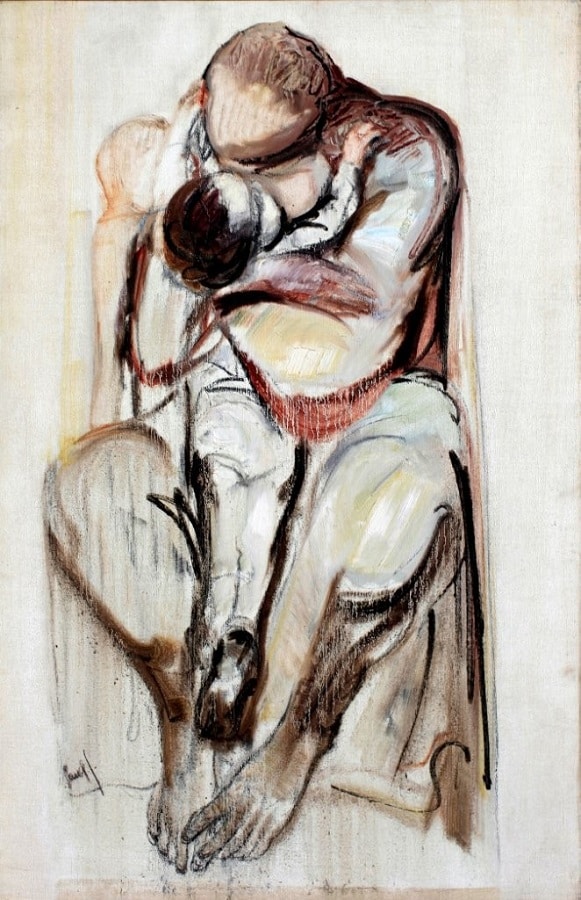
Another presentation worth spending time with is that of Palestinian artist Mohammed Joha, represented by Zawyeh Gallery in the Global Futures section, curated by Tarini Malik. Joha presents new works from his ongoing No Shelter series, following his participation in the 61st International Art Exhibition at La Biennale di Venezia, In Minor Keys. Layers of used fabric, paper and cardboard form compositions that evoke displacement and destruction, while also suggesting continuity and rebuilding
. I was particularly drawn to materials that already bear marks of use and everyday life. Their previous lives remain part of the work, giving physical form to questions of loss, memory and belonging.
Images: Yussef Agbo-Ola, via Baró Galeria Instagram
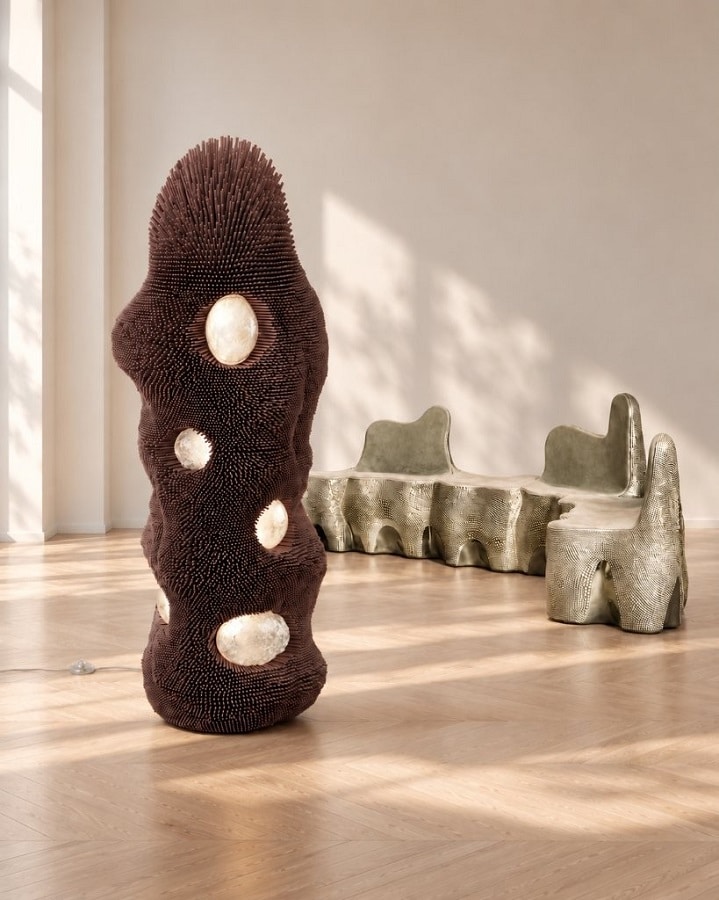
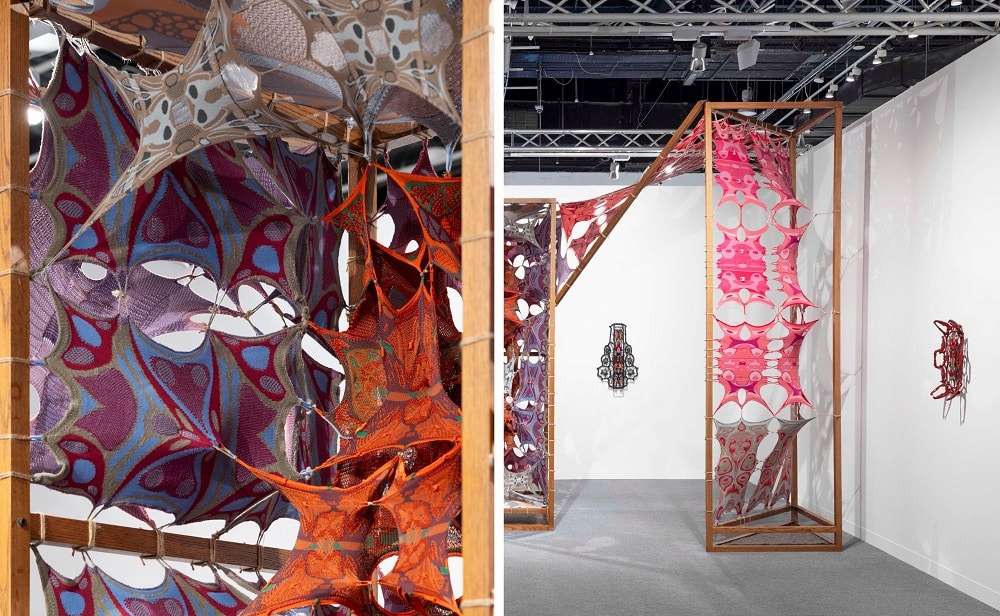
At Baró Galeria, Yussef Agbo-Ola’s solo presentation, The Infinite Within, approaches the natural world through its less visible structures. Cellular formations, Arabian paper-wasp nests and dhub burrows inform works made from threads, knots, fibres and metal components. Organic cotton and wool appear alongside recycled ocean-plastic fibre, nylon and metals.
The resulting sculptures resemble talismans and devotional objects, bringing together ecological research and the artist’s interest in ancestral knowledge. Here, the relationship with the environment emerges through the structures that sustain life, rather than through a straightforward representation of a landscape.
Images: Sheila Hicks Instagram
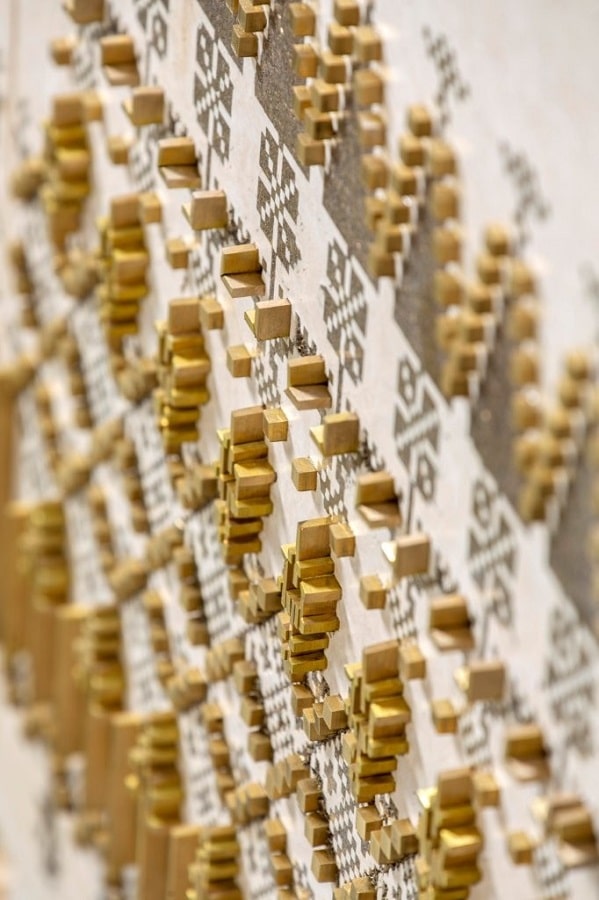
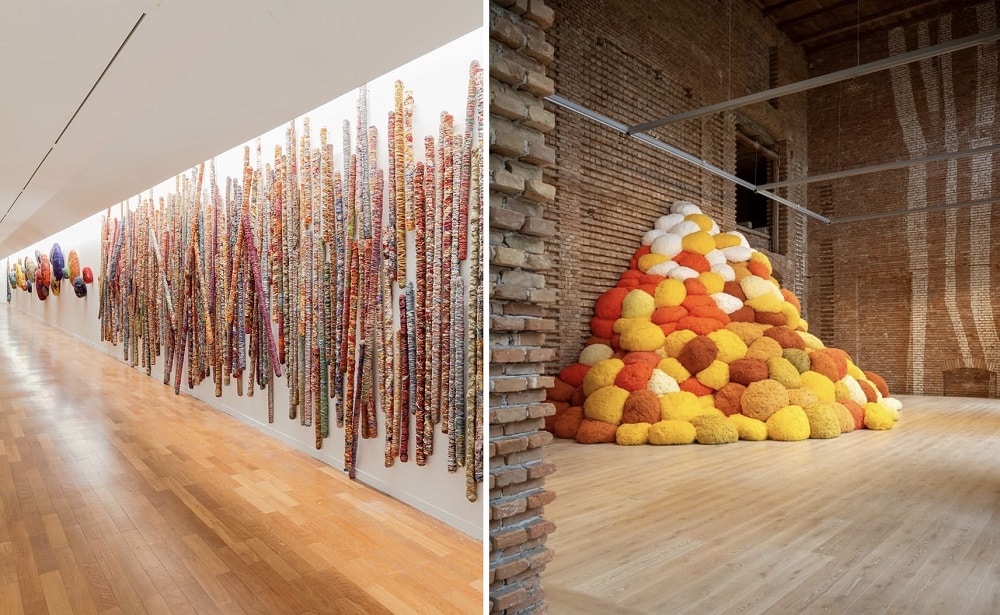
Of all the works on view, those by Sheila Hicks were the ones with which I felt the deepest connection. Presented by galerie frank elbaz, her work gives fibres a sculptural presence that extends beyond conventional distinctions between weaving, painting and sculpture.
In Contained Energy (2026), forty linen elements form a composition measuring 110 by 250 centimetres. Looking at it, I found myself thinking about how a material associated with softness can acquire such a strong spatial presence. The presentation also carries a regional history: Hicks’s relationship with the Arab world began in the early 1960s with major commissions in Saudi Arabia and developed through decades of travel across the Middle East and North Africa.
Beyond the exhibition halls, Frieze Sculpture Abu Dhabi brings five large-scale works to Mamsha Beach on Saadiyat Island, where they remain on view from 16 November to 16 December 2026.
Among them is The Form (2024) by Emirati artist Mohamed Ahmed Ibrahim, whose practice is rooted in a lifelong relationship with the landscape of Khor Fakkan. His organic forms do not reproduce nature directly, but retain something of its irregularity and rhythm.
Zeinab Alhashemi’s The Nut and Bolt (2026) turns instead towards the constructed environment. By enlarging a familiar building component, she gives an object usually encountered as a functional detail a different presence in public space.
Image: Galerie ISA
I have always enjoyed encountering artworks outside a gallery. An unfamiliar form can interrupt an ordinary walk, drawing someone closer without requiring prior knowledge of the artist or a deliberate decision to visit an exhibition.
That possibility feels particularly relevant to a fair in which so many of the works I returned to began with familiar things: fabric, fragments of buildings, traces of a landscape. Removed from their usual surroundings, they ask us to look again at what these materials hold.