At Vacheron Constantin, some of the most remarkable details are almost impossible to see with the naked eye. A carefully polished edge, a tiny component fitted into a movement, or an engraved surface that requires hours of concentration. Each belongs to a much larger process, one in which technical precision and artistic imagination must work together.
When I travelled to Geneva to visit Vacheron Constantin’s manufacture and discover the world of Les Cabinotiers, I was interested in understanding how an idea becomes a timepiece. As a creative director, I spend much of my working life translating concepts into something tangible. I wanted to see how that same process unfolds in Haute Horlogerie, where a single creation can bring together years of development and the expertise of numerous specialists.
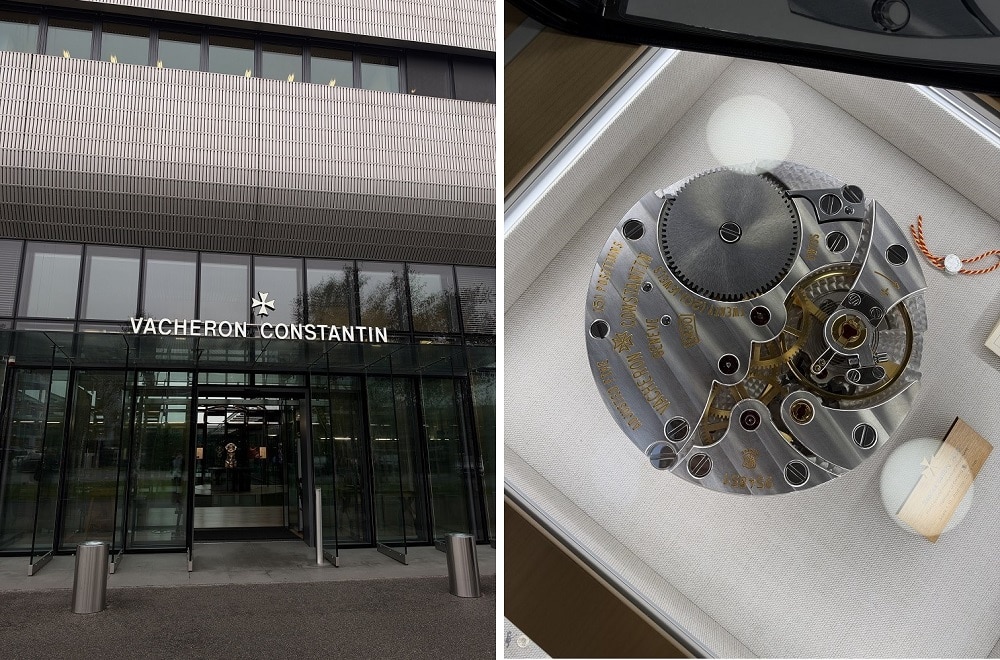
The press trip, which included an introduction to Les Cabinotiers Odyssey, offered an opportunity to explore the Maison’s approach to exceptional watchmaking. Beyond the finished creations, I was particularly looking forward to meeting the people behind them and discovering the techniques that have been passed down through generations of artisans.
A Tradition of Making the Exceptional
The name Les Cabinotiers recalls Geneva’s master watchmakers of the 18th century, who worked in workshops on the upper floors of buildings, where natural light allowed them to concentrate on their intricate craft. These artisans combined technical knowledge with an interest in science, astronomy and the arts.
Today, Vacheron Constantin continues that tradition through Les Cabinotiers, its department dedicated to creating unique timepieces. Some are conceived by the Maison’s own designers, engineers and watchmakers, while others begin with a collector’s personal vision.
Images: VC WEB
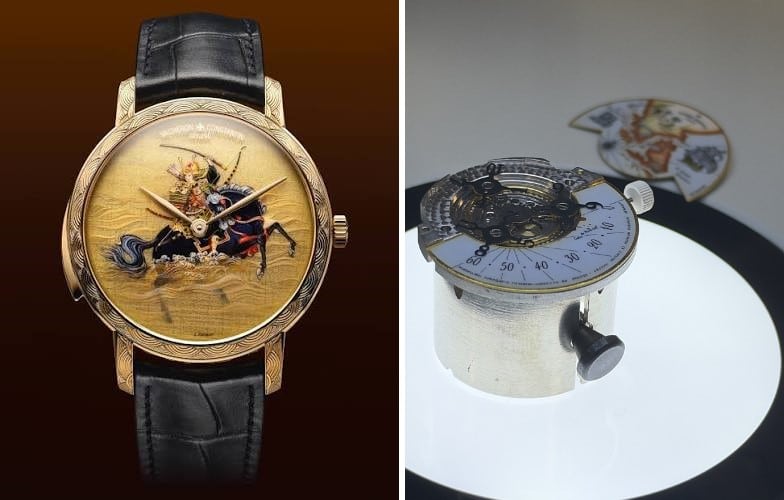
Among the creations that illustrate this approach is Les Cabinotiers – La Quête, a series introduced for the Maison’s 270th anniversary in 2025. Inspired by astronomy and mythology, the series explores two themes: Astronomic Momentum, dedicated to astronomical complications, and Epic Odyssey, which draws on heroic figures and historical narratives.
These creations reveal how far watchmaking can extend beyond the measurement of time. An astronomical phenomenon or a mythological story can become the starting point for a mechanical movement, an engraved case or an intricately decorated dial.
What I was curious to understand was how such an ambitious idea could be developed into something so precise, and ultimately small enough to wear on the wrist.
Inside the Manufacture
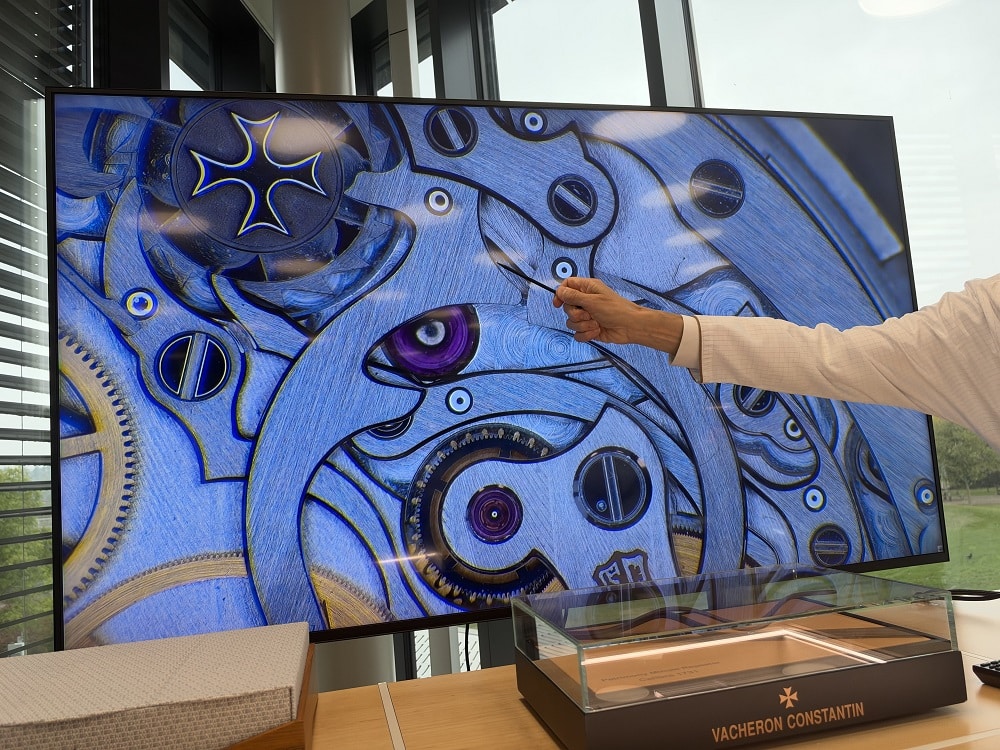
Walking through the manufacture, I began to understand how many individual operations contribute to a finished watch.
The process involves a balance between advanced technology and traditional handcraftsmanship. Machines produce components to exacting tolerances, but much of the finishing, decoration and assembly still depends on the experience and precision of human hands.
A component may be mechanically produced before passing to an artisan who refines its surfaces, polishes its edges or prepares it for assembly. Techniques such as brushing, chamfering and perlage demand consistency and an understanding of how even the smallest detail contributes to the finished movement.
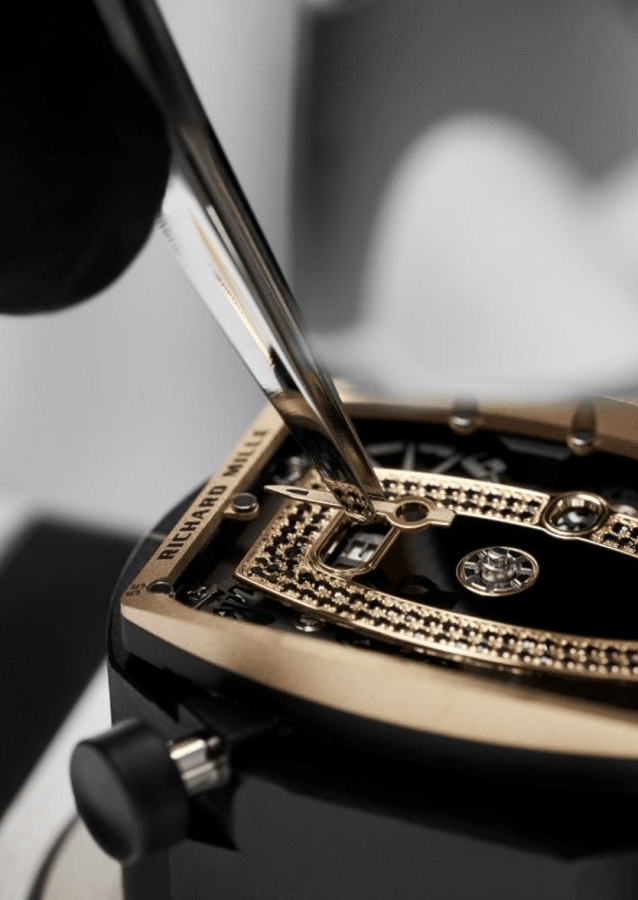
During the visit, I learned about the assembly of components such as a steel axle and brass wheel, which must be fitted together with great care. These operations might appear almost insignificant when compared with the complexity of a complete watch, yet its performance depends on their accuracy.
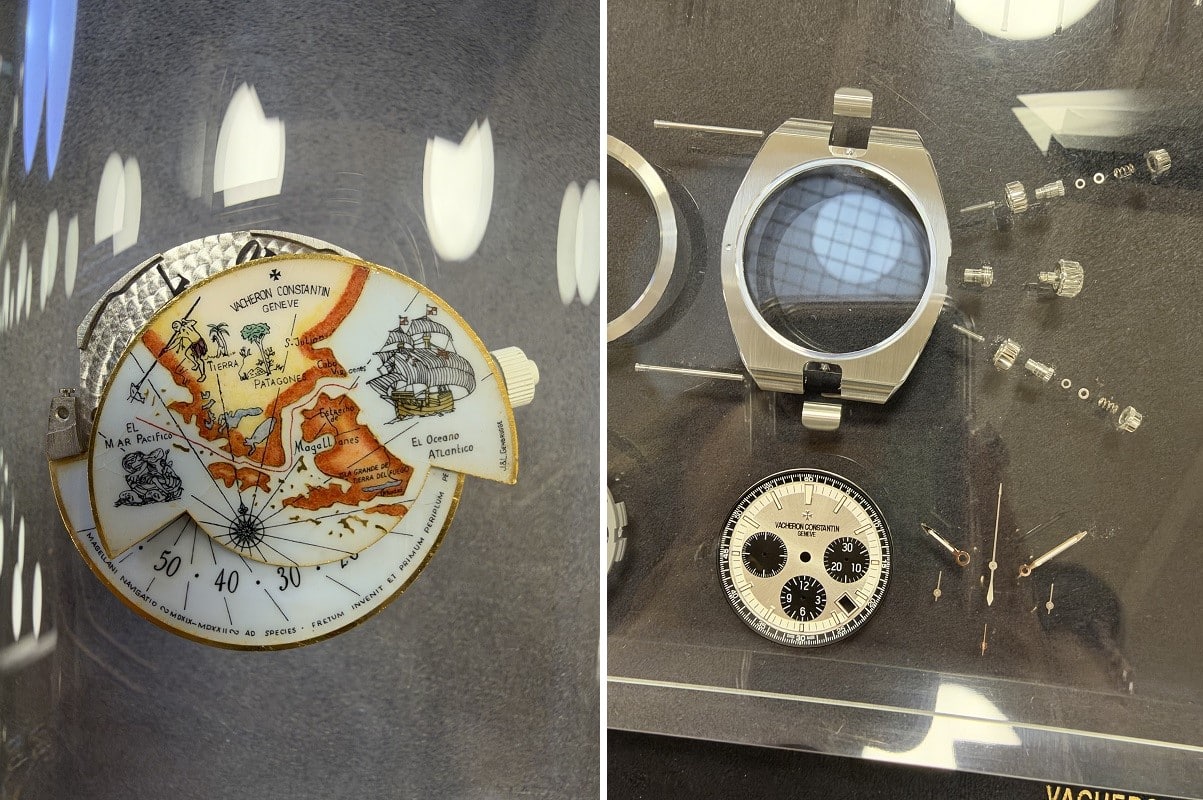
What struck me was the concentration involved. Each specialist works on a particular element, often one that the eventual owner may never see directly. Nevertheless, the same attention is given to the hidden surfaces as to the visible design.
I found myself thinking about how much work goes into the parts we rarely notice. A finished timepiece gives little indication of the hours spent perfecting a single component, or of how many people have contributed to its construction.
The Métiers d’Art
The manufacture visit also offered an insight into the Métiers d’Art, the artistic crafts that give many of Vacheron Constantin’s creations their distinctive character.
Engraving, enamelling, guilloché and gem-setting are among the disciplines through which the Maison preserves traditional expertise while continuing to develop new techniques and artistic approaches.
Each requires a different understanding of materials and an exceptional degree of control.
An engraver works directly into metal, creating textures, patterns and miniature scenes on surfaces that leave almost no room for error. The depth of an incision determines how light catches the engraving, and the slightest movement can alter the result.
Enamelling involves building colour and depth through successive applications and firings. The artisan must understand how different pigments respond to heat, often repeating the process several times before achieving the desired finish.
Guilloché introduces geometric patterns through controlled, repeated movements, while gem-setting requires precious stones to be positioned securely within the design.
What interested me was how these different crafts contribute to the same creation. An engraver cannot work entirely independently of the watchmaker, just as the designer must consider the mechanical requirements of the movement from the outset.
The case needs to accommodate the movement it protects. A decorated dial must preserve the legibility of its indications. Even the smallest decorative decision has to work within the technical requirements of the watch.
It was fascinating to discover how many different skills are involved, particularly when the finished object appears so seamless.
When Art and Mechanics Come Together
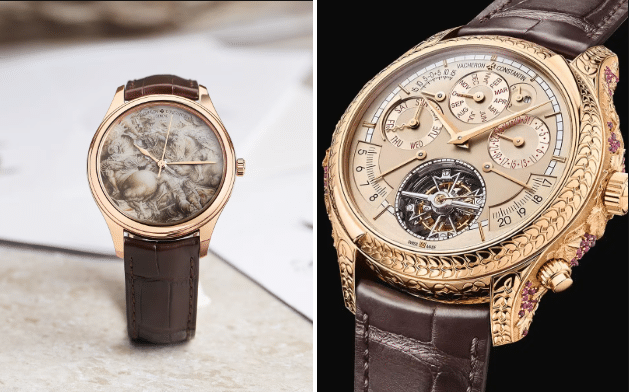
One creation that illustrates this relationship is the Les Cabinotiers Armillary Tourbillon – Myth of the Pleiades, part of La Quête.
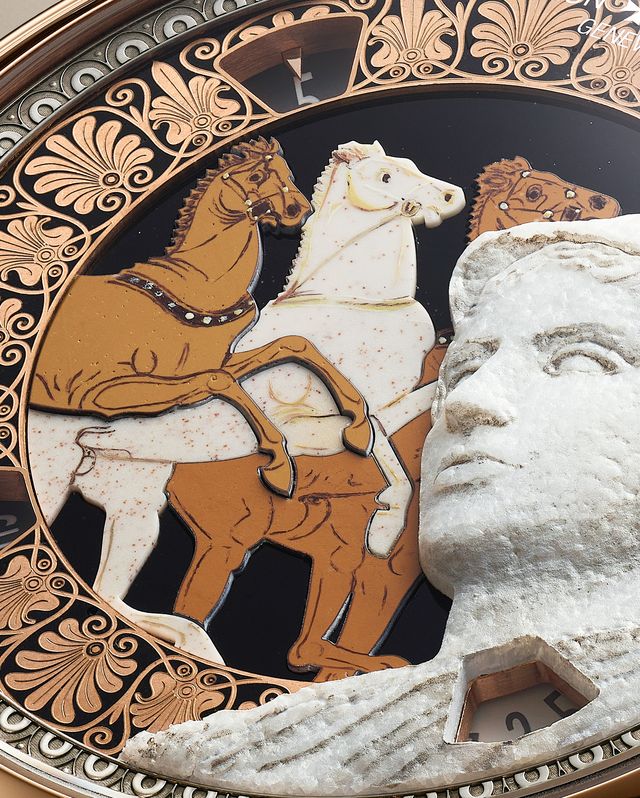
Inspired by the Greek myth of the seven sisters transformed into stars, the watch brings together an intricate mechanical movement and approximately 450 hours of hand engraving.
Its pink-gold case features mythological scenes associated with the Pleiades and Orion. The engraving extends across the case, bezel, lugs and caseback, with the different surfaces requiring careful consideration of the composition.
Inside is Calibre 1990, a mechanical movement incorporating a bi-axial armillary tourbillon and retrograde displays for the hours and minutes. The construction draws inspiration from historical astronomical instruments, bringing another interpretation of the celestial theme into the watch.
The engraving and mechanical construction are quite different disciplines, but neither can be developed without considering the other. The dimensions of the movement influence the architecture of the case, while the decorative work must respect the precise construction beneath it.
The result brings together two forms of expertise, one concerned with the mechanics of timekeeping and the other with translating a story into metal.
Looking at a creation of this complexity, it becomes easier to appreciate the conversations and decisions that must take place between the specialists involved, long before the finished watch is presented.
Where Ideas Begin
During the visit, I also spoke with Morgan Maillard, Vacheron Constantin’s Style & Heritage Expert, about the creative process behind Les Cabinotiers.
Our conversation helped connect what I had learned about the manufacture with the decisions that take place long before the first component is made.
Morgan explained that ideas can emerge from many different sources: an archival discovery, a newspaper article, a drawing or an interest in a particular historical subject. Designers and engineers may discuss these possibilities years before they develop into a finished project.
“We do not come up with a theme and then create something behind it. We bring different ideas together and find the right theme.”
Images: VC WEB
I found this particularly interesting because it reminded me of the creative process in my own work. An idea rarely develops in a perfectly straight line. Sometimes the technical possibility comes first. At other times, an artistic concept inspires the search for a mechanical solution.
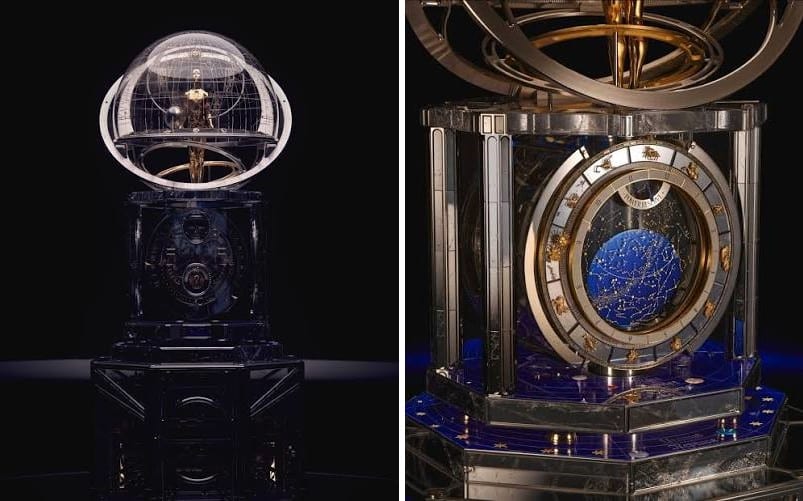
The development of La Quête du Temps, the Maison’s monumental astronomical clock, offers another example of this approach.
Developed over seven years, the creation stands 107 centimetres tall and incorporates 6,293 mechanical components. More than 15 disciplines contributed to its development, bringing together mechanical engineering, artistic craftsmanship and specialist expertise.
The clock includes an automaton whose movements are coordinated with the mechanism, demonstrating how watchmaking can extend into other forms of mechanical and artistic expression.
“For me, it combines everything Vacheron is capable of,” Morgan explained.
What I found particularly interesting was the scale of the collaboration required. While the finished clock is a single creation, its development depended on people with quite different areas of expertise working towards the same idea.
A Timepiece with a Personal Story
The same exchange between imagination and expertise also shapes the private commissions undertaken by Les Cabinotiers.
Morgan explained that creating a bespoke timepiece begins with conversations about the collector’s ideas, interests and personal references. The process can involve sketches, digital renderings and physical models before a design is approved.
Images: VC WEB
The discussions themselves may take months or even years, while the production of a particularly complex watch can require several additional years.
He offered a hypothetical example of a collector choosing a single sapphire among diamonds on a bezel to commemorate a private milestone.
The detail might be invisible to anyone unfamiliar with its meaning, yet deeply significant to the person wearing the watch.
“It’s their property to share the story,” he explained.
I liked the idea that something so technically complex could also hold such a personal meaning, one that the owner might choose never to share.
The People Behind the Timepieces
By the end of the visit, I had begun to see Les Cabinotiers differently.
Of course, the finished watches are extraordinary, but I kept thinking about the work taking place behind them. The care involved in assembling a movement, the time required to engrave a surface and the knowledge that each artisan brings to a particular stage of the process.
What appears as a single creation is actually the result of many individual contributions. The engineer, designer, engraver and watchmaker each approach the object from a different perspective, yet their work must eventually come together.
For me, this was the most meaningful connection with my own creative work. An idea may begin with one person, but bringing it to life often depends on the experience and imagination of many others.
Leaving Geneva, I kept thinking about the vest with my name embroidered on it, which I had worn during the manufacture visit. It was a small gesture, but one that stayed with me. Wearing the uniform made me feel, briefly, part of the team.
After spending time with the people behind these creations, I understood why that attention to detail mattered. It was something I had encountered throughout the visit, from the smallest component to the finished timepieces.
And perhaps that is what I will remember most about Les Cabinotiers: the people, and the care they bring to every part of the process.