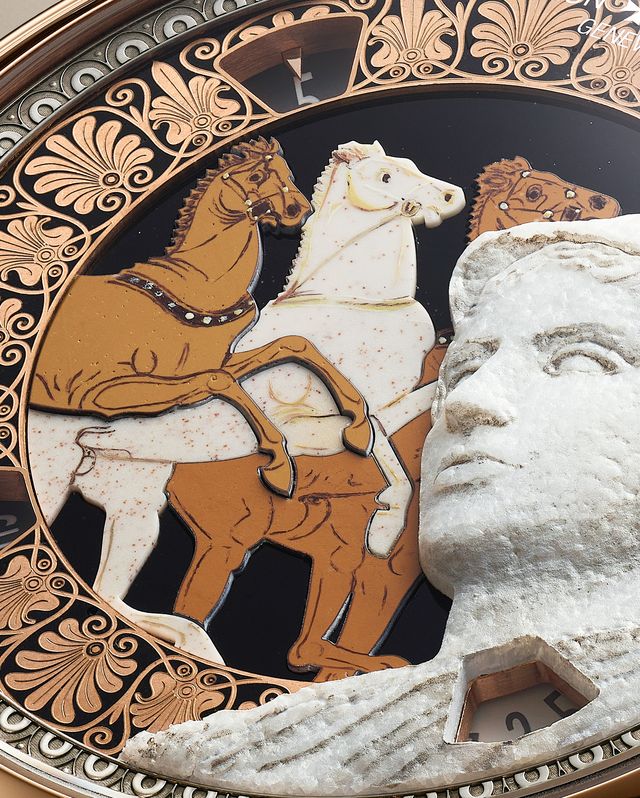
The world of watchmaking is no longer defined solely by established maisons that have built their reputations over decades, or by timepieces distinguished by innovative movements. Today, an increasing number of emerging brands are entering the industry and making their mark from the very first releases.
FAYY is one such brand. It caught attention with its debut through a watch that is difficult to overlook. The Hong Kong-based brand has introduced the Manman Panda, a 39mm titanium timepiece featuring a hand-painted illustration of a panda.
Some might argue that watches with illustrated dials are nothing new, and they would be right. What sets these creations apart, however, is the fact that the illustrations are painted by hand, along with the meaning and character behind them.
The work draws on the Chinese art of inside painting, a traditional craft with a history spanning more than two centuries. With this watch, the brand entered the Artistic Crafts category of the 2026 Grand Prix d’Horlogerie de Genève (GPHG). It is an unusual debut for a young watch brand, and one that comes with a welcome sense of playfulness.

Images: FAYY Watches Instagram
For this timepiece, the brand created an entirely fictional character: a panda named Manman, sitting at the centre of the dial, surrounded by bamboo stalks, an element closely associated with the cultural heritage of East Asia.
Its charming, endearing appearance is what first catches the eye. Look closer, however, and the watch reveals a technical achievement that goes well beyond its initial appeal. The illustration is painted on the inner surface of the sapphire crystal, using a technique that requires the artist to work in reverse. Small openings are left to accommodate separate discs displaying the hours, minutes and seconds. This allows the illustration to remain almost entirely uninterrupted by the timekeeping indications.
But that is not the only surprise this watch has in store.
The watch case can also be detached from its strap and worn as a pendant, allowing the watch to be worn as a necklace rather than solely on the wrist. There is one detail that may disappoint some collectors, though: production is limited to just 50 pieces. It is unlikely to become a widely available or familiar sight anytime soon, preserving its exclusivity and individuality.
But what is it that gives hand-painted dials their particular appeal? Unlike printed images, miniature paintings are executed by hand using exceptionally fine brushes and across a very limited surface, requiring the artist to exercise extraordinary control over the smallest details.
The image is built up through successive layers of colour, and some of its finer elements may require a magnifying glass to appreciate fully.
Depending on the design, these works can incorporate enamel, gold or precious stones, or combine several techniques. The result is more than a decorative detail. It is an independent work of art that shares its space with the watch’s timekeeping function.
Images: Vacheron Constantin
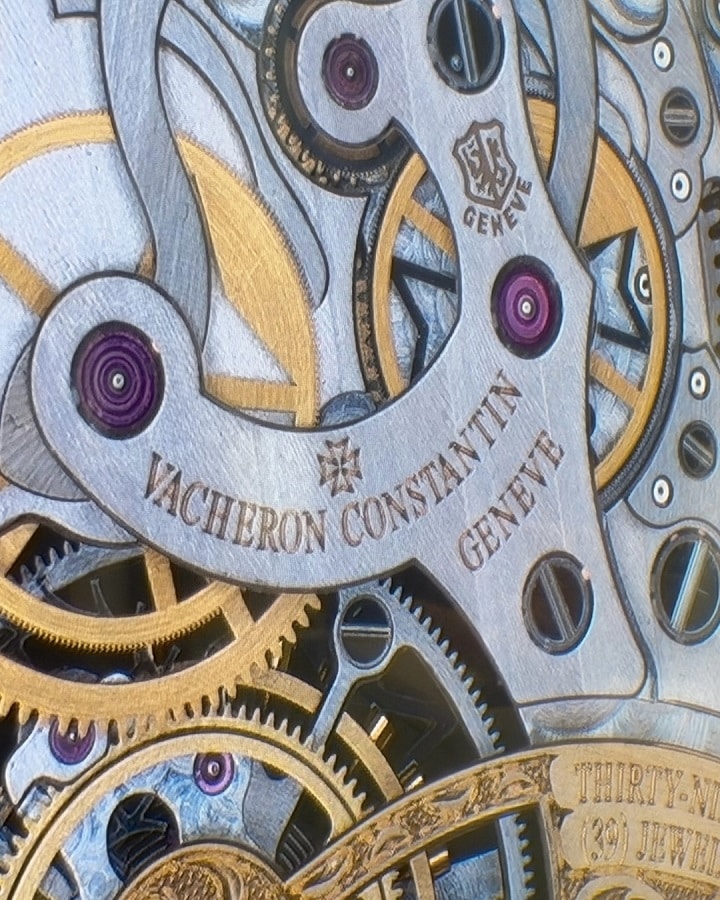
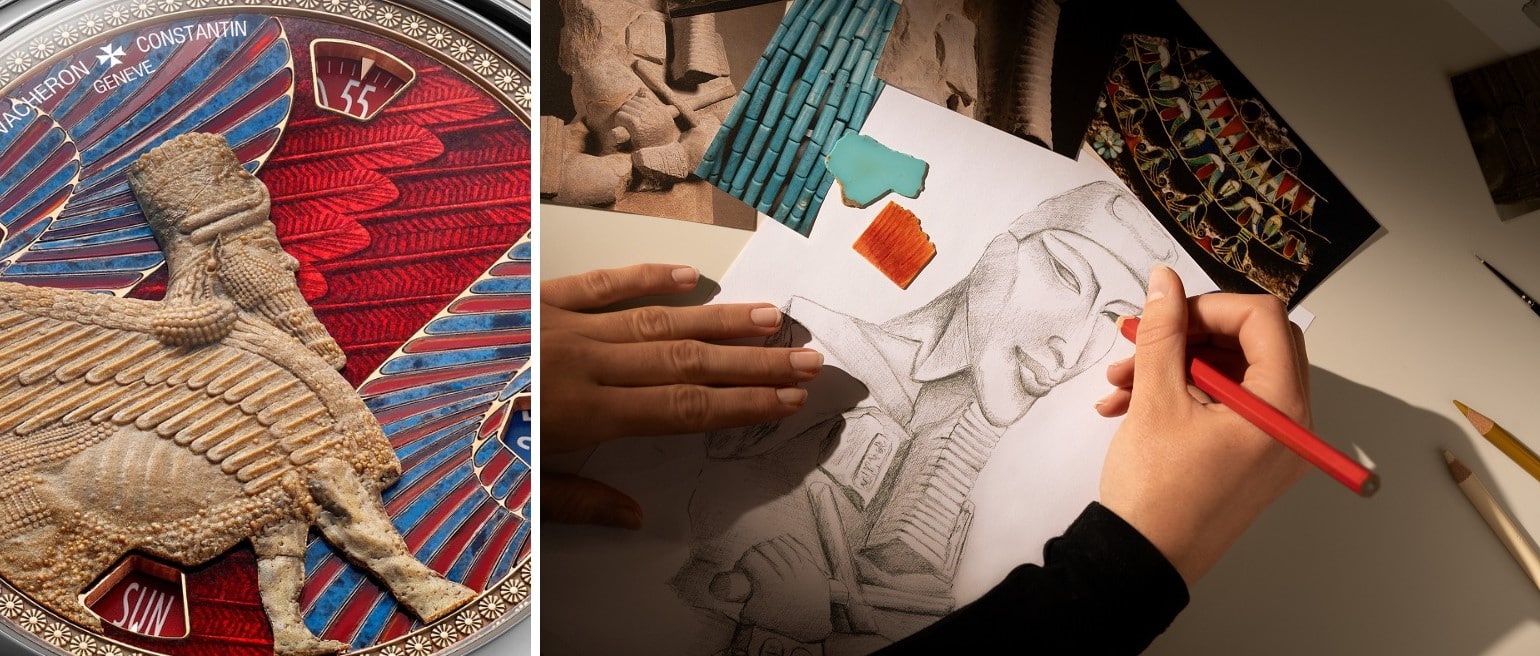
This approach, however, is not entirely new to watchmaking. Vacheron Constantin, for example, has previously transformed the dials of its Métiers d’Art Tribute to Great Civilisations collection into something resembling miniature museums.
For the 2026 edition of its ongoing collaboration with the Louvre Museum in Paris, the Swiss maison drew inspiration from the museum’s Department of Antiquities, specifically its collections from Pharaonic Egypt, the Assyrian Empire, Ancient Greece and Imperial Rome. The result is four timepieces, each limited to just 15 pieces. Their dials feature artistic motifs inspired by these ancient civilisations.
Vacheron Constantin did not rely on a single engraving or painting technique. Instead, the designs brought together hardstone carving, known as Glyptics, micro-mosaic, engraving, enamel work and miniature painting. At the centre of each dial, sculpted hardstone figures are surrounded by decorative motifs inspired by the artistic traditions of the civilisation represented.
Images: Courtesy of MB&F
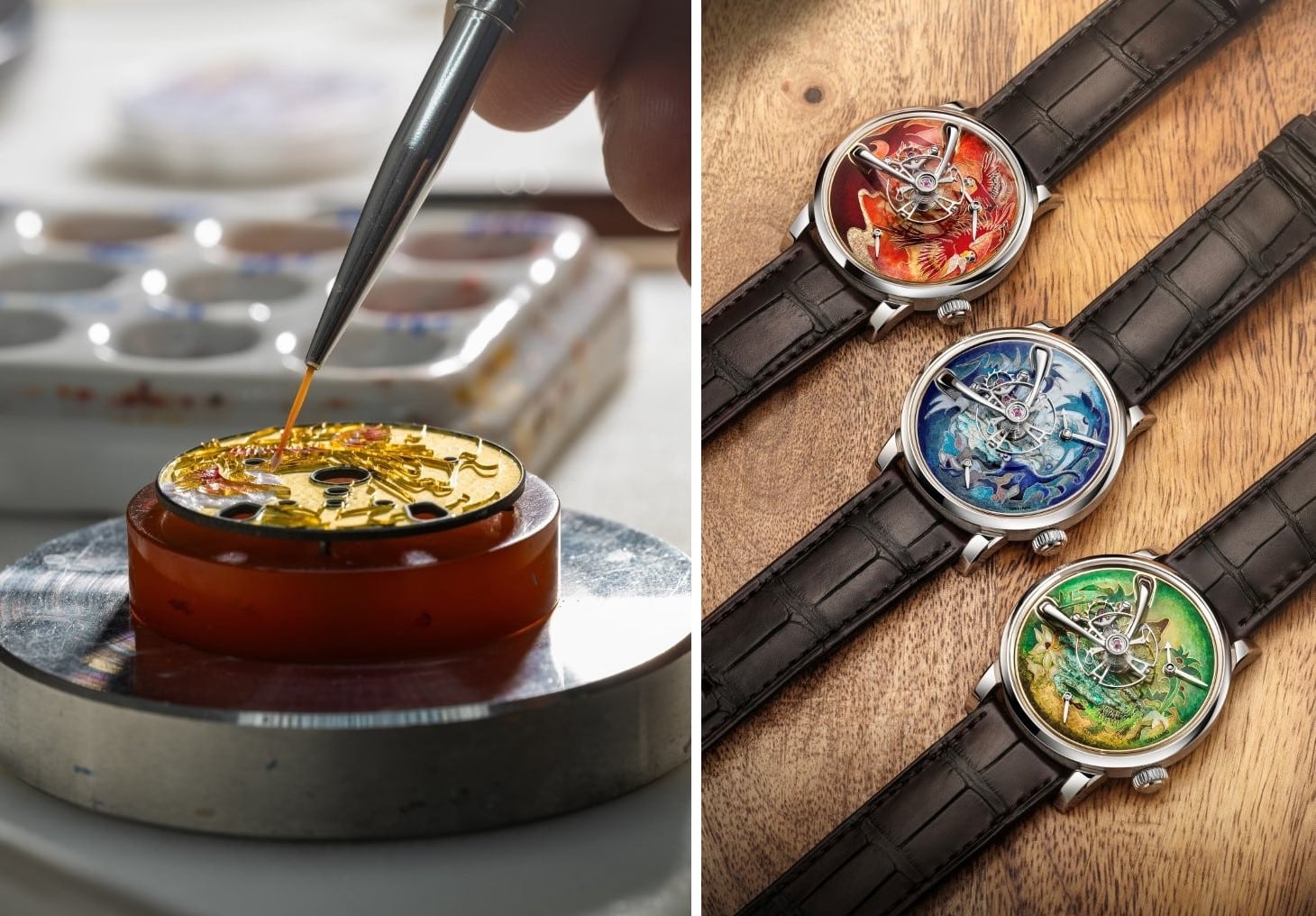
Taking a different approach, MB&F unveiled a collaboration this month with independent artist and enamelist Gabriel Colliard, resulting in three editions of the Legacy Machine 101. Here, the technique is not miniature painting in the traditional sense, but cloisonné enamel. The process begins with fine gold wires, which are carefully bent by hand to outline the design and create small compartments. These are then filled with enamel and fired at high temperatures. The process is repeated to build up the colours and create depth.
Colliard created three scenes inspired by the forest: a scarlet macaw against a red background, a playful monkey rendered in shades of blue, and a crocodile surrounded by green foliage. Each edition is limited to eight pieces. What makes this collaboration particularly interesting is the way the artwork interacts with the movement’s three-dimensional architecture. The suspended balance wheel and sculptural bridges become part of the composition, while MB&F modified the dial’s structure to give the artist more room to work. The artistic treatment does not stop at the dial, either. It extends to the enamelled ratchet wheel, which is also decorated with enamel to complement the main scene.

Images: Van Cleef & Arpels Instagram
Another notable example is Van Cleef & Arpels’ Lady Arpels Pont des Amoureux collection, which has turned dial illustrations into stories open to endless possibilities. Through these watches, the maison brings its fascination with ballet and love stories into a miniature world measuring no more than a few centimetres. The hand-painted illustrations are only part of the experience; movement brings them to life. The two lovers gradually move towards one another to share a kiss at noon and midnight, while other models feature hand-painted enamel backgrounds that evoke the changing seasons across the city.
Ultimately, these timepieces reveal the intricate relationship between art and time. A watch dial is no longer simply a neutral surface for hands, markers and other indications. It can also become a canvas on which artists explore some of the most intricate and demanding forms of craftsmanship.
These creations remind us that patience, imagination and manual skill remain just as valuable as ever. Perhaps that is part of their appeal: they invite us to spend far longer looking at a watch than we would ever need simply to tell the time.