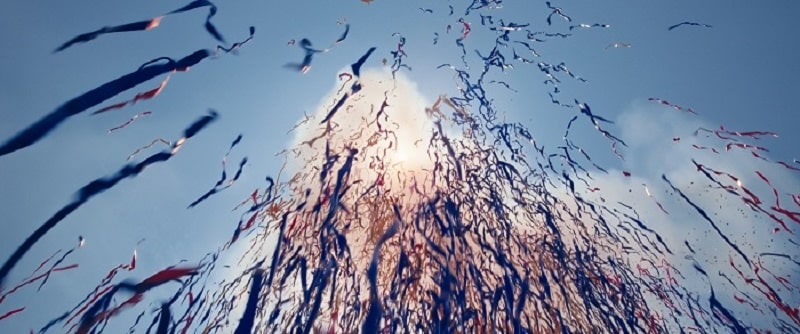
In the summer of 1831, something strange began happening in the sea between Sicily and Tunisia. Ships passing near the southern Sicilian coast reported water that appeared to boil, dead fish floating on the surface and smoke rising from the sea. An underwater volcano was erupting.
Within days, a new island appeared. Britain called it Graham Island, the Kingdom of the Two
Sicilies called it Ferdinandea, while the French referred to it as Île Julia. Each name came with its own claim to the island. Then, before the dispute could be settled, the island disappeared. Its loose volcanic material was rapidly worn away by the sea and, within months, it had slipped back beneath the Mediterranean.
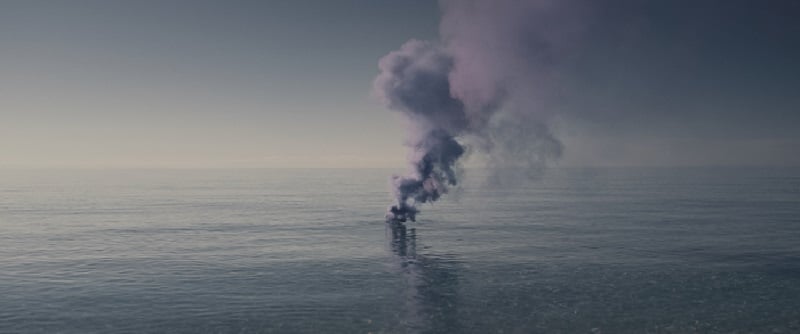
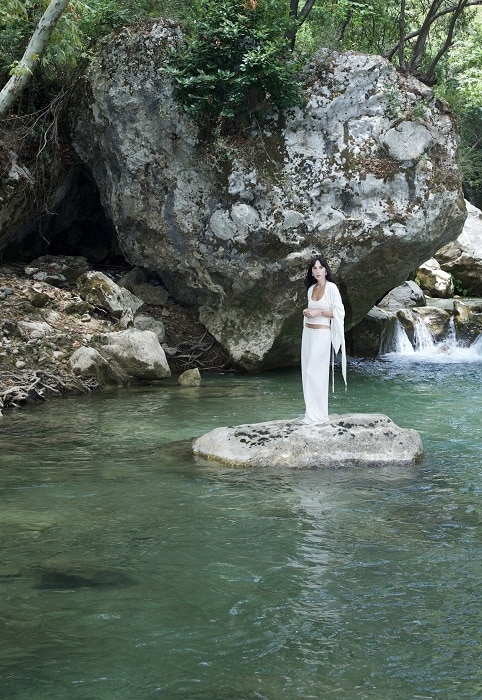
Image: Elisa Giardina Papa, She Flickered In and Out of History, 2026. Courtesy of the artist.
Elisa Giardina Papa takes on this short-lived geopolitical drama in She Flickered In and Out of History, her new 18-minute film and mixed-media installation at London’s Institute of Contemporary Arts (ICA)
Before making the film, she travelled to the site with fishermen from Pantelleria and dived to around forty metres. She says the submerged volcanic formation is now a natural fish nursery. The film moves across Mount Etna, Stromboli and submerged volcanic slopes in the Mediterranean. Water, ash, pyroclastic material and pumice appear in place of one fixed image of the island.
Giardina Papa says the narration is built entirely from historical records. “Nothing is invented, yet everything is rearranged.” Reading nineteenth-century geological reports, she noticed that measurements varied from one account to another. Heights, depths and dimensions shifted as the island continued to form and erode.
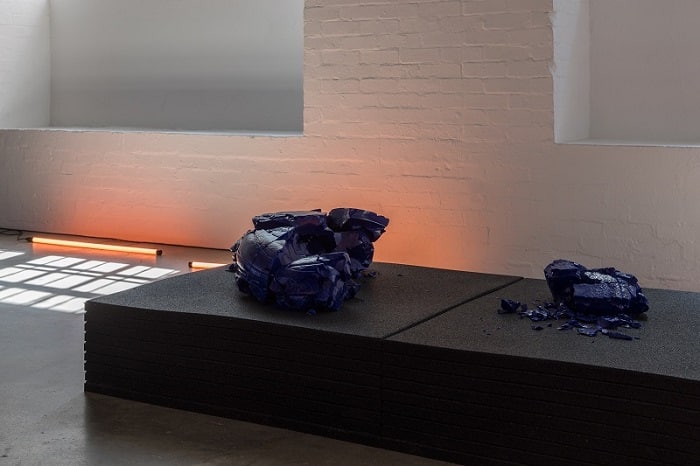
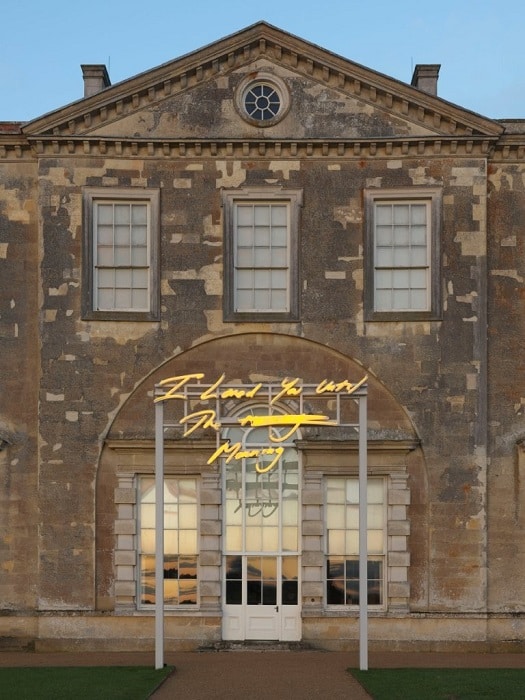
Elisa Giardina Papa, She Flickered In and Out of History, 2026. Installation view at Institute of Contemporary Arts, London, 2026. Photograph©Rob Harris
The final stanza of the film’s poem turns to colour, drawing directly on eyewitness accounts recorded after the eruption: violet, lilac, purple, indigo-blue. In Palermo, the sun appeared as ‘a pale whitish-blue disc’. At Saint-Sever in France, it was described as ‘round and white like a moon’ before becoming ‘a pale blue colour’. A newspaper in Guangzhou reported ‘a pale green sun on both rising and setting’. In Tennessee, a note in the margin of a family Bible described the sun as a ‘clear blue culler’.
Those colours reappear in the gallery in glass works made partly from cotisso, a raw glass normally returned to Murano furnaces to be melted again.
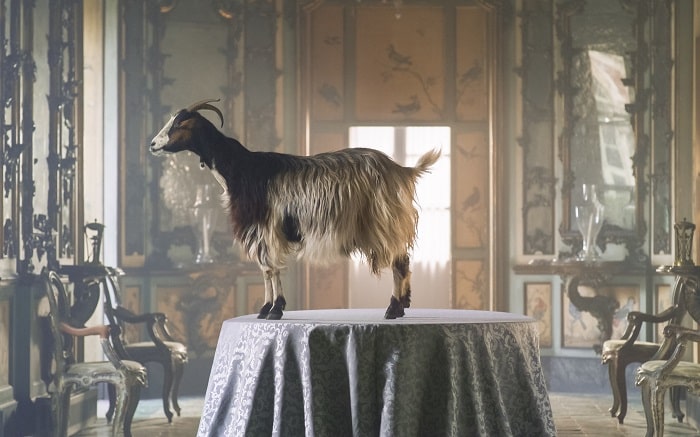
Image: Elisa Giardina Papa, “U Scantu”: A Disorderly Tale, 2022. Video and ceramic installation. Variable dimensions,12 min. Still frame from video. Courtesy of the Artist and Galerie Tanja Wagner. ©Elisa Giardina Papa.
The new film is the second chapter in Giardina Papa’s trilogy exploring forgotten
Mediterranean histories. The first, U Scantu: A Disorderly Tale (2022), was first presented at the 59th International Art Exhibition of La Biennale di Venezia. It drew on Sicilian folklore, family memories and Inquisition records surrounding the donne di fora, figures from Sicilian tradition described as human yet part animal, benevolent yet vengeful.
She describes the new film in terms of ‘withdrawal and refusal’, rejecting the idea that land is simply ‘a given object available for capture’.
Almost two centuries later, the island is still underwater. The questions it raised never really went away.