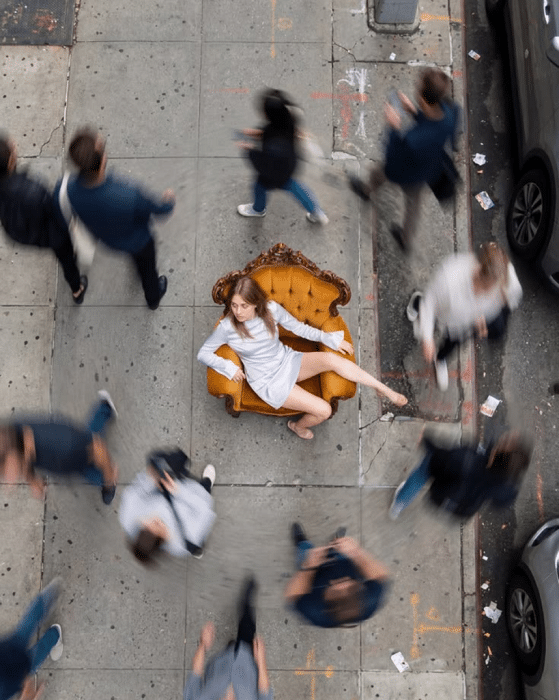
I recently revisited the farm in North East England where I lived from the age of two to around twelve. It looked a lot smaller than what I remember but still as beautifully wild and rugged – a stone-built small holding surrounded by the storybook’s favourite “fields as far as the eye could see.” What I remember most about that time was being outside, helping my uncle round the sheep or playing in the fields or barns, completely preoccupied with whatever fantasy world filled my head. This was the 80s: there was no Internet, no social media, no digital anything, and boy, am I grateful for that.
The pressure to be ‘on,’ performing, responding and digitally present 24/7, is starving us of our peace, not to mention the space to let our imaginations run wild. It’s almost impossible to have an original thought. We’re constantly fed ‘things we might like’ by carefully curated algorithms and informed and influenced by the opinions, tastes and agendas of others.

Open Instagram on any night right before bed (terrible idea, I know) and within the space of a few minutes you might see: shopping bait via new product drops, triggering images of trending news (or more bizarre claims by Trump), workout hacks to achieve the body of your dreams, someone blitzing greens and Avo into a smoothie, AI generated ads, and so on. Try to close your eyes and attempt a peaceful nights’ sleep after that.
It’s actually quite hard to measure what all of this is doing to our brains. Maxed anxiety levels? Collective desensitisation to brutality? One thing that scientists and psychologists can agree on is that social media has the propensity to contribute to poor mental health more generally – particularly among young people. One study by Dr Yunyu Xiao, an assistant professor of population health at Weill Cornell Medicine, found that adolescences who were “addicted” to social media were at roughly double the risk of suicidal behaviour.
Kate Winslet is just one of many high-profile names that has spoken out on the subject, banning her own children from using social media. Now, even governments are on board, and the UAE has followed in the footsteps of Australia and the UK by implementing a ban on social media for under 15-year-olds. But even without imposed restrictions, there’s a conscious movement towards digital minimalism: people are tired of filters, noise, and fake perfection. They want quiet confidence, real connection, and moments that don’t need to be posted.

Cue companies that are providing opportunities for in-person connection. In a world where dating, music discovery, and the flow of information is largely controlled by algorithms, there is a movement pushing people back to in-person hangs. The following five apps are designed to get people off their phones and into real conversations:
The Breakfast: a member’s only offline social network for people to meet one-on-one in local cafes, encouraging “real conversations over breakfast.” Currently available in 27 cities including Dubai.
The League Dubai: the aim is quality over quantity at The League, which is building a thoughtfully connected community of people who know what they want in the company they keep. Members are screened and span media, technology, finance, entrepreneurship and the cultural sphere.
Timeleft: this friendship app and social networking platform connects strangers through curated in-person dinners, coffee catchups and group runs, operating in over 200 cities globally.
Belong: popular in the UAE and across the Middle East, Belong connects like-minded people and local creators through real-world community events.
Art of Mondays: “We create spaces for ambitious people to belong,” is how Art of Mondays describes its global community and lifestyle brand, providing experiences such as co-living and working trips to Bali, real-talk therapy groups, and sporting activities.