‘How can we reimagine a world that brings people together as opposed to dividing them?’
When Sheikha Al Mayassa bint Hamad bin Khalifa Al Thani, Chairperson of Qatar Museums and sister of Qatar’s Emir, posed this question during a breakfast discussion in Basel in June, she was speaking about much more than the future home of Art Basel Qatar.
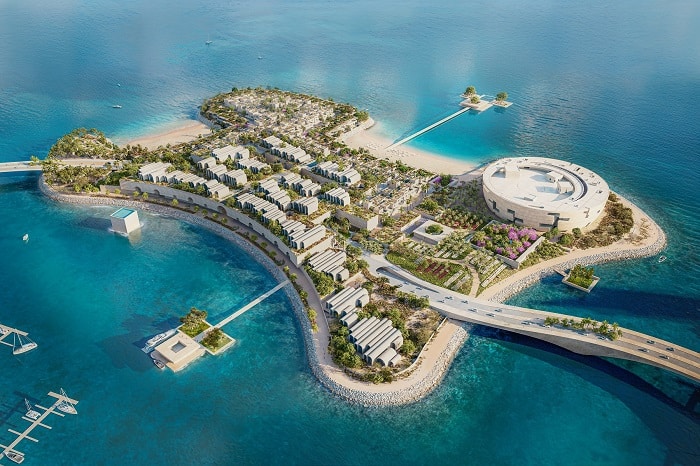
In conversation with Jacques Herzog, the Swiss architect and co-founder of Herzog & de Meuron, she outlined the next phase of Al Maha Island, an existing man-made island off the coast of Lusail, north of Doha.
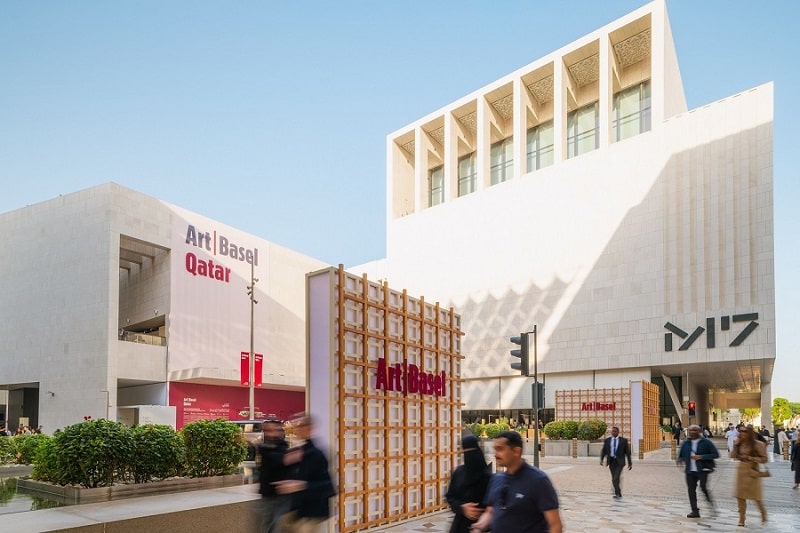
The first Art Basel Qatar took place at M7 and Doha Design District in February 2026. In the years ahead, the fair is expected to move to a permanent venue on Al Maha Island, within a larger development bringing together culture, hospitality, public space and residential life. Breaking ground in 2028 is currently the project’s target.
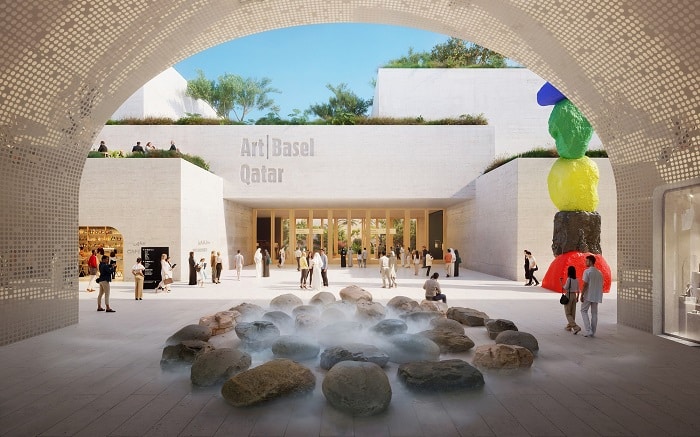
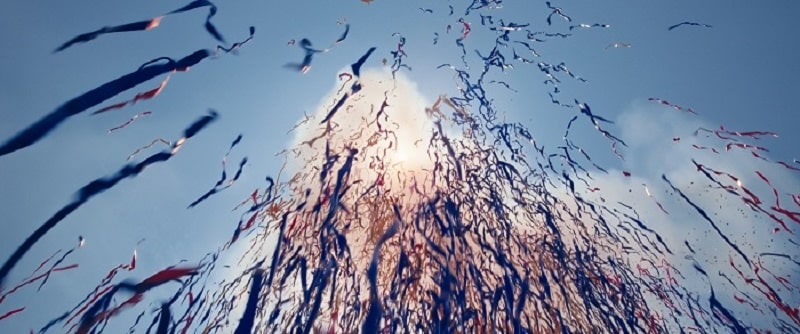
Rendering of Art Basel Arrival © Herzog & de Meuron with Ugo Rondinone, Doha Mountains (rendered image) (c) Ugo Rondinone, 2026.
Shaped by Water and Shade
For Herzog, the project begins with Qatar’s coastline, where land and water constantly shift into one another.
‘What is really land and what is water?’ he asked
Sand, rock and water will shape the island’s materials. The climate will be equally important. Courtyards, thick walls, arches and shaded passages have long shaped the experience of moving through the region’s architecture.
‘It contains hidden secrets about how to give people this feeling of being protected,’ Herzog
said.
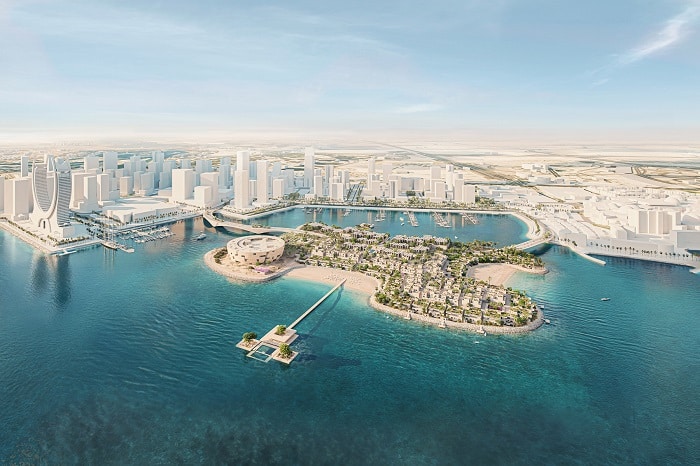
Aerial Wide View of Al Maha Island © Herzog & de Meuron
At Al Maha Island, shade will set the rhythm of the visit. Visitors may cross the brightness of the coast, enter a cooler passage and emerge into a garden, arriving from Lusail by bridge or boat as the city, marina and open sea gradually unfold around them.
‘How should people move here? How should people stay? How can we protect them from the harsh climatic conditions and make it a pleasure to be there, to go there?’ Herzog asked.
His answer lies in gardens, bridges, shaded routes and spaces that allow visitors to pause. He stressed that the island should not become an anonymous Gulf resort detached from its own character
The wider development will include a reinterpreted souq, a village, a mosque and paths across the water, with its character shaped by Qatar’s climate, landscape and traditions of making.
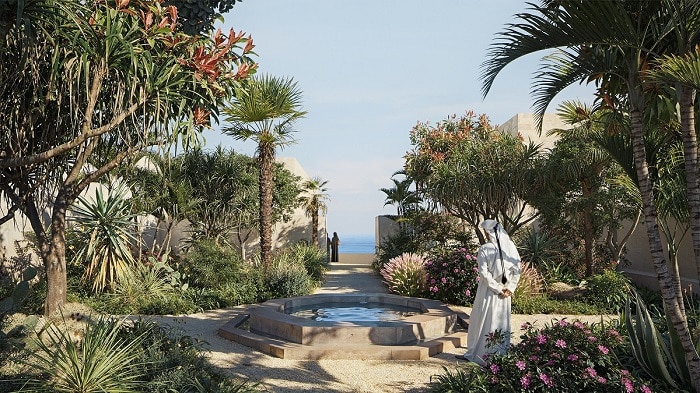
Rendering of Garden © Herzog & de Meuron.
Two Moons, One Museum
At the southern end of the island, the planned Lusail Museum will form the cultural centre of the development. Its volume will be shaped by three intersecting spheres, forming two distinct parts: one resembling a full moon, the other a crescent moon wrapping around it.
The earth-coloured exterior will give the building a sense of weight and permanence. Herzog described the form as “almost like a planet”. Deeply recessed windows will shield the interiors from direct sunlight while preserving views towards the sea and Lusail.
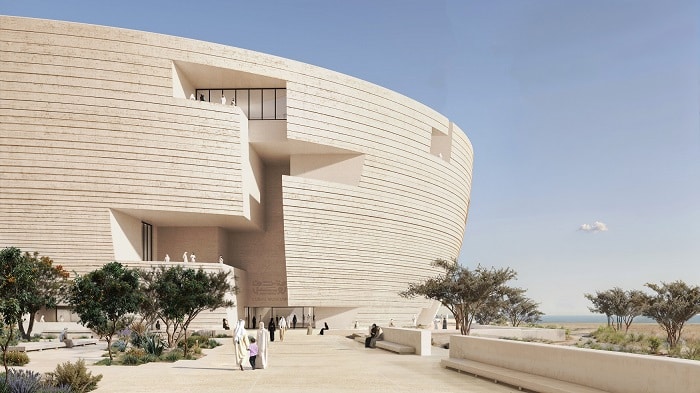
Rendering of Lusail Museum South Entrance © Herzog & de Meuron.
Inside, a naturally lit street will run through the museum, linking spaces with different atmospheres. Its internal organisation is conceived as a vertically layered souq.
‘We don’t want to just have white-cube galleries,’ he said. ‘We want this juxtaposition of unlikely spaces.’
The museum’s architectural references extend across the Islamic world. Herzog referred to historic domes from Istanbul, Natanz, Cairo and Zaragoza, whose forms will inform spaces for video, installation and new artistic production.
Wood, textiles, metalwork, ceramic tiles and plaster will contribute to the interiors. Local and regional forms of making will sit alongside contemporary art and digital media. Craftsmanship will be embedded in the surfaces and atmosphere of the museum

Rendering of Lusail Museum, view from Lusail Marina looking towards Al Maha Island. © Herzog & de Meuron.
Whose History, Told by Whom
Sheikha Al Mayassa also spoke about the movement of ideas and techniques between East and West, and West and East, recalling the influence of Islamic glassmaking on Venice.
History is not formed by two fixed sides, but of movement, adaptation and transformation. Techniques, forms and knowledge have travelled across regions, acquiring new meanings along the way.
The museum will place Qatar Museums’ major collection of Orientalist paintings in conversation with contemporary art, research and new cultural production.
‘How do you regain your identity and your confidence to contribute to a global narrative that appreciates what you have created in terms of art, culture and sciences?’ Sheikha Al Mayassa asked. The region, she continued, ‘has always been a knowledge-based society’
A Living Island
The name Al Maha adds another dimension. Meaning ‘oryx’ in Arabic, it refers to an animal closely associated with Qatar.
“It will be unusual to live in a museum and see oryx walking around, with residents and children learning how to care for them. It is a unique experience,” Sheikha Al Mayassa said.
The island’s landscape is also intended to accommodate Arabian oryx, adding a living dimension to the project’s connection with Qatar’s natural environment.
Art Basel Qatar will provide one reason to visit. The island’s character will be shaped by everything around the fair: the crossing from Lusail, the coolness of a shaded passage, the texture of a wall, the sound of water and the sight of an oryx moving through the landscape.
Al Maha Island is already there. What is now being planned around it is a cultural district connecting Qatar’s history with contemporary creativity, regional craftsmanship and everyday life. Sheikha Al Mayassa’s hope is that people will feel at home there ‘no matter what they believe or where they come from’
That sense of belonging, however, will have to be earned slowly, through the life of the island beyond the fair itself.

Rendering of Village © Herzog & de Meuron